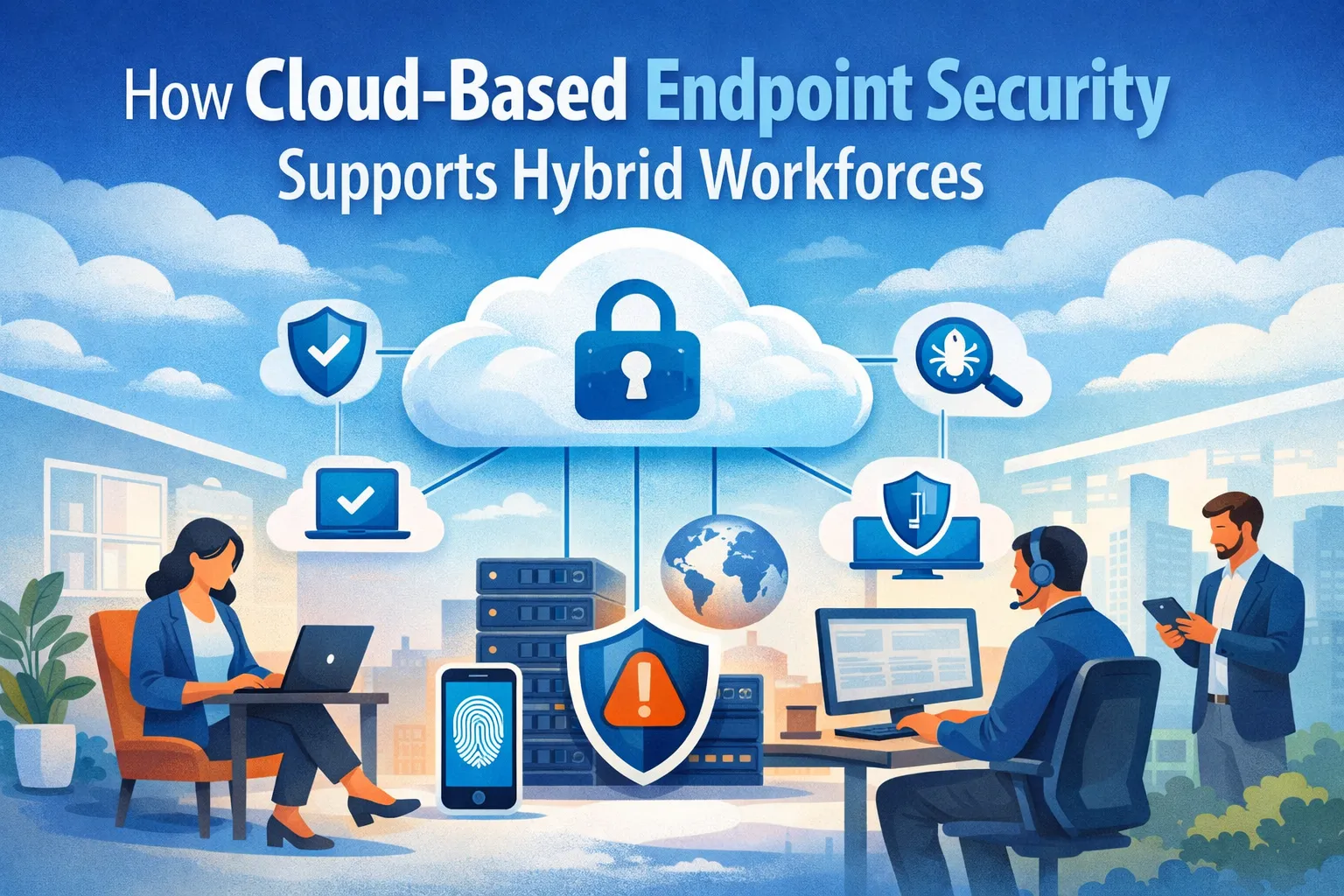

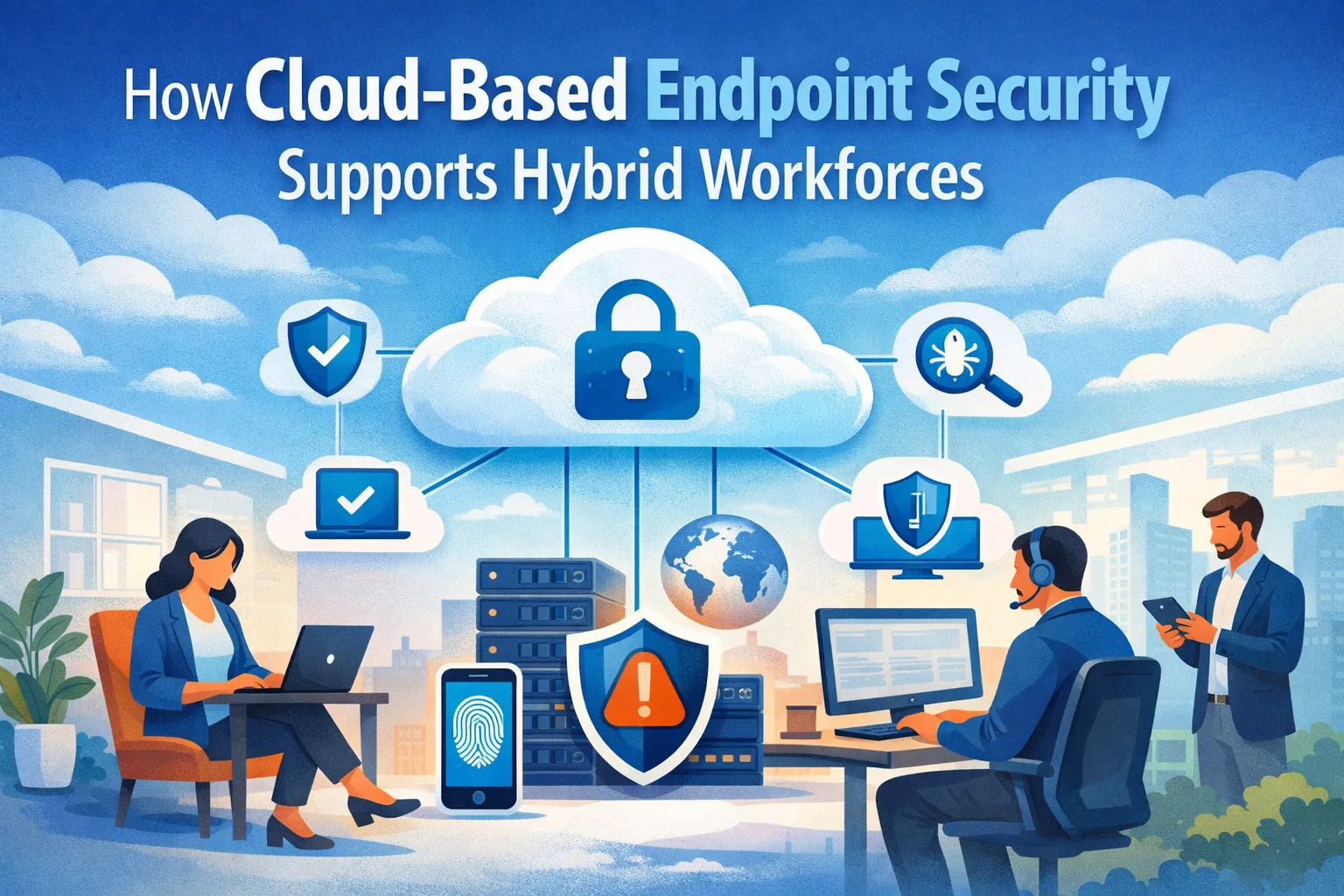
Hybrid work has become the default operating model for many enterprises. Employees now access business applications from a mix of office networks, home Wi-Fi, and public internet connections often using multiple devices.
This shift expands the organisation’s attack surface and demands a stronger, more agile defence. Cloud based endpoint security delivers that agility by securing every device, user, and connection regardless of location.
The Rapid Growth of Remote Endpoints
Hybrid workforces depend on laptops, mobiles, and tablets that connect from anywhere. As organisations scale, the number of remote endpoints grows exponentially. Traditional security tools struggle because they rely on on-premises architecture, offer limited visibility, and enforce policies slowly. Security teams cannot afford blind spots when endpoints remain the first target for ransomware, phishing, data theft, and zero-day threats.
Modern enterprises need endpoint cloud security that keeps pace with dynamic work environments and provides real-time control over distributed devices.
Challenges of Cybersecurity for Remote Work Teams
Hybrid endpoint devices can be complicated because of:
- The corporate firewall does not see devices that connect to the internet on public networks.
- Because of many different types of networks, there will be times when users will not receive the latest security updates or patches.
- Users connect to Software as a Service (SaaS) applications and access sensitive data over unsecured networks.
- Conventional agent-based solutions do not work with devices that are not connected to a network.
- Limited threat intelligence reduces the ability to detect advanced attacks
These complexities increase vulnerability to malware, credential theft, and lateral movement threats, which can lead to operational disruption and the exposure of critical and sensitive data in businesses.
How Cloud-Based Protection Strengthens Hybrid Security Posture
Cloud-delivered endpoint protection provides enterprise security teams with unified visibility and control. Key advantages include:
- Always-on protection: Secures devices whether on-site or remote
- Centralised policy orchestration: Enforce security rules instantly across all endpoints
- Real-time threat intelligence: Blocks evolving attacks using AI/ML-driven insights
- Scalability: Add thousands of devices without additional infrastructure
- Integrated cloud device security: Manage detection, response, and device compliance from a single console
Conclusion: Build a Secure, Future-Ready Hybrid Workforce
Hybrid work will continue to evolve, and enterprises must adopt security models that scale with it. Cloud based endpoint security equips organisations with continuous protection, stronger visibility, and proactive defence across every device—no matter where employees work from.
Ready to secure your hybrid workforce? Explore how Seqrite’s advanced endpoint and cloud-driven security solutions can strengthen your enterprise environment.


























Sign in to leave a comment.