

Dermatology practices treat a wide range of skin conditions, from acne and psoriasis to skin cancer and cosmetic concerns. While patient care is the primary focus, an efficient billing process is essential to ensure practices receive proper reimbursement for the services they provide.
Dermatology billing involves multiple steps from verifying insurance eligibility to submitting claims and collecting payments. Because dermatology procedures often involve complex coding, modifiers, and documentation requirements, many clinics partner with specialized providers like AnnexMed to manage their billing and revenue cycle operations.
This guide explains how dermatology billing works step-by-step and what practices should know to maintain an efficient billing process in 2026.
What Is Dermatology Medical Billing?
Dermatology medical billing is the process of translating dermatology services into standardized medical codes and submitting them to insurance companies for reimbursement.
The billing process typically includes:
- Patient registration
- Insurance verification
- Medical coding
- Claim submission
- Payment posting
- Denial management
- Accounts receivable follow-up
Each step must be handled carefully to ensure claims are approved and payments are received on time.
Step-by-Step Dermatology Billing Process
#Step 1: Patient Registration
The billing process begins when a patient schedules an appointment.
During this stage, staff collect essential information such as:
- Patient demographics
- Insurance details
- Medical history
- Contact information
Accurate patient information helps prevent billing errors later in the process.
#Step 2: Insurance Eligibility Verification
Before providing treatment, practices must verify the patient’s insurance coverage.
This step confirms:
- Whether the patient’s insurance policy is active
- Coverage for dermatology procedures
- Copayments and deductibles
- Prior authorization requirements
Insurance verification helps prevent claim denials related to coverage issues.
#Step 3: Medical Documentation
After the patient visit, the dermatologist documents the diagnosis, procedures performed, and treatment plan.
Important documentation elements include:
- Patient symptoms and medical history
- Diagnosis codes
- Procedure details
- Physician notes
Accurate documentation is essential for proper coding and reimbursement.
#Step 4: Dermatology Medical Coding
Medical coders translate clinical documentation into standardized codes used for billing.
Common coding systems include:
- CPT codes for procedures
- ICD-10 codes for diagnoses
- Modifiers to provide additional information about procedures
Dermatology coding can be complex because multiple procedures may be performed during a single visit.
#Step 5: Claim Preparation and Submission
Once coding is complete, the billing team prepares the insurance claim.
Claims include:
- Patient information
- Provider details
- Diagnosis codes
- Procedure codes
- Supporting documentation
Most dermatology practices submit claims electronically to speed up processing.
#Step 6: Claim Review and Processing
Insurance companies review submitted claims to determine whether the services are covered and medically necessary.
The insurer may:
- Approve the claim and issue payment
- Request additional documentation
- Deny the claim due to errors or policy restrictions
#Step 7: Payment Posting
After the insurance company processes the claim, payments are sent to the dermatology practice.
Billing teams record these payments and reconcile them with submitted claims to ensure accurate reimbursement.
If patients have remaining balances, they are billed accordingly.
#Step 8: Denial Management
Not all claims are approved on the first submission.
If a claim is denied, billing teams review the denial reason and take corrective action.
Denial management may include:
- Correcting coding errors
- Adding missing documentation
- Resubmitting the claim
- Appealing the denial
Effective denial management helps practices recover lost revenue.
#Step 9: Accounts Receivable Follow-Up
Billing teams monitor unpaid claims and follow up with insurance companies to ensure payments are received.
This step helps reduce accounts receivable days and improves practice cash flow.
Common Dermatology Billing Challenges
Dermatology practices often face several billing challenges, including:
- Incorrect CPT or ICD-10 coding
- Missing procedure modifiers
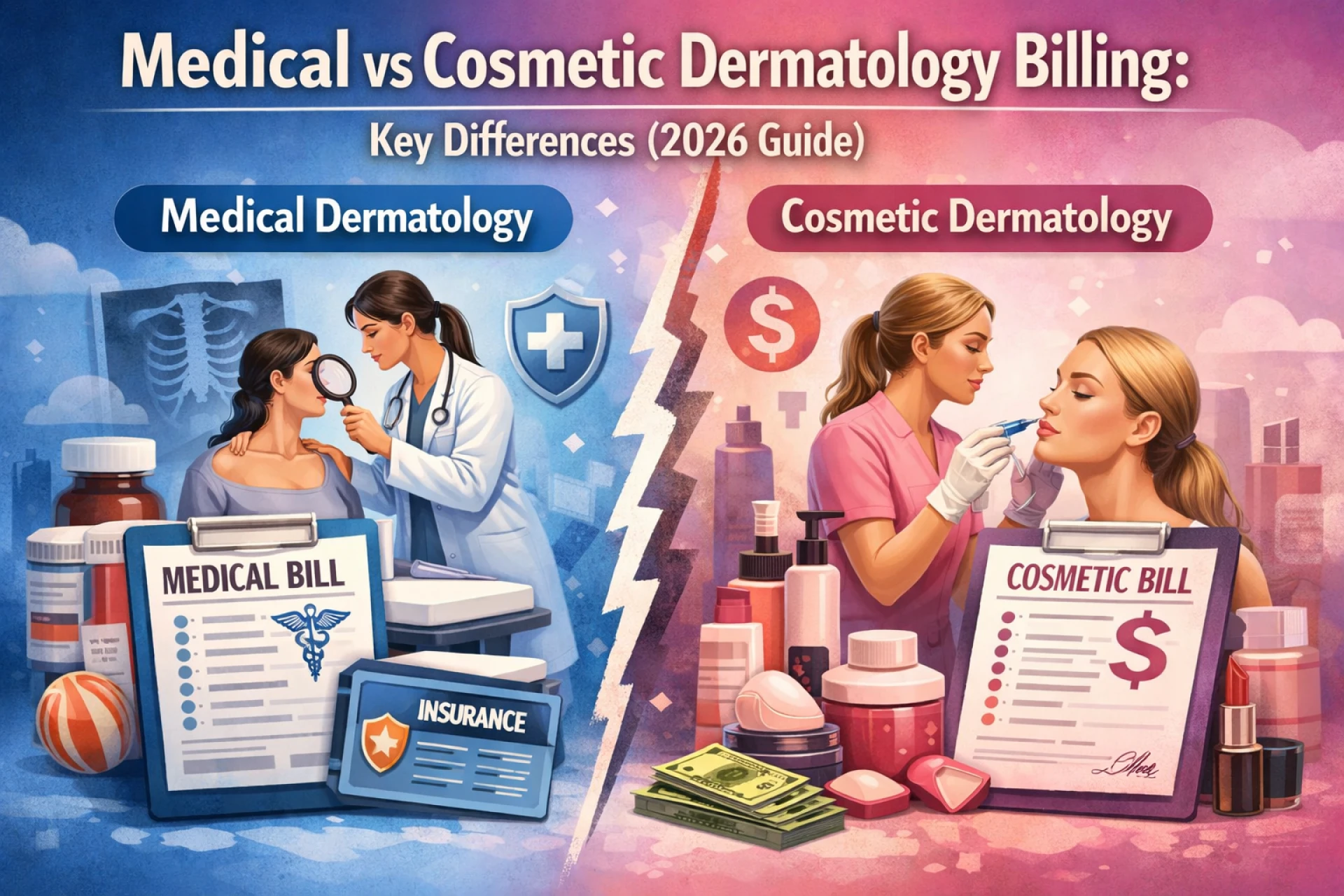
- Confusion between medical and cosmetic procedures
- Incomplete clinical documentation
- Insurance eligibility issues
Without proper billing expertise, these issues can lead to claim denials and delayed reimbursements.
Benefits of Professional Dermatology Billing Services
Many dermatology practices choose to outsource billing to experienced providers.
Professional dermatology billing services offer:
- Accurate dermatology coding
- Reduced claim denials
- Faster reimbursements
- Efficient denial management
- Improved revenue cycle performance
Experienced providers such as AnnexMed help dermatology practices streamline billing operations and maintain consistent revenue.
Technology Used in Dermatology Billing
Modern dermatology medical billing systems use advanced technology to improve efficiency and accuracy.
Common tools include:
- Automated claim scrubbing software
- Real-time insurance verification systems
- Denial tracking platforms
- Revenue cycle analytics dashboards
These technologies help detect billing errors before claims are submitted.
Dermatology Billing Trends in 2026
Healthcare billing continues to evolve with the adoption of new technologies and automation.
Key trends include:
- AI-assisted medical coding
- Automated claims processing
- Predictive denial management
- Integration with dermatology EHR systems
These innovations are helping practices improve billing efficiency and reimbursement rates.
Conclusion
Dermatology billing is a detailed process that requires accurate documentation, precise coding, and efficient claim management. From patient registration to final payment collection, each step in the billing workflow plays a critical role in ensuring proper reimbursement.
Because dermatology procedures involve complex coding and strict insurance requirements, many practices partner with specialized providers like AnnexMed to manage their billing operations.
By implementing efficient billing processes and leveraging professional expertise, dermatology practices can reduce claim denials, improve cash flow, and focus on delivering high-quality patient care.
FAQs
1. What is dermatology medical billing?
Dermatology medical billing is the process of coding dermatology procedures and submitting insurance claims to receive reimbursement.
2. Why is dermatology billing complex?
Dermatology billing involves multiple procedures, coding systems, modifiers, and documentation requirements.
3. How long does dermatology claim processing take?
Claim processing typically takes 7–30 days, depending on the insurance provider and claim accuracy.
4. Why do dermatology practices outsource billing services?
Outsourcing helps improve coding accuracy, reduce claim denials, and accelerate reimbursements.
5. How can dermatology practices improve billing efficiency?
Practices can improve efficiency by using advanced billing technology, verifying insurance eligibility, and maintaining accurate documentation.































Sign in to leave a comment.