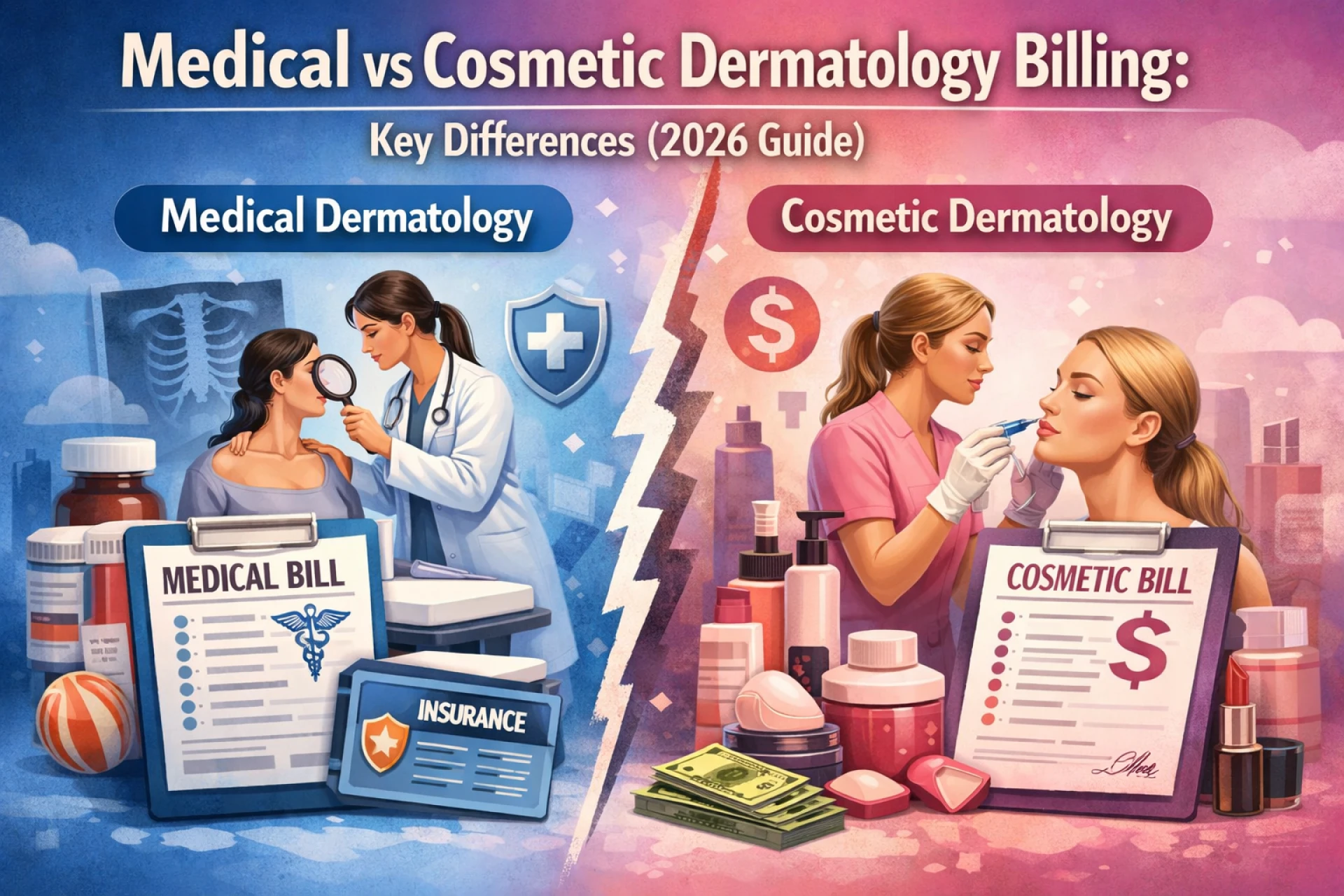

Dermatology practices often provide both medical treatments and cosmetic procedures, but the billing process for these services is very different. Understanding the distinction between medical dermatology billing and cosmetic dermatology billing is essential for accurate reimbursement and compliance with insurance regulations.
Because the rules, coding requirements, and payment methods vary significantly, many dermatology clinics rely on specialized billing providers such as AnnexMed to manage complex dermatology billing services workflows efficiently.
This guide explains the key differences between medical and cosmetic dermatology billing, including coding requirements, insurance coverage, documentation standards, and common billing challenges in 2026.
Understanding Medical Dermatology Billing
Medical dermatology billing refers to services that are medically necessary and typically covered by insurance providers. These treatments are performed to diagnose, treat, or manage skin diseases and medical conditions.
Common Medical Dermatology Services
Medical dermatology includes treatments for:
- Acne and severe inflammatory acne
- Psoriasis and eczema
- Skin infections
- Skin cancer screening and removal
- Warts and fungal infections
- Chronic dermatologic conditions
Because these services address medical conditions, they require proper diagnosis codes (ICD-10) and documentation supporting medical necessity.
Understanding Cosmetic Dermatology Billing
Cosmetic dermatology billing involves procedures performed primarily for aesthetic or appearance-related purposes rather than medical necessity. Most cosmetic procedures are not covered by insurance and are typically paid out-of-pocket by patients.
Common Cosmetic Dermatology Procedures
Cosmetic dermatology services often include:
- Botox and dermal fillers
- Laser skin resurfacing
- Chemical peels
- Skin tightening treatments
- Scar and pigmentation treatments
- Cosmetic mole removal
Because these procedures are considered elective, they are usually billed directly to the patient rather than submitted to insurance companies.
Coding Requirements for Medical Dermatology Billing
Medical dermatology services require accurate coding and documentation to justify insurance claims.
Common Codes Used
Medical dermatology billing typically involves:
- CPT codes for procedures such as biopsies and lesion removals
- ICD-10 diagnosis codes indicating the patient's condition
- Modifiers such as -25 or -59 when multiple procedures are performed
Incorrect coding can lead to claim denials or reduced reimbursements.
Documentation Requirements for Medical Dermatology
Insurance providers require detailed documentation to verify that procedures are medically necessary.
Essential documentation includes:
- Patient medical history
- Diagnosis confirmation
- Procedure details
- Physician notes
- Treatment justification
Incomplete documentation is one of the most common reasons for claim denials in dermatology billing.
Payment Process for Cosmetic Dermatology Services
Unlike medical services, cosmetic dermatology procedures usually follow a direct payment model.
Typical payment structures include:
- Upfront payment before treatment
- Package pricing for cosmetic treatments
- Membership or subscription-based aesthetic services
Practices must clearly communicate payment policies to patients before performing cosmetic procedures.
Challenges in Dermatology Billing
Dermatology practices often face several billing challenges when managing both medical and cosmetic services.
Determining Medical Necessity
Some procedures may have both medical and cosmetic components. Determining whether a treatment qualifies for insurance coverage can be difficult.
Coding Errors
Incorrect coding or modifier usage can lead to claim rejections.
Insurance Policy Variations
Different insurance providers may have different rules regarding dermatology treatments.
Documentation Issues
Incomplete documentation may result in delayed reimbursements or claim denials.
These challenges highlight the need for experienced dermatology billing professionals.
Benefits of Specialized Dermatology Billing Services
Many dermatology practices outsource billing to specialized providers to manage these complexities.
Key benefits include:
- Accurate dermatology coding
- Reduced claim denials
- Faster insurance reimbursements
- Better compliance with billing regulations
- Improved revenue cycle management
Billing specialists understand the nuances between medical and cosmetic dermatology billing, which helps practices avoid costly mistakes.
Dermatology Billing Trends in 2026
Dermatology billing is evolving rapidly with advancements in technology and healthcare regulations.
Important trends include:
- AI-assisted medical coding
- Automated claim processing
- Improved denial management tools
- Integration with dermatology practice management systems
These innovations are helping practices improve billing accuracy and financial performance.
Conclusion
Medical and cosmetic dermatology billing service differ significantly in terms of insurance coverage, coding requirements, and payment processes. Medical dermatology services require detailed documentation and insurance claims, while cosmetic procedures are typically paid directly by patients.
Understanding these differences is essential for maintaining compliance and maximizing revenue in dermatology practices. Many clinics partner with experienced billing providers like AnnexMed to manage these complex billing workflows and ensure accurate reimbursement.
By implementing structured billing processes and specialized expertise, dermatology practices can improve financial performance while continuing to provide high-quality patient care.
FAQs
- What is medical dermatology billing?
Medical dermatology billing involves submitting insurance claims for treatments that are medically necessary, such as acne treatment, skin cancer removal, and chronic skin conditions. - Are cosmetic dermatology procedures covered by insurance?
Most cosmetic dermatology procedures are not covered by insurance and are paid directly by patients. - What documentation is required for medical dermatology billing?
Documentation typically includes patient diagnosis, treatment details, physician notes, and proof of medical necessity. - Why is dermatology billing complex?
Dermatology billing involves multiple procedures, coding requirements, and strict insurance policies that must be followed accurately. - Why do dermatology practices outsource billing services?
Outsourcing helps reduce claim denials, improve coding accuracy, and streamline revenue cycle management.































Sign in to leave a comment.