

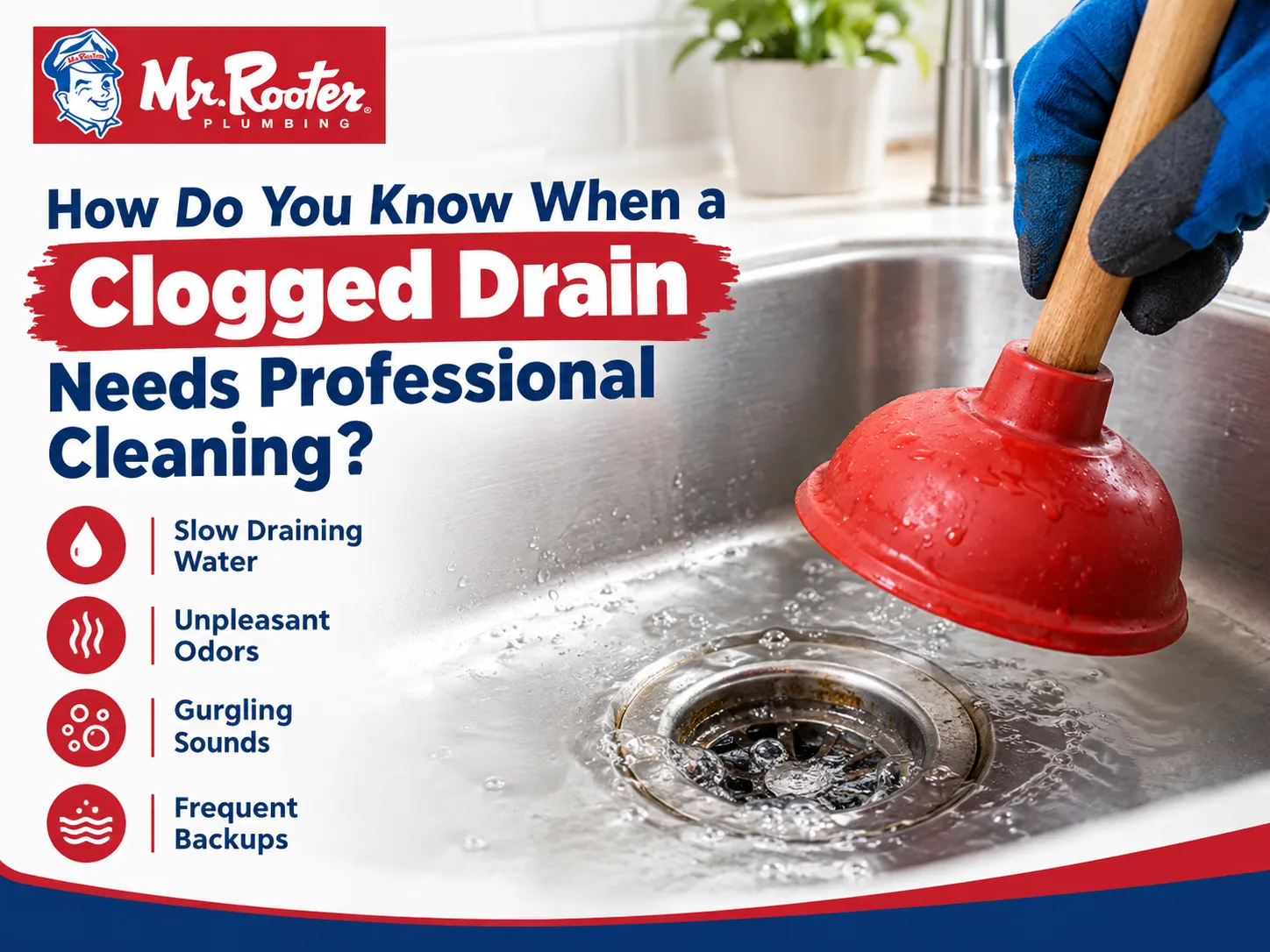
A clogged drain needs professional cleaning when a plunger or store-bought cleaner stops working, when the same drain clogs repeatedly within weeks, when multiple fixtures are slow at once, or when you notice gurgling, sewage odors, or standing water. These signs mean the blockage sits deeper in the system than basic tools can reach. If you're seeing any of them, expert drain cleaning in Youngstown from a professional can clear the problem at its actual source rather than just the surface symptom.
What Separates a Minor Clog From One That Needs a Professional?
A minor clog is typically isolated to a single fixture, close to the drain opening, and clears with basic tools like a plunger or a short cable. A clogged drain needs professional cleaning once it resists those basic methods, returns after being cleared, or shows signs of affecting more than one part of your plumbing system. The difference comes down to depth and cause, not just how annoying the clog feels.
Signs of a Serious Drain Clog You Shouldn't Ignore
The Clog Won't Clear With a Plunger or Basic Tools
If you've tried plunging or a short store-bought snake and the drain is still slow or fully blocked, that's one of the clearest signs of a serious drain clog. Basic tools typically only reach the first several feet of pipe, so resistance beyond that point means the blockage is sitting further down than household tools can effectively handle.
You're Dealing With a Stubborn Drain Clog That Keeps Coming Back
A stubborn drain clog that clears temporarily but returns within days or weeks usually isn't the same debris reforming by coincidence. It often means something, grease residue, mineral buildup, or a partial obstruction, is still present and simply wasn't fully removed the first time.
Multiple Drains Are Slow or Backing Up at the Same Time
When more than one fixture is draining slowly- a bathtub, a kitchen sink, and a toilet all acting up together, that points to a blockage in the shared main line rather than an issue with any single drain. This pattern of recurring drain clogs across different fixtures is a strong signal that professional attention is needed.
You Notice Gurgling, Sewage Odors, or Standing Water
Gurgling sounds happen when trapped air is forced back through the pipes because something downstream is blocking normal flow. A persistent sewage smell or standing water near a drain or in the yard often means the problem has progressed beyond a simple clog and needs a closer look.
Why Aggressive DIY Attempts Can Make Things Worse
Can Chemical Drain Cleaners Actually Damage My Pipes?
Yes. The heat generated during the chemical reaction can warp PVC connections and eat through older metal pipes, and pouring multiple bottles down the same drain when the first attempt fails concentrates that damage further. This kind of repeated chemical exposure weakens pipe walls and can lead to sudden failures months later, long after the original clog seemed resolved.
Why Does Forcing a Metal Auger Through Pipes Cause Long-Term Problems?
Metal augers spun at high speeds can scrape through galvanized steel or chip away at cast iron joints, and that damage starts small but compounds with each attempt. What begins as minor scratching becomes grooves where debris catches and builds up faster than before, which is exactly how a one-time clog turns into a pattern of recurring drain clogs.
How Professionals Diagnose a Clog Before Cleaning
A drain camera gives a plumber eyes inside the pipe before any tools go in, and this inspection takes the guesswork out of a clogged drain repair. The footage reveals whether you're dealing with grease buildup, tree roots, or a collapsed section of pipe, and each of these problems needs a different approach to clear safely.
Why Does Pipe Material Change the Cleaning Method?
PVC pipes can typically handle hydro jetting because the material is smooth and durable. Cast iron and galvanized steel need more careful handling since these materials corrode from the inside out, especially in older homes, so a plumber might start with a cable auger instead of water pressure. Clay and concrete sewer lines, often 50 to 100 years old, call for the gentlest approach available, since pushing debris through old pipe at the wrong angle can dislodge sections at the joints.
How Hydro Jetting and Mechanical Cleaning Differ
Hydro jetting machines have adjustable pressure settings ranging from 1,500 to 4,000 PSI, and a professional selects the right setting based on what the camera inspection revealed about pipe condition and blockage type. Residential lines are typically cleaned at the lower end of that range. Mechanical cleaning with a cable auger, by contrast, works best for clogs closer to the drain opening, where the plumber can feel resistance through the cable and avoid pushing tools through an already weakened section of pipe.
What Does Professional Drain Cleaning Actually Accomplish?
Professional drain cleaning clears the blockage using a method matched to the pipe's material and the clog's actual cause, rather than applying the same force to every situation. This approach is central to keeping your drains clear and flowing without the pipe damage that aggressive DIY methods or poorly matched tools can cause.
When Should You Stop Trying DIY Fixes and Call a Plumber?
If you've attempted a plunger and a basic cable snake without success, or if you've noticed any of the signs above, that's the point to stop experimenting and call a professional. Continuing to try the same unsuccessful approach, or escalating to stronger chemical cleaners, usually just delays the real fix while increasing the risk of pipe damage.
Key Takeaways
- A clog that resists a plunger or basic cable snake usually sits deeper in the system than household tools can reach
- Recurring drain clogs in the same spot often mean the original blockage wasn't fully cleared
- Multiple slow drains at once point to a main line issue rather than a single clogged fixture
- Chemical drain cleaners can warp PVC and corrode metal pipes with repeated use
- Camera inspections let professionals match the cleaning method to the pipe's actual material and condition
- Hydro jetting and mechanical cable cleaning serve different purposes depending on pipe type and clog location
Conclusion
Knowing when a clogged drain needs professional cleaning comes down to recognizing a few clear signals: resistance to basic tools, clogs that keep returning, multiple fixtures acting up together, or signs like gurgling and odors that point to something bigger. Trying to force a stubborn clog with repeated chemical treatments or aggressive mechanical tools often does more harm than good, especially in older homes with more fragile pipe materials. A proper diagnosis matched to the right cleaning method protects your plumbing while actually solving the problem.
Dealing With a Stubborn Clog? Contact Mr. Rooter Plumbing of Youngstown
If your drain isn't responding to basic efforts, don't risk further damage with repeated DIY attempts. Mr. Rooter Plumbing of Youngstown inspects first, chooses the cleaning method suited to your specific pipes, and clears the blockage without putting your plumbing at risk. Contact Mr. Rooter Plumbing of Youngstown today to schedule your drain cleaning.
Frequently Asked Questions
How do I know if my clog is too deep for a plunger to handle?
If plunging doesn't improve drainage after a couple of attempts, the blockage is likely further down the pipe than a plunger can reach, and it's time to consider professional cleaning.
Is it normal for a cleared drain to clog again a few weeks later?
No, a recurring clog in the same spot usually means the original blockage wasn't fully removed or that an underlying issue, like roots or buildup, is still present.
Can hydro jetting be used on any type of pipe?
Not always. PVC generally handles hydro jetting well, but older or more fragile pipe materials like clay, cast iron, or galvanized steel may need a gentler mechanical approach instead.
Why shouldn't I just use more chemical drain cleaner if the first bottle doesn't work? Repeated chemical use concentrates the heat and corrosive effects on your pipes, which can weaken pipe walls and lead to failures months after the original clog.
Do professionals always use a camera before cleaning a drain?
A camera inspection helps identify the actual cause and pipe condition first, which allows the method used to match the specific situation rather than relying on guesswork.




















Sign in to leave a comment.