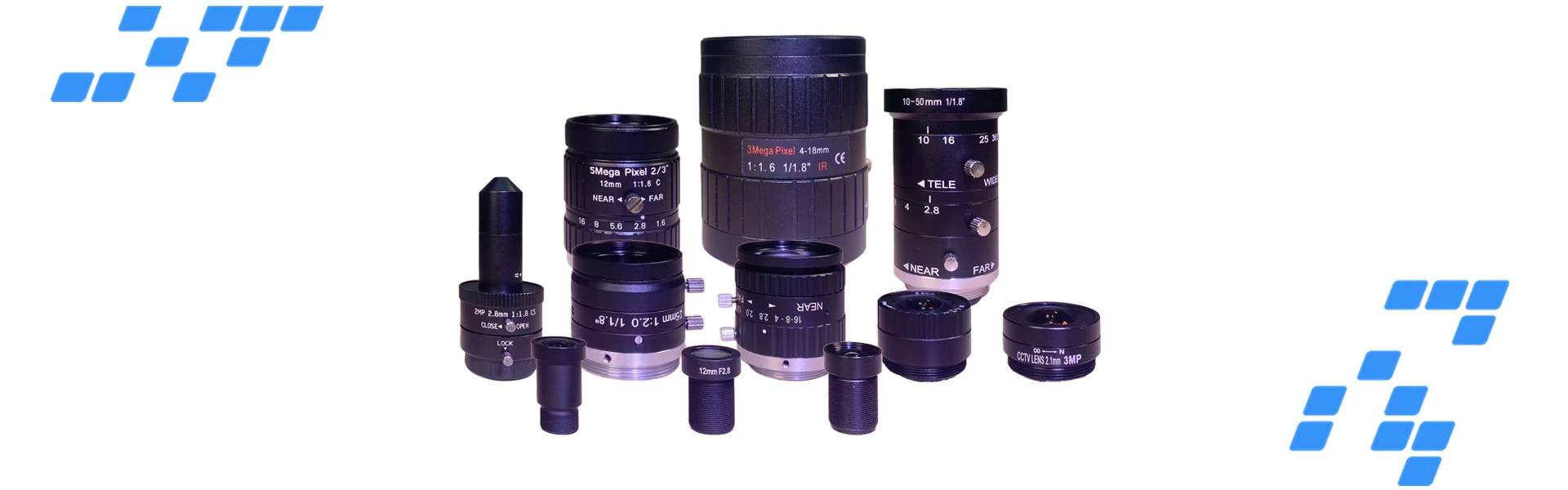

Photography enthusiasts often debate whether a Zoom lens is ideal for low-light conditions. While prime lenses are celebrated for their wide apertures and sharpness, Zoom lenses offer versatility that’s hard to match. But how does a Zoom lens perform in low-light conditions? This question hinges on several technical and practical factors, from aperture size to image stabilization.
Understanding Zoom Lenses and Low-Light Challenges
A Zoom lens allows photographers to adjust focal lengths without swapping lenses, making it a go-to for events, travel, and wildlife photography. However, low-light conditions—such as indoor settings, nighttime scenes, or overcast days—pose unique challenges. These include limited light availability, increased noise, and slower shutter speeds. How does a Zoom lens perform in low-light conditions compared to prime lenses? The answer depends on its design and features.
1. Aperture Size: The Gateway to Light
The aperture, measured in f-stops (e.g., f/2.8, f/4), determines how much light enters the lens. A wider aperture (lower f-number) lets in more light, which is critical in low-light scenarios. Many high-end Zoom lenses, like the Canon EF 24-70mm f/2.8L II USM, offer a constant f/2.8 aperture across their focal range. This allows photographers to shoot in dim environments without compromising exposure.
However, not all Zoom lenses have wide apertures. Budget-friendly options often start at f/3.5 or f/4, limiting their low-light performance. If you frequently shoot in low light, prioritize a Zoom lens with a maximum aperture of f/2.8 or wider.
2. Image Stabilization: Reducing Shake in Dim Light
In low-light conditions, slower shutter speeds are necessary to gather enough light. This increases the risk of camera shake, resulting in blurry images. Image stabilization (IS) technology counteracts this by reducing motion blur. Many modern Zoom lenses, such as the Sony FE 24-105mm f/4 G OSS, include built-in IS, enabling sharper handheld shots at slower speeds.
Without IS, you’ll need a tripod or faster shutter speeds, which may not always be practical. When evaluating how a Zoom lens performs in low-light conditions, check for optical stabilization features.
3. Sensor Compatibility: Full-Frame vs. Crop-Sensor
The camera’s sensor size also impacts low-light performance. Full-frame sensors (found in cameras like the Nikon Z6 II) capture more light than crop sensors, improving image quality in dim settings. When paired with a full-frame camera, a Zoom lens can leverage its full potential, delivering cleaner images with less noise.
Crop-sensor cameras, while more affordable, amplify noise in low light. If you use a crop-sensor body, opt for a Zoom lens with a wider aperture to compensate.
4. Lens Construction: Quality Glass Matters
The materials and coatings used in a Zoom lens affect light transmission and contrast. High-quality lenses minimize flare and ghosting, ensuring sharpness even in backlit or low-light scenes. Premium Zoom lenses often feature aspherical elements and nano-coatings to enhance performance.
5. Autofocus Speed: Capturing Fleeting Moments
In low light, autofocus (AF) systems can struggle to lock onto subjects. A Zoom lens with fast, accurate AF is essential for action or portrait photography. Look for lenses with ring-type ultrasonic motors (USM) or stepping motors (STM), which perform well in dim conditions.
FAQs
Are Zoom lenses worse than prime lenses in low light?
Not necessarily. While prime lenses often have wider apertures, high-end Zoom lenses like the Sony 24-70mm f/2.8 GM rival primes in low-light performance. The trade-off is size and cost.
Can I use a Zoom lens for astrophotography?
Yes, but choose a lens with a wide aperture (f/2.8 or lower) and minimal coma at wide angles.
Do image-stabilized Zoom lenses eliminate the need for a tripod?
No, but they allow handheld shooting at slower shutter speeds. For long exposures or extreme zoom ranges, a tripod is still recommended.
What is the best Zoom lens for low-light video?
Lenses with parfocal design (maintaining focus while zooming) and silent AF motors are ideal.
How can I improve low-light performance with any Zoom lens?
Use a tripod, increase ISO cautiously, and shoot in RAW format for post-processing flexibility. External lighting, like a speedlight, can also help.
Conclusion
How does a Zoom lens perform in low-light conditions? The answer depends on your priorities. If versatility and convenience are key, a high-quality Zoom lens with a wide aperture, IS, and fast AF is an excellent choice. For ultimate low-light performance, prime lenses still hold an edge, but modern Zoom lenses have closed the gap significantly.






















Sign in to leave a comment.