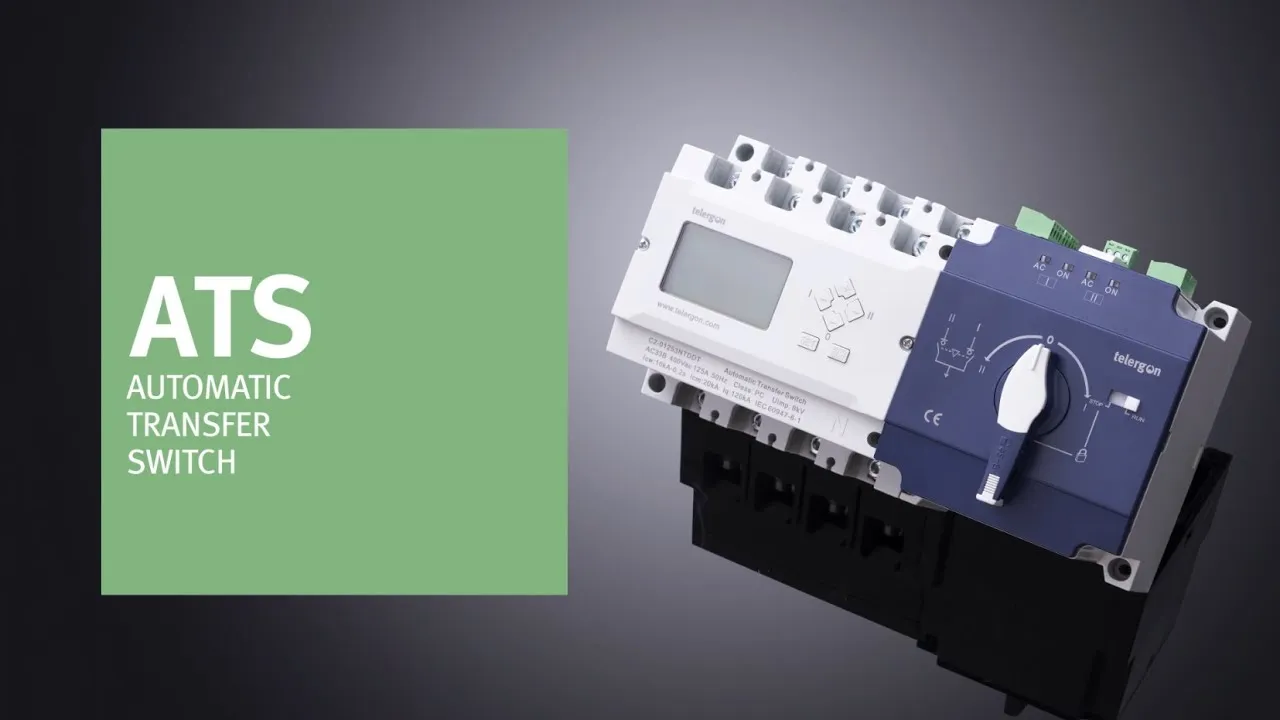

Transfer time is one of the most cited specifications in any conversation about automatic transfer switches, and one of the least understood. Facility managers see a number on a spec sheet, compare it to another number on a different spec sheet, and make purchasing decisions based on which one is smaller. That's the wrong way to think about it.
The right transfer time for a given application isn't the fastest one available. It's the one that matches what the connected loads can actually tolerate, delivered reliably, every time the system is called on. Getting that match right is what separates a transfer switch system that genuinely protects a facility from one that looks adequate on paper but fails the operation when it matters.
This post breaks down how transfer time actually works, what drives it, and how to determine what your facility needs.
Transfer Time Is Not One Number
The first thing to understand is that transfer time is not a single event with a single duration. It's a sequence of events, each with its own time contribution, that happen in order from the moment a power disturbance begins to the moment the alternate source is fully carrying the load.
That sequence typically looks like this. The transfer switch monitors the primary source and detects that voltage or frequency has moved outside acceptable limits. It waits through a confirmation delay to distinguish a sustained outage from a transient dip. It signals the alternate source, usually a generator, to start. The generator starts, accelerates, and reaches stable voltage and frequency. The transfer switch verifies that the alternate source is within acceptable parameters. The mechanical transfer executes. The load is now on the alternate source.
Every one of those steps takes time. The sum of all of them is the transfer time the connected loads actually experience. When a manufacturer publishes a transfer time specification for a switch, that number usually reflects only the mechanical switching time, which is one step in the sequence. It does not include generator startup time, confirmation delays, or source verification time.
A switch rated for a 10-millisecond mechanical transfer time installed in front of a generator that takes 12 seconds to start will deliver a transfer time of 12 seconds plus all the other delays in the sequence. The switch specification is technically accurate. It's also nearly irrelevant to the operational outcome.
What Drives Each Component of Transfer Time
Understanding what drives each step in the transfer sequence tells you where the time goes and which parts of it you can control through design choices.
Outage detection time is how long the switch takes to recognize that the primary source has failed. Most modern transfer switches detect voltage and frequency deviations within one to three cycles, which at 60Hz is roughly 17 to 50 milliseconds. This is generally fast enough that it's not the limiting factor in most systems.
Confirmation delay is a programmed wait time, typically adjustable, that prevents the switch from initiating a transfer in response to a brief voltage transient rather than a genuine outage. A common setting is one to two seconds. This delay exists for a good reason: transferring to generator power every time a voltage sag occurs wastes fuel, puts unnecessary wear on the generator, and can cause its own disruptions to sensitive loads. But it also means that two seconds of interruption is baked into the system before the transfer sequence even begins.
Generator start and stabilization time is usually the largest single contributor to total transfer time in systems that use a generator as the alternate source. A diesel generator typically takes 8 to 15 seconds from start signal to stable voltage output, depending on ambient temperature, engine condition, and starting system design. Cold weather extends this. Poor maintenance extends it further. A generator that takes 20 seconds to start in winter is a 20-second floor on your transfer time, regardless of what the switch does.
Source verification time is the delay after the generator reaches output before the switch confirms it is within acceptable parameters and proceeds with the transfer. This is typically short, one to two seconds, but it adds to the total.
Mechanical switching time is what most spec sheets lead with. For a conventional electromechanical transfer switch, this is typically 100 to 200 milliseconds. For a static transfer switch with no moving parts, it can be less than a quarter of a cycle, under 4 milliseconds. This matters a great deal for some loads and not at all for others.
What Your Loads Can Actually Tolerate
The transfer time your facility needs is determined by what your connected loads can tolerate during a power interruption, not by what's technically achievable or what's cheapest. Those are two different questions and they need to be answered in that order.
Different equipment has different ride-through capability, which is the duration of a power interruption it can sustain without losing function, losing state data, or requiring a manual restart.
Conventional motor loads, HVAC equipment, and lighting circuits generally tolerate interruptions of several seconds without significant consequence. A motor that coasts down during a 15-second transfer and restarts when power is restored is not a system failure. It's a normal operational event.
Programmable logic controllers, variable frequency drives, and process control systems are more sensitive. Many PLCs lose program execution and require restart sequences after interruptions as short as 50 to 100 milliseconds. VFDs may trip on undervoltage and require manual reset depending on their configuration. In a facility where these devices control continuous processes, a 15-second transfer time is not acceptable even if the facility can technically survive it, because the restart sequence takes longer than the outage did.
Data center and IT loads are at the opposite end of the sensitivity spectrum from motor loads. Servers, network equipment, and storage systems can lose data and require extensive recovery procedures after interruptions measured in milliseconds. These loads require UPS systems ahead of any generator-backed transfer switch, providing ride-through during the entire generator startup sequence. The transfer switch and generator handle the extended outage. The UPS handles the bridge.
Medical equipment in healthcare facilities, laboratory instruments, and certain industrial processes represent applications where the consequence of interruption is not financial but functional or physical. The design requirements for those applications are driven by code and by the nature of what's connected, and they need to be treated accordingly.
The Three Broad Categories of Transfer Switch Speed
When you look at the market for automatic transfer switches, the products fall into three broad speed categories, each appropriate for a different class of loads and applications.
Standard electromechanical transfer switches with mechanical switching times in the 100 to 300 millisecond range are appropriate for facilities where the connected loads are primarily motor loads, lighting, HVAC, and general power. The total transfer time including generator startup is typically 10 to 30 seconds, and the loads can tolerate that interruption without significant consequence. These are the most common, most cost-effective, and most appropriate option for a wide range of commercial and industrial applications.
Fast transfer switches with reduced mechanical switching times and optimized confirmation delays are appropriate where loads are more sensitive but don't require instantaneous transfer. Some configurations use stored energy mechanisms or electronic controls to reduce mechanical switching time and minimize confirmation delays, bringing total transfer time down while still relying on a generator as the alternate source. These work well for facilities with mixed load types where some circuits need faster response than standard equipment provides.
Static transfer switches with sub-cycle switching times are appropriate for the most sensitive loads, where any interruption longer than a few milliseconds causes operational consequences. These switches use power electronics rather than mechanical contacts and can transfer in less than a quarter of a cycle. They require a continuously available alternate source, either a second utility feed or a UPS system, because there is no time in the transfer sequence to start a generator. The cost is substantially higher than electromechanical alternatives, and that cost is justified only where the load sensitivity actually demands it.
The Generator Startup Problem
The single most overlooked factor in transfer time planning is generator startup time, and it's overlooked because it's not a transfer switch specification. It's a generator specification, and the two pieces of equipment are often evaluated and specified separately.
A transfer switch system is only as fast as its slowest component. In a generator-backed system, the generator startup time sets the floor for total transfer time regardless of how fast the switch itself operates. This means that transfer time cannot be engineered through switch selection alone. It requires coordinating the switch selection, the generator starting system, the confirmation delay settings, and the source verification parameters into a system that delivers the total transfer time the application requires.
Facilities in cold climates need to account for the effect of low ambient temperatures on generator startup time. Block heaters that keep the engine warm, battery heating systems, and proper starting system maintenance are all factors that affect how reliably a generator reaches stable output within its rated startup time. A generator that starts in 10 seconds in July may take 25 seconds in January without proper cold-weather provisions.
Closed Transition and Its Role in Transfer Time
For applications where the interruption during transfer is the primary concern, closed transition transfer eliminates it entirely. Rather than breaking the connection to the primary source before establishing the connection to the alternate source, closed transition operates both sources in parallel briefly before disconnecting the primary. The load never sees an interruption.
The constraint on closed transition is synchronization. Both sources must be in phase and within acceptable frequency and voltage differentials before the parallel operation can occur safely. This means closed transition works in applications where the alternate source is a second utility feed or a generator that can be synchronized to utility frequency, and it requires transfer switch equipment and control systems capable of managing the synchronization process.
For facilities where the operational or process consequences of even a brief interruption are significant, and where a generator-based system would otherwise deliver transfer times that cause those consequences, closed transition transfer is worth the additional engineering investment and equipment cost. For facilities where connected loads can tolerate the interruption inherent in open transition, it typically isn't.
How to Determine What Your Facility Actually Needs
The process for specifying the right transfer time for a facility starts with the loads, not the equipment catalog.
Identify which loads are being protected by the transfer switch system and document what each one can tolerate during an interruption. Group loads by sensitivity: loads that tolerate 30 seconds or more, loads that tolerate 5 to 15 seconds, loads that tolerate less than a second, and loads that cannot tolerate any interruption at all.
For the last two categories, identify whether a UPS system ahead of the transfer switch is the right solution, whether static transfer switch technology is required, or whether the loads need to be on a separate circuit with its own protection strategy.
For the first two categories, define the maximum acceptable total transfer time and work backward through the transfer sequence to verify that the combination of switch selection, confirmation delay settings, and generator startup time can actually deliver it under all expected operating conditions, including cold weather.
Test the system under realistic conditions after commissioning and document actual transfer times across the full sequence. Spec sheet numbers are design targets. Measured performance under real conditions is what your facility actually has.
The Number That Matters
Transfer time matters because what happens to your operation during that window determines whether your power continuity investment is delivering what it was designed to deliver. A system that transfers in 10 seconds when your critical process controllers lose state at 100 milliseconds isn't protecting your operation. It's protecting some of it.
Getting this right requires treating transfer time as a system characteristic, not a switch specification. It means understanding your loads before selecting your equipment, coordinating the generator and the switch as a single system, accounting for conditions that affect startup time, and testing what you've built against what you need.
The right answer for most facilities is simpler than it sounds once the loads are understood. The problem is that most facilities skip the load analysis and select equipment based on what's standard or what fits the budget, and then discover the mismatch when the system is called on for the first time.

























Sign in to leave a comment.