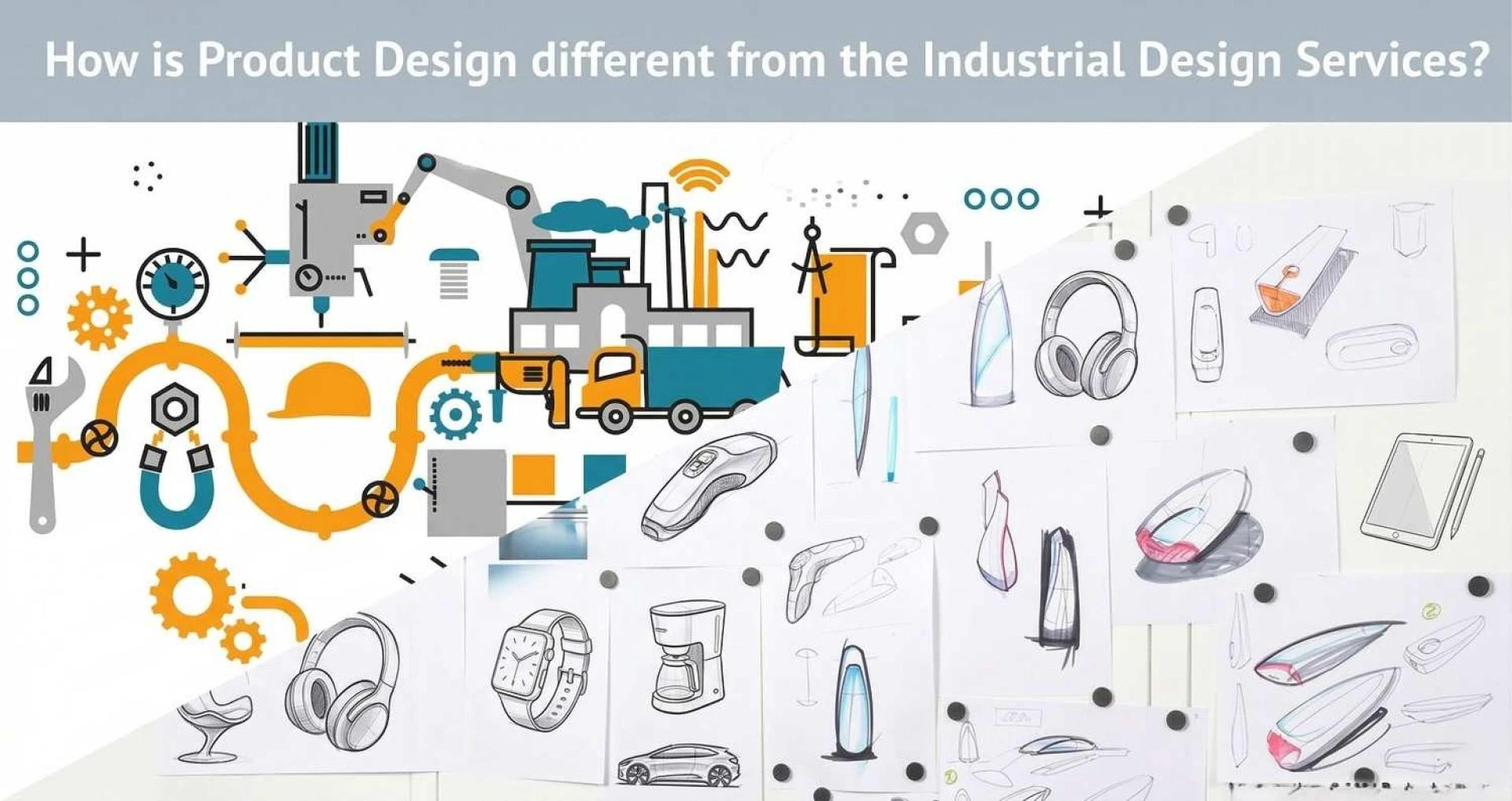
In the fast-paced world of mechanical engineering and manufacturing, the terms "Product Design" and "Industrial Design" are frequently used interchangeably. However, for an engineering firm or a manufacturer, confusing the two can lead to significant bottlenecks in development. While both aim to bring a concept to life, they approach the challenge from different ends of the spectrum: one focuses on the experience, while the other focuses on the execution.
Understanding the distinction is critical for optimizing workflows, reducing costs, and ensuring that a final component or machine is not only functional but also viable for the market.
The Core of Industrial Design: Form and User Experience
In the context of the mechanical industry, Industrial Design (ID) is the bridge between the human user and the machine. It is often the first step in the development cycle. Industrial designers focus on the "outward-facing" aspects of a product.
Their primary concerns include:
Ergonomics: How does a technician grip this tool? Is the interface intuitive for an operator?
Aesthetics: Does the machine look professional, modern, and aligned with the brand?
User Interface (UI): If the hardware involves a control panel, how is that interaction mapped out?
Industrial design ensures that a mechanical product is "usable." If you are developing a heavy-duty power tool, the industrial designer determines the curve of the handle and the placement of the trigger to minimize fatigue. They define the "what" and the "why" of the product’s physical presence.
The Core of Product Design: Engineering and Functionality
While Industrial Design creates the vision, Product Design (PD), especially in mechanical engineering, is about the "how." Product design is a more holistic, technical process that encompasses the entire lifecycle of the part, from internal mechanics to mass production.
In our industry, product design is heavily rooted in engineering principles. It involves:
Mechanical Integrity: Selecting materials (like high-strength alloys or polymers) that can withstand specific stresses, temperatures, and pressures.
Internal Architecture: Designing the gears, circuits, and fasteners that make the machine work.
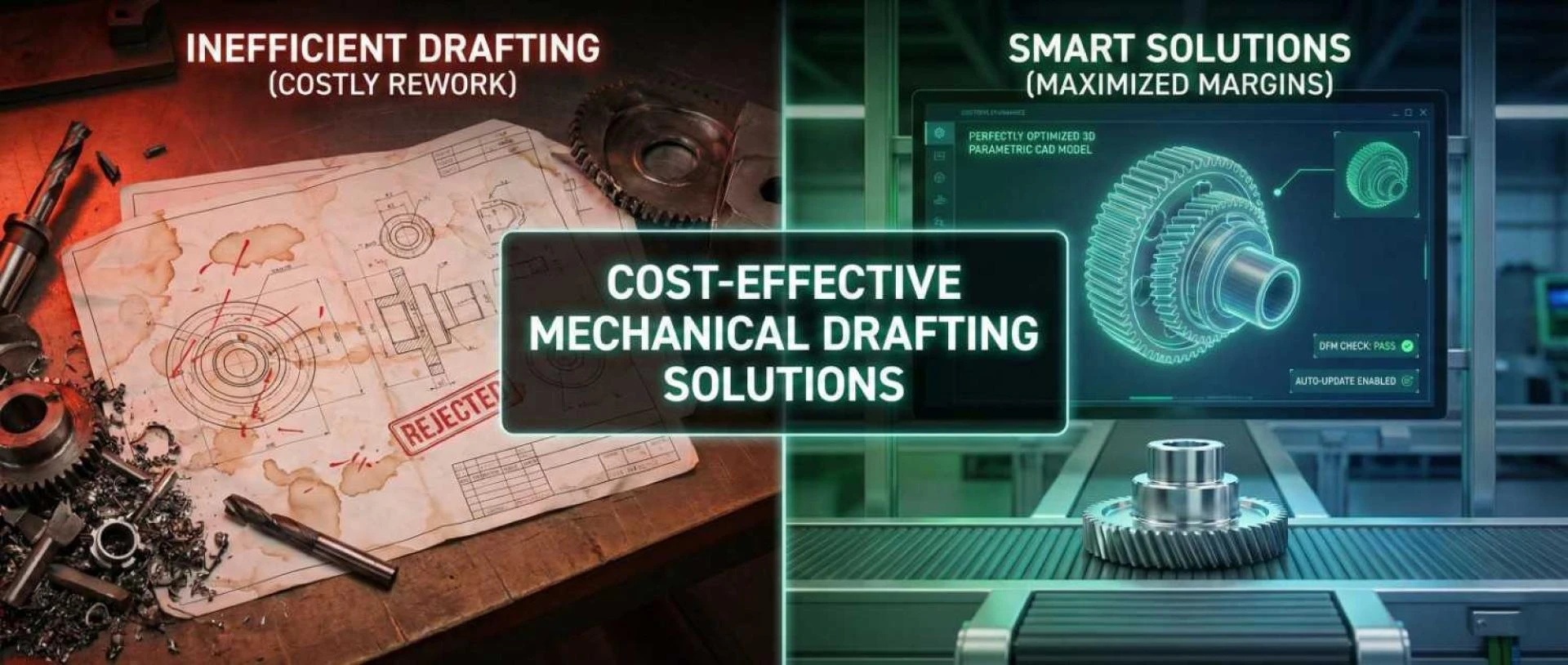
Design for Manufacturing (DFM): Ensuring the part can be cost-effectively produced using methods like CNC machining, injection molding, or sheet metal fabrication.
If we go back to the power tool example, the product designer (or mechanical engineer) is the one designing the internal motor housing, the heat dissipation system, and the specific screw torque required to hold the assembly together under vibration.
Key Differences at a Glance
To better visualize how these services deviate, consider this comparison table:
| Primary Goal | User experience, aesthetics, and ergonomics. | Functionality, manufacturability, and durability. |
| Perspective | "Outside-In" (Starting with the user). | "Inside-Out" (Starting with the mechanism). |
| Tools Used | Rendering software, clay models, sketching. | CAD (SolidWorks/AutoCAD), FEA, CFD analysis. |
| Main Constraint | Human factors and market appeal. | Physical laws, material limits, and production costs. |
Where the Lines Blur: The Collaborative Sweet Spot
In the modern engineering landscape, the gap between these two disciplines is narrowing. This is largely due to the rise of advanced 3D Modeling and Simulation tools.
A successful mechanical project requires a symbiotic relationship. If an industrial designer creates a sleek, ultra-thin housing for a hydraulic pump (ID) without consulting a product designer, they might find there is no room for the necessary cooling fans or valves (PD). Conversely, a product designer might create a perfectly functional internal mechanism that is impossible for a human to operate comfortably.
Integrated Design is the solution. By involving both industrial design services and mechanical product design from the start, firms can identify "clashes" early. This is where concepts like Finite Element Analysis (FEA) and Computational Fluid Dynamics (CFD) become invaluable, allowing engineers to validate the industrial designer’s aesthetic vision against real-world physics.
Which Service Do You Need?
The choice depends on where you are in your development journey:
Choose Industrial Design Services if: You have a functional prototype, but it’s "ugly," hard to use, or doesn't stand out against competitors. You need to define how the user will interact with the machine.
Choose Product Design/Engineering if: You have a great idea or a sketch but need to know if it can actually be built, if it will break under pressure, or how much it will cost to manufacture 10,000 units.
Two Sides of the Same Coin
In the mechanical and engineering industry, you cannot have one without the other. Industrial design provides the soul and the interface, while product design provides the skeleton and the muscle.
For companies looking to innovate, the goal shouldn't be to choose between them, but to integrate them. When form meets function through a disciplined engineering lens, the result is a product that doesn't just work, but excels in the marketplace.

























Sign in to leave a comment.