The automotive landscape has undergone a seismic shift. In 2026, Electric Vehicles (EVs) are no longer a niche alternative; they are the dominant vector of automotive engineering. Moving away from the mechanical complexity of Internal Combustion Engines (ICE), EVs represent a paradigm shift toward electrochemical energy storage and simplified drivetrain mechanics.
However, while the moving parts have decreased, the engineering challenges have become far more specialized. This overview explores the core mechanics, critical design considerations, and the future trajectory of electric vehicles.
The Anatomy of an EV Powertrain
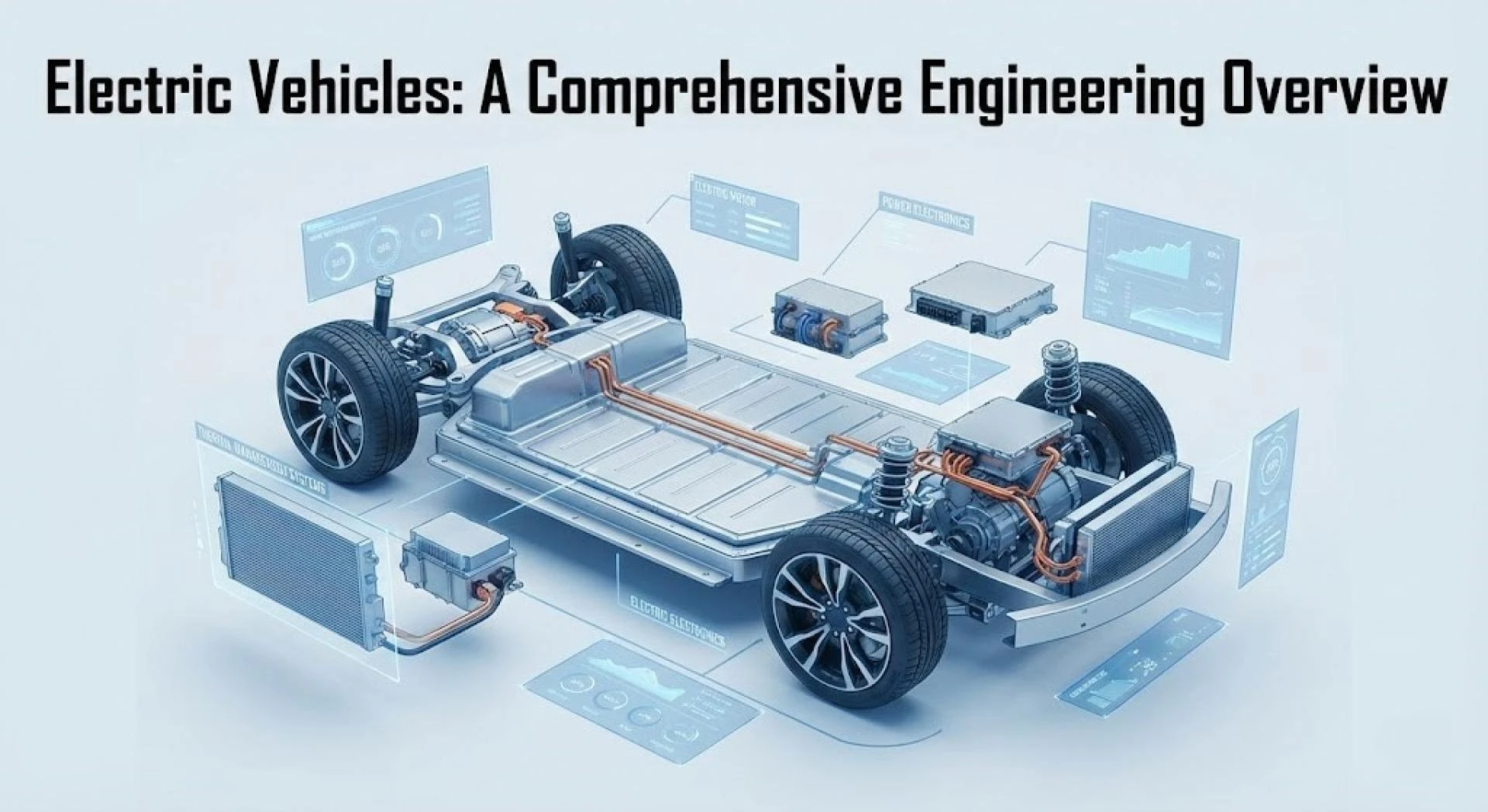
Unlike traditional vehicles that rely on thousands of moving parts to generate power through controlled explosions, an EV’s powertrain is elegantly efficient. The core architecture revolves around three primary components:
The Battery Pack: The beating heart of the EV, typically composed of thousands of individual lithium-ion (or newer solid-state) cells arranged in modules. It stores the massive amounts of electrical energy required for propulsion and auxiliary systems.
The Inverter: This critical component acts as the translator between the battery and the motor. It converts the Direct Current (DC) stored in the battery pack into the Alternating Current (AC) needed to drive the electric motor. It also regulates the flow of power based on throttle input.
The Electric Motor & Drivetrain: Using electromagnetism, the motor converts electrical energy into rotational mechanical energy. Because electric motors deliver maximum torque instantly from zero RPM, most EVs utilize a simple single-speed transmission. This drastically reduces mechanical friction, maintenance requirements, and overall drivetrain weight.
Mechanical Design Challenges in EV Development
While the drivetrain is simpler, designing a safe and efficient EV requires rigorous mechanical engineering. At Tesla Mechanical Designs, we see three primary engineering challenges dominating the EV development space:
1. Advanced Thermal Management Batteries, inverters, and motors generate immense heat during rapid discharge (heavy acceleration) and rapid DC fast charging. Designing highly efficient liquid-cooling channels, cold plates, and heat sinks is critical. Proper thermal management prevents thermal runaway, ensures passenger safety, and prevents premature battery degradation.
2. Aggressive Lightweighting Battery packs are exceptionally heavy. To achieve an acceptable driving range, mechanical designers must offset this weight elsewhere in the vehicle. This requires topological optimization and the use of advanced materials such as aluminum alloys, high-strength steel, and carbon fiber composites in the vehicle's chassis, brackets, and enclosure designs.
3. Packaging and Aerodynamics The absence of a massive front engine allows for a "skateboard" chassis design, placing the heavy battery flat along the floorboard for a superior center of gravity. However, this requires meticulous packaging of HVAC systems and auxiliary electronics. Furthermore, aerodynamic efficiency is paramount. Mechanical engineers must design sleek, drag-reducing body profiles, as even a minor reduction in the drag coefficient will significantly extend the vehicle's highway range.
The Road Ahead: 2026 and Beyond
The EV industry is advancing at a blistering pace. We are currently witnessing the commercialization of solid-state batteries, which promise higher energy density and faster charging times without the flammability risks of liquid electrolytes.
Additionally, the engineering focus is shifting toward the circular economy. Designing complex battery enclosures for easy disassembly (Design for Disassembly) is becoming a regulatory requirement, ensuring that valuable metals can be easily extracted and recycled at the end of the vehicle's life.
Conclusion
Electric vehicles represent the pinnacle of modern mechanical and electrical integration. They demand precision, innovative material science, and rigorous thermal design to operate safely and efficiently. As the global market continues its rapid expansion, the automotive manufacturers who prioritize intelligent, manufacturing-ready designs will be the ones leading the charge toward a sustainable future.
To read more industry insights or to explore our previous discussions on this topic, visit our original blog: Electric Vehicles – An overview.


























Sign in to leave a comment.