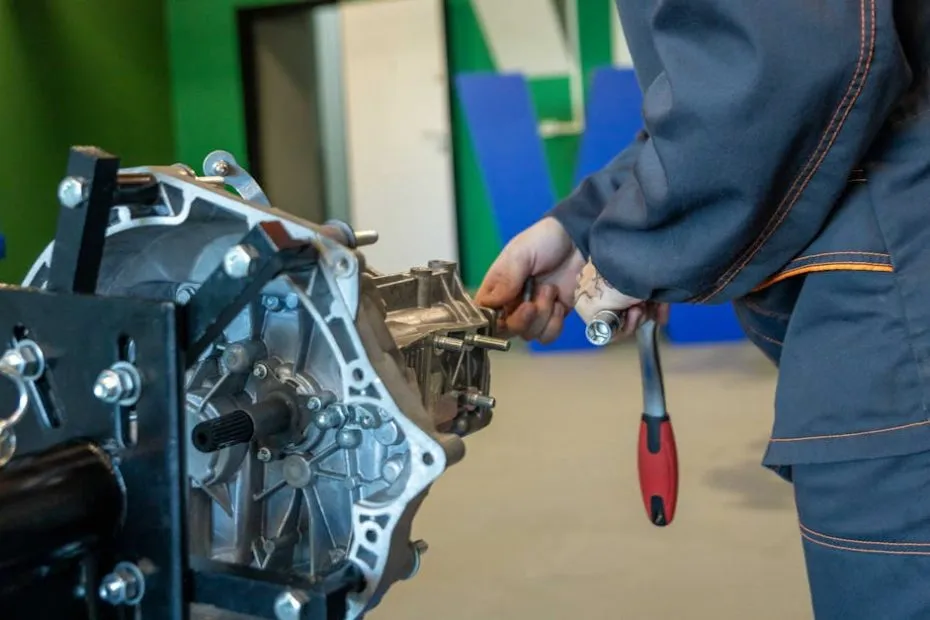

When a gearbox starts slipping, shuddering, or refusing to engage a specific gear, the first decision is not how to fix it but whether to fix it at all. Modern vehicles often have replacement units available that cost about the same as a full rebuild, and the calculus shifts depending on the age of the vehicle, the make, and how long the owner plans to keep driving it.
Reading the Early Warning Signs
Before it matters whether to rebuild or replace, the fault needs to be properly diagnosed. A professional gearbox assessment starts with a road test, followed by scanning the ECU for any stored codes, and finally a physical inspection of the fluid for metal shavings or a burnt smell.
A lot of symptoms point to the gearbox when the real problem is elsewhere. A slipping clutch can mimic a failing manual transmission, a faulty torque converter can feel like a slipping automatic, and a bad mount can cause vibrations that feel like internal wear. A proper diagnostic rules these out before any stripdown begins.
Early signs worth taking seriously include delayed engagement from park or neutral, hard shifts under load, grinding noises that sync with road speed, and fluid leaks from the bell housing. Each of these has a specific meaning that a qualified technician can interpret, and ignoring them usually turns a repair into a rebuild.
The Cost Logic
Rebuild costs depend on the extent of internal damage. A clutch and bearing refresh on a manual costs far less than a full automatic overhaul with new valve body, clutches, and torque converter. Getting a proper quote means getting the unit opened up and inspected rather than relying on a phone estimate.
Sourcing a second-hand gearbox for sale often works out cheaper than a full rebuild on the original unit, particularly for common makes where used stock is plentiful. For rarer models, rebuild is usually the cheaper path because second-hand units are either expensive or simply not available locally.
A third option, factory-reconditioned units, sits between the two. These come with warranty and have been through proper quality control, but carry a higher price tag than a generic used gearbox. For owners who plan to keep the car for several more years, the warranty usually pays for itself.
When Rebuild Makes More Sense
A rebuild makes sense when the vehicle is still in overall good condition, the owner plans to keep it for at least another three to four years, and the original gearbox is a known durable unit when properly serviced.
Searching gearbox near me and picking a specialist workshop that handles rebuilds daily usually gives better results than a general mechanic who handles rebuilds occasionally. Gearbox rebuild is specialised work, and experience with the specific make and model matters more than general engine-repair competence.
A rebuild also retains the serial numbers on the vehicle, which matters for resale, insurance, and warranty continuity on higher-end models. Insurance companies sometimes want proof that the unit matches the V5 or registration papers, and a replacement might complicate that paperwork.
When Replacement Wins
Replacement becomes the better choice when a rebuild cost approaches or exceeds the replacement cost, when the vehicle is already near the end of its sensible life, or when downtime for rebuild exceeds what the owner can tolerate.
A reputable gearbox service near me workshop will tell the owner honestly when replacement is the smarter call rather than pushing a more expensive rebuild. Good workshops don’t push every job toward the bigger invoice; they recommend what actually serves the customer.
Installation of a replacement unit usually takes a day, compared to several days or a week for a full rebuild. For vehicles that are critical for work or family logistics, that turnaround time can tip the decision even if the parts cost is slightly higher.
Picking a Workshop
Workshop choice matters more than the decision between rebuild and replace, because either option fails when done by an inexperienced hand. A workshop offering gearbox repairing near me services with a track record on specific makes is far safer than a cheaper generalist.
Reputation signals worth checking: how long the workshop has been operating, whether they carry specific brands regularly, whether the technicians are certified on automatic transmissions, and whether they offer any kind of post-repair warranty. A workshop that cannot answer these questions directly is usually not the right pick.
Price is the last filter, not the first. Choosing the cheapest quote on a gearbox repair is an easy way to end up back at another workshop three months later paying the difference plus tow costs. Cheapest quotes often skip steps that matter, like replacing all seals, properly testing the rebuilt unit, or using correct specification fluid.
Differentials Deserve the Same Attention
Worn or damaged differentials create very different symptoms from gearbox faults: whining noises at specific speeds, vibration under acceleration, and fluid leaks from the rear axle casing. These symptoms are easy to confuse with wheel bearing or driveshaft issues, which is another reason a proper diagnosis matters.
Differential repair, like gearbox work, splits into rebuild and replace decisions. Most differential rebuilds replace bearings, seals, and sometimes the crown and pinion. Full replacement is reserved for cases where the housing is cracked or multiple internal parts are beyond saving.
Fluid changes on differentials are often skipped during regular servicing, and this is one of the leading causes of premature failure. A differential fluid change every 60,000 to 80,000 kilometres extends the life of the unit significantly, and the cost is tiny compared to a rebuild.
Factoring in the Rest of the Vehicle
One rule worth keeping in mind: the gearbox decision should always factor in the rest of the vehicle. Pouring money into a rebuild on a car with worn suspension, a tired engine, and rust in the body makes less sense than finding a cleaner replacement vehicle.
Honest mechanics will sometimes recommend the owner sell the vehicle as-is and use the money as a deposit on a newer unit, rather than doing the repair. This conversation is uncomfortable but saves everyone money in the long run.
For vehicles in otherwise solid condition, though, a proper gearbox rebuild can add five to ten years of reliable service, which is usually far cheaper than replacing the whole vehicle. Done at the right workshop, with the right diagnosis, and the right follow-up service, it is money well spent. A short conversation with a gearbox specialist before making the call is usually the best place to start.



































Sign in to leave a comment.