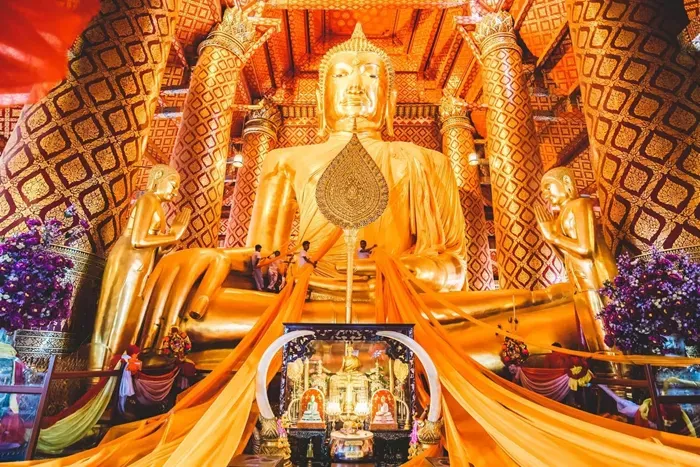

Thailand is often called the “Land of Smiles,” but it is also a land of deep Buddhist faith. Across the country, Buddha statues appear in temples, homes, forests, mountains, and even along roadsides. For many visitors, one question naturally arises: how many Buddha statues are there in Thailand? The simple answer is that no exact number exists. The real answer is far more meaningful. The number is vast, and it continues to grow.
In Theravāda Buddhism, which is the main tradition in Thailand, Buddha images are not just decorations. They are reminders of awakening. They represent the historical Buddha, Siddhartha Gautama, and also the ideal of enlightenment that all beings can reach. Because of this, creating Buddha statues is seen as a meritorious act. This belief has shaped Thai culture for centuries and explains why the number of statues is so large.
Is There an Exact Number of Buddha Statues in Thailand?

No Official Count Exists
There is no official record that counts every Buddha statue in Thailand. The country has more than 40,000 Buddhist temples, known locally as “wats.” Each temple contains multiple Buddha images. Some temples have dozens, while others have hundreds or even thousands.
In addition to temples, Buddha statues are found in:
Private homes
Shops and businesses
Public parks
Mountains and caves
Roadside shrines
Because many statues are privately owned or newly created, any attempt to count them would quickly become outdated.
Estimated Scale
While an exact number is not possible, scholars and cultural observers suggest that Thailand likely has millions of Buddha statues. This estimate comes from simple observation:
If each of the 40,000 temples has even 50 statues, that alone equals 2 million.
Many temples exceed this number.
Household statues add millions more.
Thus, it is reasonable to say that Thailand holds several million Buddha images, and the number continues to increase every year.
Why Are There So Many Buddha Statues?
The Practice of Making Merit
In Thai Buddhism, making merit is a central practice. Merit refers to positive spiritual energy created through good actions. Building or donating a Buddha statue is considered a powerful way to gain merit.
People create or sponsor statues for many reasons:
To honor deceased relatives
To express gratitude
To seek blessings
To support a temple
This tradition encourages continuous creation, which explains the large number of statues.
Buddha Statues as Teaching Tools
A Buddha statue is not worshipped as a god. Instead, it serves as a visual teaching. It reminds people of the Buddha’s qualities:
Wisdom
Compassion
Calmness
Detachment
When people see a Buddha image, they are encouraged to reflect on these qualities and develop them in their own lives.
Cultural and Historical Continuity
Thailand has been a Buddhist society for over 700 years. From the Sukhothai period to the present, rulers and communities have supported the creation of Buddha statues.
Each era added new styles and forms, but the purpose remained the same: to preserve and spread the teachings of the Buddha.
Types of Buddha Statues in Thailand

Standing Buddha
Standing Buddha statues often represent the act of giving reassurance. One common pose shows the Buddha with his right hand raised, palm facing outward. This gesture symbolizes protection and peace.
Sitting Buddha
This is the most common form. The Buddha is shown seated in meditation. The most famous posture is the “Maravijaya” pose, where the Buddha touches the earth. This represents the moment of enlightenment.
Reclining Buddha
The reclining Buddha represents the Buddha’s passing into Nirvana. It reminds followers of impermanence and the end of suffering.
Walking Buddha
Unique to Thai art, the walking Buddha shows movement and grace. It symbolizes mindfulness in daily life.
Famous Buddha Statues in Thailand
Wat Phra Kaew’s Emerald Buddha
Located in Bangkok, this statue is one of the most sacred in Thailand. It is small but highly revered. The king changes its seasonal robes three times a year.
Wat Pho’s Reclining Buddha
This giant statue measures 46 meters long. It represents the Buddha entering Nirvana. The feet are decorated with mother-of-pearl designs.
Big Buddha of Phuket
This modern statue stands 45 meters tall. It overlooks the island and has become a symbol of peace and unity.
Wat Muang’s Giant Buddha
One of the tallest Buddha statues in Thailand, it stands over 90 meters high. It reflects the modern continuation of statue-building traditions.
The Spiritual Meaning Behind Buddha Statues
Not Idols, but Symbols
In Buddhism, a Buddha statue is not considered a god. It does not possess supernatural power on its own. Instead, it represents the awakened mind.
When people bow before a statue, they are showing respect for the Buddha’s teachings, not worshipping the material object.
A Focus for Meditation
Buddha statues help practitioners focus their minds. By looking at the calm face of the Buddha, people can develop inner peace.
Many meditators use the image as a reminder to:
Sit still
Observe the breath
Let go of distractions
A Reminder of Impermanence
Even large and beautiful statues will one day decay. This reflects the Buddhist teaching of impermanence. Nothing lasts forever, not even sacred objects.
Materials Used in Buddha Statues

Stone and Bronze
Early statues were often made from stone or bronze. These materials were durable and suitable for temple settings.
Gold and Precious Materials
Some statues are covered in gold leaf or made from valuable materials. This reflects devotion and respect.
Wood and Clay
Smaller statues are often made from wood or clay. These are common in homes and local shrines.
Rules and Respect for Buddha Statues
Proper Conduct
In Thailand, Buddha statues are treated with great respect. Visitors should follow certain rules:
Do not climb on statues
Do not point feet toward them
Dress modestly in temples
Legal Protection
Thai law protects Buddha images. Exporting antique statues without permission is illegal. This helps preserve cultural heritage.
Modern Production of Buddha Statues
Continued Growth
New Buddha statues are created every day. Workshops across Thailand produce statues of all sizes.
Global Influence
Thai-style Buddha statues are exported worldwide. They can be found in homes, yoga studios, and temples across the globe.
Can the Number Ever Be Counted?
A Changing Number
Even if someone tried to count all Buddha statues in Thailand, the number would change daily. New statues are created, and old ones are repaired or replaced.
A Symbolic Perspective
From a Buddhist point of view, the exact number is not important. What matters is the intention behind each statue. Each one represents faith, generosity, and the wish for enlightenment.
Conclusion
Thailand does not have a fixed number of Buddha statues. The total likely reaches into the millions, and it continues to grow. These statues are not just objects. They are expressions of faith and tools for spiritual practice.
In Buddhist teaching, the outer form is less important than the inner meaning. A single small statue, if used with mindfulness, has as much value as a grand monument. Each image points toward the same truth: the possibility of awakening.
Thus, the question “how many Buddha statues are there in Thailand?” leads to a deeper reflection. The true measure is not in numbers, but in the sincerity of the people who create and honor them.
FAQs
Why do Thai people place Buddha statues in their homes?
People keep Buddha statues at home to create a peaceful environment. The statue serves as a reminder to live with mindfulness, kindness, and wisdom.
Is it disrespectful to take photos of Buddha statues?
Taking photos is generally allowed, but it should be done respectfully. Avoid inappropriate poses or behavior, and follow temple rules.
Can foreigners buy Buddha statues in Thailand?
Yes, foreigners can buy Buddha statues. However, exporting antique or sacred images may require permission from authorities.
What is the most common Buddha pose in Thailand?
The most common pose is the seated Buddha in meditation, especially the earth-touching gesture. It represents the moment of enlightenment.












Sign in to leave a comment.