
What if a textile could be designed to have UV protection, antimicrobial properties, flame resistance or a specific colour before the fabric is even made?
That is the basic idea behind masterbatch technology.
Instead of adding a functional treatment to a finished fabric, selected additives are introduced into the polymer during fibre production. The resulting fibre carries the desired property throughout its structure.
For textile manufacturers, this can be an attractive approach. But it also raises practical questions: Will the additive affect fibre strength? Will it survive processing? How much should be used? And will the functionality still work after the fibre becomes a finished textile?
Those questions are more important than simply knowing what masterbatch technology is.
What Is Masterbatch Technology?
A masterbatch is essentially a concentrated mixture of an additive and a carrier material.
The concentrate is added to the base polymer at a controlled ratio before the material is converted into fibres.
Depending on the formulation, the masterbatch may introduce:
- Colour
- UV resistance
- Flame-retardant properties
- Antimicrobial functionality
- Antistatic behaviour
- Conductivity
- Other specialised properties
The additive becomes part of the fibre rather than being applied only to its surface.
This distinction can be important when the finished product needs to withstand washing, abrasion or prolonged use.
Why Put Functionality Into the Fibre?
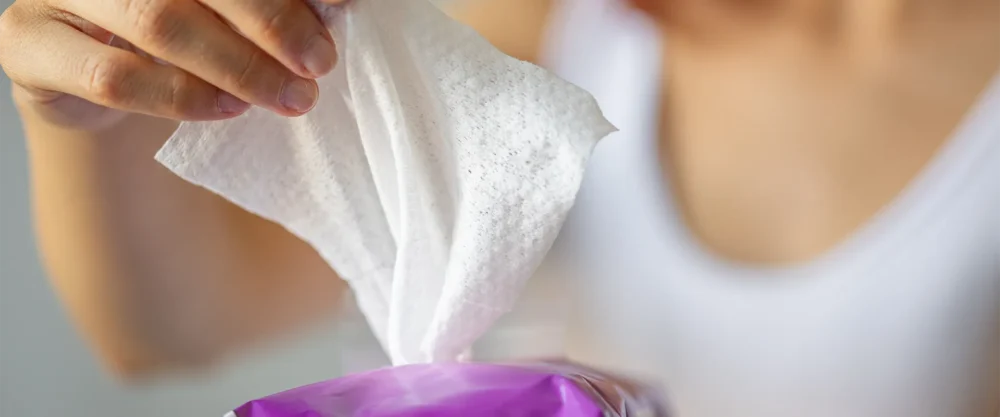
There are two broad ways of making a textile functional.
One option is to produce the fabric first and apply a finish afterwards.
The other is to modify the fibre itself.
Masterbatch technology belongs to the second approach.
One potential advantage is durability. A surface treatment can gradually be affected by washing or abrasion, whereas an additive incorporated into the fibre is not simply sitting on the outside.
There can also be manufacturing advantages because the functionality is introduced earlier in the production chain.
But the approach has limitations too. Once an additive is incorporated into a fibre, it can affect the polymer and spinning process. Getting the formulation right is therefore critical.
The Real Challenge: Adding Function Without Damaging the Fibre
This is where functional fibre development becomes more complicated.
Suppose an additive provides excellent UV protection. If adding it significantly reduces tensile strength or causes fibre breakage during spinning, the formulation may not be commercially useful.
The same issue can arise with antimicrobial or flame-retardant additives.
The developer has to balance:
Desired functionality + fibre performance + processing stability + cost
Adding more additive does not necessarily produce a better textile.
In many cases, the goal is to achieve the required functionality at the lowest practical concentration.
What Happens During Fibre Production?
The masterbatch and base polymer are mixed before or during extrusion. The mixture is then processed into fibres through the appropriate spinning process.
Several things need to work correctly.
The additive must disperse evenly
Poor dispersion can create areas with higher and lower additive concentrations. This can lead to inconsistent colour or functionality and may create defects in the fibre.
The additive must tolerate processing temperatures
Fibre production can involve significant heat. If the additive degrades during processing, the expected functionality may not appear in the finished fibre.
The additive must be compatible with the polymer
An additive that works well in one polymer may behave very differently in another.
The formulation must remain processable
Changes in melt viscosity or flow behaviour can affect extrusion and spinning.
These are reasons why a masterbatch should be evaluated as part of the complete fibre-production system.
What Can Go Wrong?
Understanding potential problems early can save considerable development time.
The fibre becomes weaker
Some additives can interfere with polymer structure or fibre formation, resulting in lower tensile strength or elongation.
Spinning becomes unstable
Poor dispersion or changes in melt behaviour can lead to inconsistent extrusion or fibre breakage.
The colour is inconsistent
This is particularly common when pigment dispersion is inadequate.
The desired functionality is too weak
The additive may be present, but its concentration, distribution or accessibility may not be sufficient to deliver the required performance.
The functionality changes after textile processing
A fibre may perform well on its own but behave differently after weaving, knitting, dyeing or finishing.
This last point is particularly important.
Does a Functional Fibre Guarantee a Functional Textile?
No.
A textile fibre eventually becomes part of a much larger system.
For example:
Fibre → yarn → fabric → dyeing/finishing → finished product
Every stage can influence the final result.
Fabric density can affect UV protection. Finishing can influence surface properties. Yarn construction can change mechanical behaviour.
Therefore, testing only the fibre does not provide a complete picture.
The final textile should be tested against the performance requirements of its intended use.
What Functions Can Masterbatch Provide?
UV Protection
UV additives can help protect the fibre and potentially improve the durability of products exposed to sunlight.
This may be useful in outdoor textiles, furnishings, sports products and technical applications.
Antimicrobial Performance
Certain antimicrobial additives can be incorporated into fibres where microbial growth or odour control is important.
However, the finished textile should be tested under realistic conditions rather than relying solely on the additive manufacturer's specifications.
Flame Resistance
Flame-retardant masterbatches can modify the combustion behaviour of selected polymer fibres.
The formulation needs careful evaluation because flame-retardant additives may affect mechanical and processing properties.
Antistatic and Conductive Properties
Functional additives can also be used to alter the electrical properties of fibres for specialised technical applications.
The required level of conductivity and the way the textile will be used determine whether this approach is suitable.
What About Colour?
Colour masterbatch is one of the most established uses of the technology.
Instead of relying entirely on dyeing after fabric production, pigments can be introduced into the polymer before spinning.
This can provide consistent colour throughout the fibre and may reduce the need for some downstream processing.
However, colour consistency still depends on good pigment dispersion, accurate dosing and compatible processing conditions.
Can This Approach Be Used With Cellulose Fibres?
This is where things become more application-specific.
Many masterbatch systems are designed for thermoplastic polymers such as polyester or polypropylene. Cellulose-based fibres follow different chemistry and processing routes.
As a result, a solution developed for a synthetic textile fiber cannot simply be transferred to cellulose.
When functionalising cellulose materials, factors such as chemical compatibility, fibre formation and the stability of the desired functionality need to be considered separately.
A cellulose consultant can be useful when a project involves modifying cellulose fibres or evaluating how a functional treatment interacts with cellulose chemistry.
How Should You Evaluate a New Masterbatch?
Before committing to production, it helps to establish a simple testing sequence.
Start with the required performance
Be specific about what the textile needs to achieve.
"UV resistant" or "antimicrobial" is not enough. Define the required level of performance and how it will be measured.
Test the fibre
Check:
- Tensile strength
- Elongation
- Fibre uniformity
- Thermal behaviour
- Appearance
- Processing stability
- Test the textile
Convert the fibre into the intended yarn and fabric structure and repeat the relevant performance tests.
Test durability
If the product will be washed, exposed to sunlight, flexed or subjected to chemicals, reproduce those conditions as closely as possible.
Evaluate production feasibility
A formulation that works on a small laboratory line must also be practical on the intended production equipment.
When Is Specialist Advice Worth Considering?
Functional fibre development crosses several disciplines. A manufacturer may understand fibre spinning extremely well but need additional expertise in polymer/additive interactions or textile performance.
This is where a fiber consultant can provide useful support.
Rather than simply recommending an additive, good fiber consultation should help answer:
- Why is the fibre behaving differently after adding the masterbatch?
- Is the additive concentration appropriate?
- Is poor dispersion causing the problem?
- Could another carrier improve compatibility?
- Is the loss of strength caused by the additive or the spinning process?
- Will the functionality survive downstream processing?
- Can the formulation be scaled economically?
Similarly, textile consulting becomes useful when the question moves from fibre performance to finished-product performance.
Depending on the project, textile consulting services may cover material selection, fibre development, process troubleshooting, testing and scale-up.
The Most Important Question Isn't “Which Masterbatch?”
It is tempting to start development by searching for a masterbatch that promises the required function.
A better starting point is the product itself.
Ask:
What does the finished textile need to do?
Then work backwards:
End-use requirement → required textile properties → required fibre properties → suitable additive → appropriate concentration → production process → finished-product testing
This approach reduces the risk of selecting an additive simply because it performs well in isolation.
Masterbatch Technology Works Best When the Whole System Is Considered
Masterbatch technology provides an effective way to introduce functionality during fibre production, but it is not a shortcut around material development.
The additive needs to be compatible with the polymer. The polymer needs to remain processable. The fibre needs to retain its mechanical properties. And the finished textile needs to deliver the promised functionality throughout its intended service life.
For manufacturers developing a new functional textile fiber, the most useful approach is therefore not to ask how many properties can be added.
It is to ask:
Which property matters most to the end user, and what is the most reliable way to build it into the material?
That question usually leads to better formulations, more focused testing and a more practical path from laboratory development to commercial textile production.























Sign in to leave a comment.