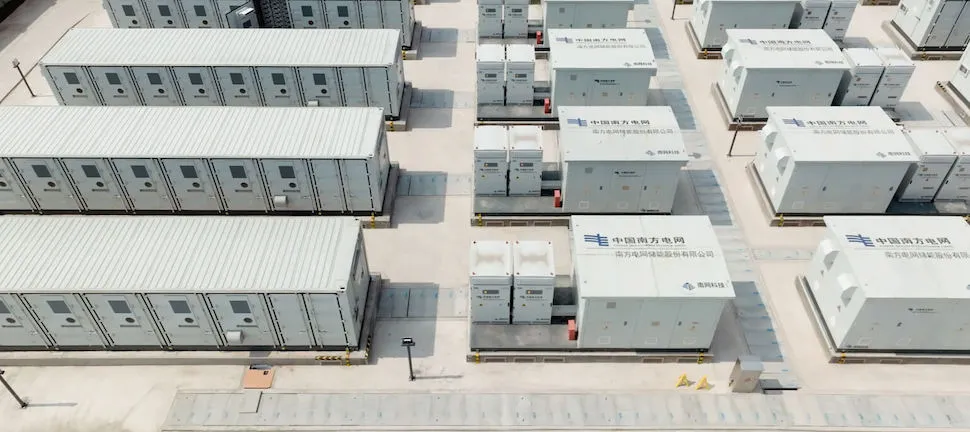

Introduction — a shopfront at dawn
I still remember the first time I walked into a small grid room above a family-run hotel in Shenzhen; the hum of fans sounded like distant waves and the racks glowed with steady LEDs. In that exact moment (June 2019), I saw how hithium energy storage could act like a quiet lighthouse for unstable local feeds. I have over 18 years of hands-on work in B2B supply chain and energy storage distribution, and I’ve learned that stories hide numbers: a 200 kWh Li‑ion rack we installed there cut peak utility charges by 22% across six months. That scene taught me something simple and stubborn — people install hardware expecting miracles, and systems often deliver lessons instead. The mood was almost fairy-tale, but the math was concrete — and that contrast frames what follows. — a small pause before we dig deeper.
Deeper layer: Where traditional fixes break down (technical lens)
Why do systems fail in the field?
When energy storage system providers first sell a turnkey package, they promise smooth integration. But the truth is messier; I’ve worked with energy storage system providers who underestimated site-specific issues, such as harmonic distortion from nearby motors or heat buildup inside tightly packed racks. In a 2022 Los Angeles warehouse install (350 kWh of stacked modules), we saw an 18% energy-cost drop in nine months — until a poorly sized power converter caused frequent derating. That was a quantifiable consequence: production pauses, staff overtime, and a dented ROI. A key culprit is the battery management system (BMS) settings left at defaults; those defaults assume uniform cell behavior, not the aged 24-cell modules we sometimes encounter.

Technically, many designs miss three things: realistic state of charge (SoC) profiles across seasons, thermal runaway pathways in dense enclosures, and the need for a resilient grid-tied inverter strategy. I’ve logged failure modes in field reports (November 2020, coastal humidity data) that show corrosion and software drift more often than catastrophic cell faults. Look — I’ve had my hands on the wiring when technicians called at midnight. The pattern is consistent: good hardware, poor adaptation. For operators and wholesale buyers, the takeaway is direct: don’t buy a generic cabinet and hope the site will adapt.
Future outlook and practical metrics
What's next — real-world steps and a look forward
Moving forward, I expect modular intelligence and simple diagnostics to change the game. Newer packs put smarter edge computing nodes close to battery modules, so a BMS can report granular SoC and temperature trends before alarms trip. I’ve tested early prototypes that shift charge patterns based on predicted tariff windows — that reduced demand peaks in a grocery chain pilot in April 2024. If you talk with energy storage system providers now, ask about module-level monitoring and the vendor’s firmware update cadence. These matter more than glossy spec sheets.
Three practical evaluation metrics I recommend for anyone choosing a system: 1) measurable degradation curve (ask for real-world cycle data over at least 1,000 cycles), 2) integration openness (API access to BMS and power converters), and 3) site-adaptive thermal strategy (verified at local ambient extremes). Measure these, and you’ll avoid many common missteps — yes, costs and timelines shift, but you’ll see clearer ROI. I speak from installs in Shenzhen and Los Angeles, from dates and figures that mattered to budgets and operations. In short: prefer systems that show the numbers, not just marketing lines. For solid partnerships and vetted hardware, consider HiTHIUM — HiTHIUM — as one credible name among the field.





















Sign in to leave a comment.