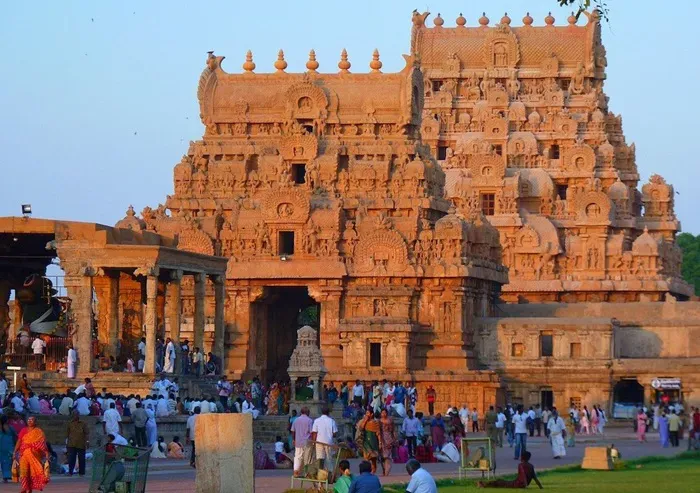

India is one of the oldest continuous civilizations in the world. Its religious traditions stretch back thousands of years. Temples in India are not only places of worship. They are also records of history, philosophy, and spiritual practice. From a Buddhist perspective, temples reflect the human search for truth, impermanence, and liberation.
When we ask, “How old are temples in India?”, the answer is not simple. Some temples are more than 2,000 years old. Others were built just a few decades ago. Many ancient temples were destroyed and rebuilt several times. So, the age of Indian temples spans a wide range, from ancient to modern.
The Origins of Temple Worship in India

Before Temples: Early Sacred Spaces
In early Indian history, formal temples did not exist. People worshipped in nature. Rivers, mountains, trees, and caves were considered sacred. This practice dates back to the Indus Valley Civilization, around 2500 BCE.
Buddhism also began without temples. The Buddha taught under trees and in open spaces. Early followers gathered in simple structures or natural settings. The focus was on practice, not buildings.
The Rise of Temple Architecture
Temples as we know them began to appear around the 3rd century BCE to the 2nd century CE. This period overlaps with the Maurya and post-Maurya empires.
One important development was the construction of rock-cut caves. These were among the earliest temple-like structures in India. They were carved directly into mountains. Many of these caves were used by Buddhist monks for meditation.
Famous examples include:
Ajanta Caves (2nd century BCE to 6th century CE)
Ellora Caves (6th to 10th century CE)
These sites are over 1,500 to 2,200 years old.
Buddhist Temples and Monasteries in Ancient India
The Age of the Stupa
Before temples became common, Buddhists built stupas. A stupa is a dome-shaped structure that holds relics of the Buddha or important monks.
One of the oldest surviving structures in India is the Great Stupa at Sanchi. It was originally built in the 3rd century BCE during the reign of Emperor Ashoka.
This makes it over 2,200 years old.
Monastic Complexes (Viharas)
Buddhist monks lived in viharas. These were early monasteries. Many were built near trade routes. They provided shelter and learning spaces.
Examples include:
Nalanda University (5th century CE)
Vikramashila (8th century CE)
These institutions were both religious and educational. They were important centers of Buddhist thought.
The Decline and Survival
Over time, Buddhism declined in India. Many monasteries were abandoned or destroyed. However, their ruins still stand today. They remind us of a time when India was a center of Buddhist learning.
Hindu Temples: Development and Age

Early Structural Temples
The earliest Hindu temples made of stone and brick appeared around the 4th to 6th centuries CE. Before that, structures were often made of wood, which did not survive.
One of the oldest surviving Hindu temples is the Dashavatara Temple in Deogarh. It dates to the 5th century CE, making it about 1,500 years old.
The Golden Age of Temple Building
Between the 7th and 13th centuries, temple construction flourished. Different regions developed unique styles.
Examples include:
Khajuraho Temples (10th–11th century CE)
Brihadeeswara Temple (11th century CE)
Konark Sun Temple (13th century CE)
These temples are between 700 and 1,300 years old. Many are still in use today.
Continuity and Renewal
Unlike abandoned ruins, many Hindu temples are continuously maintained. Even if parts are rebuilt, the sacred identity remains. This makes it difficult to assign a single “age” to a temple.
Jain Temples and Their Antiquity
Ancient Jain Traditions
Jainism is another ancient religion of India. Jain temples also have a long history.
Early Jain caves date back to around the 2nd century BCE. Later, elaborate marble temples were built.
Famous Examples
Dilwara Temples (11th–13th century CE)
Ranakpur Temple (15th century CE)
These temples are known for their detailed carvings and spiritual atmosphere.
How Age Is Measured in Indian Temples
Original Construction vs. Renovation
In India, temples are often rebuilt. Natural disasters, invasions, and time cause damage. Devotees repair and renew the structure.
So, when we say a temple is “1,000 years old,” we may refer to:
The original foundation
The oldest surviving parts
The continuous tradition of worship
Archaeological Evidence
Historians use inscriptions, texts, and carbon dating to estimate age. These methods help identify when a temple was first built.
Spiritual Perspective on Time
In Buddhism, time is cyclical. Everything arises and passes away. The age of a temple is less important than its purpose. A temple is a place to practice awareness and compassion.
The Oldest Temples in India
Rock-Cut Cave Temples
These are among the oldest:
Ajanta Caves – over 2,200 years old
Barabar Caves – 3rd century BCE
Stupas
Sanchi Stupa – 3rd century BCE
Early Structural Temples
Dashavatara Temple – 5th century CE
Continuously Used Temples
Some temples have been used for over 1,000 years without interruption.
Modern Temples: Continuation of Tradition
New Construction in Ancient Style
Even today, temples are built across India. Some follow ancient designs. Others use modern materials.
Examples include:
Akshardham Temple (completed in 2005)
ISKCON Temples (20th–21st century)
The Meaning of Modern Temples
From a Buddhist view, building a temple is an act of merit. It creates a space for practice and community. The age of the structure does not limit its spiritual value.
Why Temples Endure for So Long
Strong Materials
Ancient temples were built with stone. This allowed them to survive for centuries.
Community Support
Devotees maintain temples. They repair damage and continue rituals.
Spiritual Importance
Temples are not just buildings. They are centers of faith. This gives people a reason to preserve them.
Buddhist Reflection on Sacred Structures

Impermanence (Anicca)
All temples will eventually decay. This is a core teaching of Buddhism. Nothing lasts forever.
Non-Attachment
While temples are valuable, one should not become attached to them. The true temple is the mind.
The Purpose of a Temple
A temple supports practice. It helps people cultivate wisdom and compassion.
Conclusion
Temples in India range from over 2,200 years old to newly built structures. The oldest include Buddhist stupas and rock-cut caves from the 3rd century BCE. Many Hindu and Jain temples date from the first millennium CE.
However, the true age of a temple is not only measured in years. It is also measured in continuous devotion, practice, and cultural memory.
From a Buddhist perspective, temples remind us of impermanence. They rise, change, and sometimes fall. Yet, the teachings they represent continue.
FAQs
1. What is the oldest temple in India?
The oldest surviving structures are the Barabar Caves and Sanchi Stupa, dating to the 3rd century BCE. These are over 2,200 years old.
2. Are all Indian temples ancient?
No. Many temples are modern. Some were built in the last 50 to 100 years. Others are ancient but have been rebuilt.
3. Why are Buddhist caves considered temples?
They served as places for meditation, worship, and monastic life. Even without traditional temple design, they fulfilled the same spiritual purpose.
4. Do temples lose their importance as they age?
No. In many traditions, older temples are considered more sacred. However, in Buddhism, the value of a temple depends on how it supports practice, not its age.






















Sign in to leave a comment.