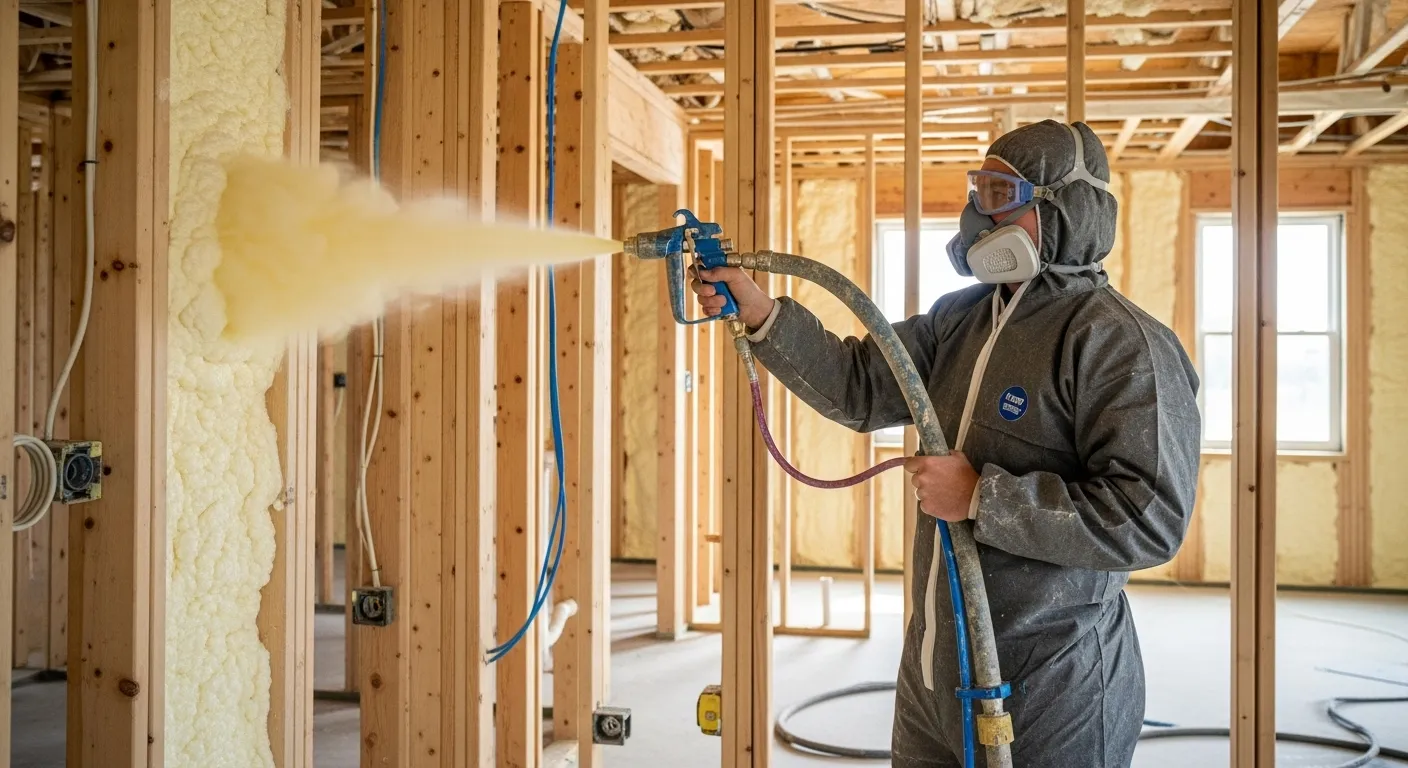

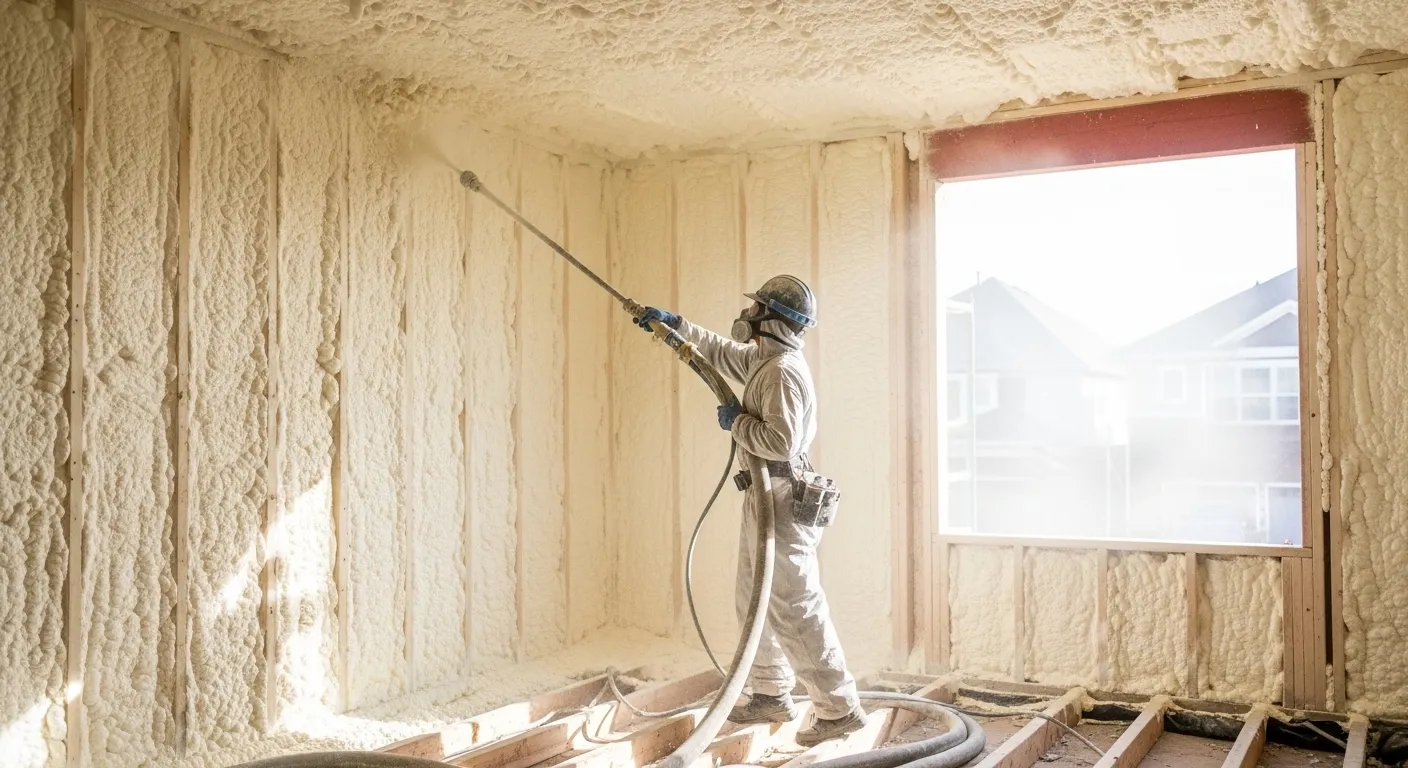
Open cell spray foam addresses the most frequent home performance issues by creating a custom-fit air barrier that traditional materials cannot match. It expands rapidly upon application to fill every gap and crack in your walls or attic, effectively stopping air leaks and reducing energy bills.
This material provides a high-performance solution for homeowners struggling with drafty rooms, inconsistent temperatures, and high noise levels. By choosing this modern insulation method, you ensure your living space stays comfortable throughout the year while protecting your property from air-driven moisture problems. The following guide offers practical details based on industry experience to help you understand how this technology works for your home.
The primary way spray foam stops energy loss
The most significant challenge in home insulation is air infiltration. Most houses lose about 40 percent of their heated or cooled air through small gaps in the building envelope. Traditional fiberglass batts or cellulose often leave small spaces around electrical outlets, plumbing stacks, and rim joists where air can pass through easily.
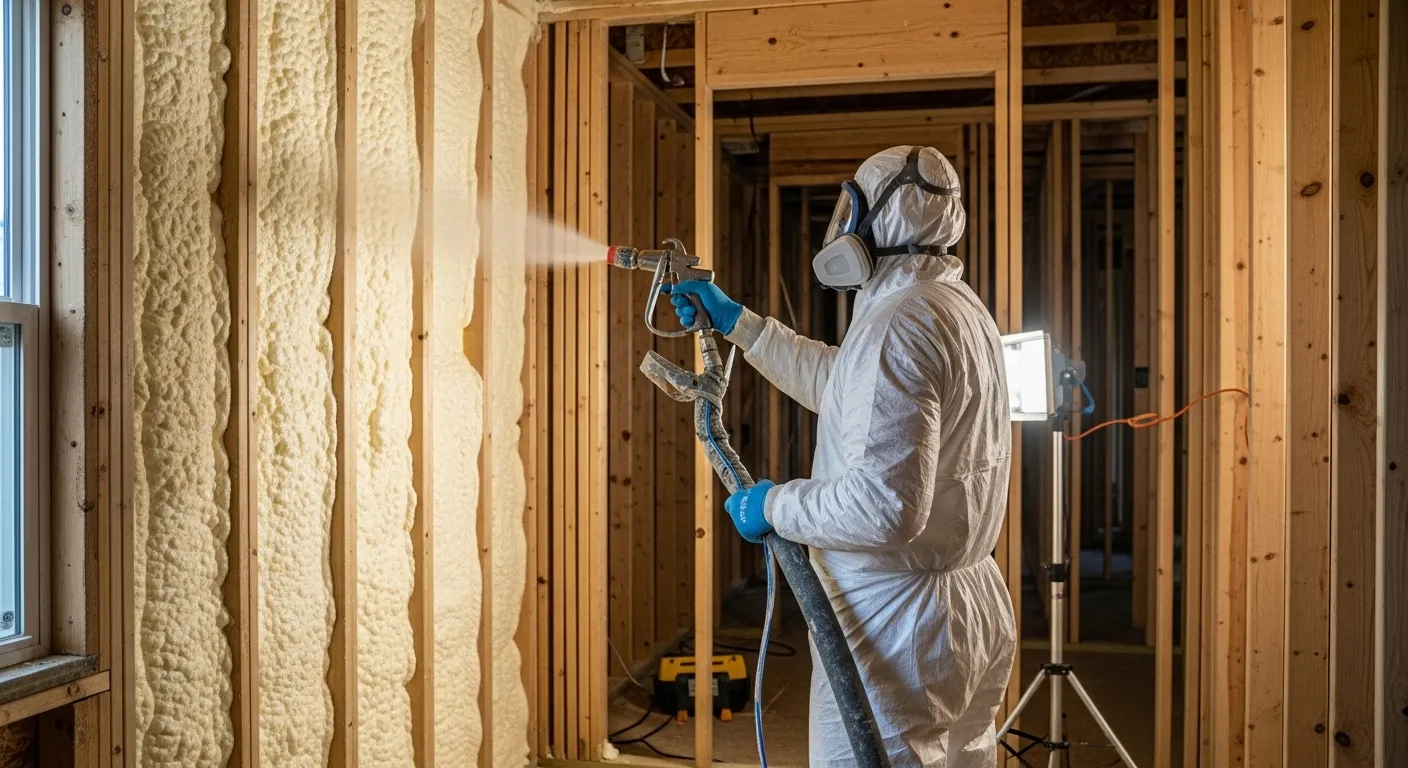
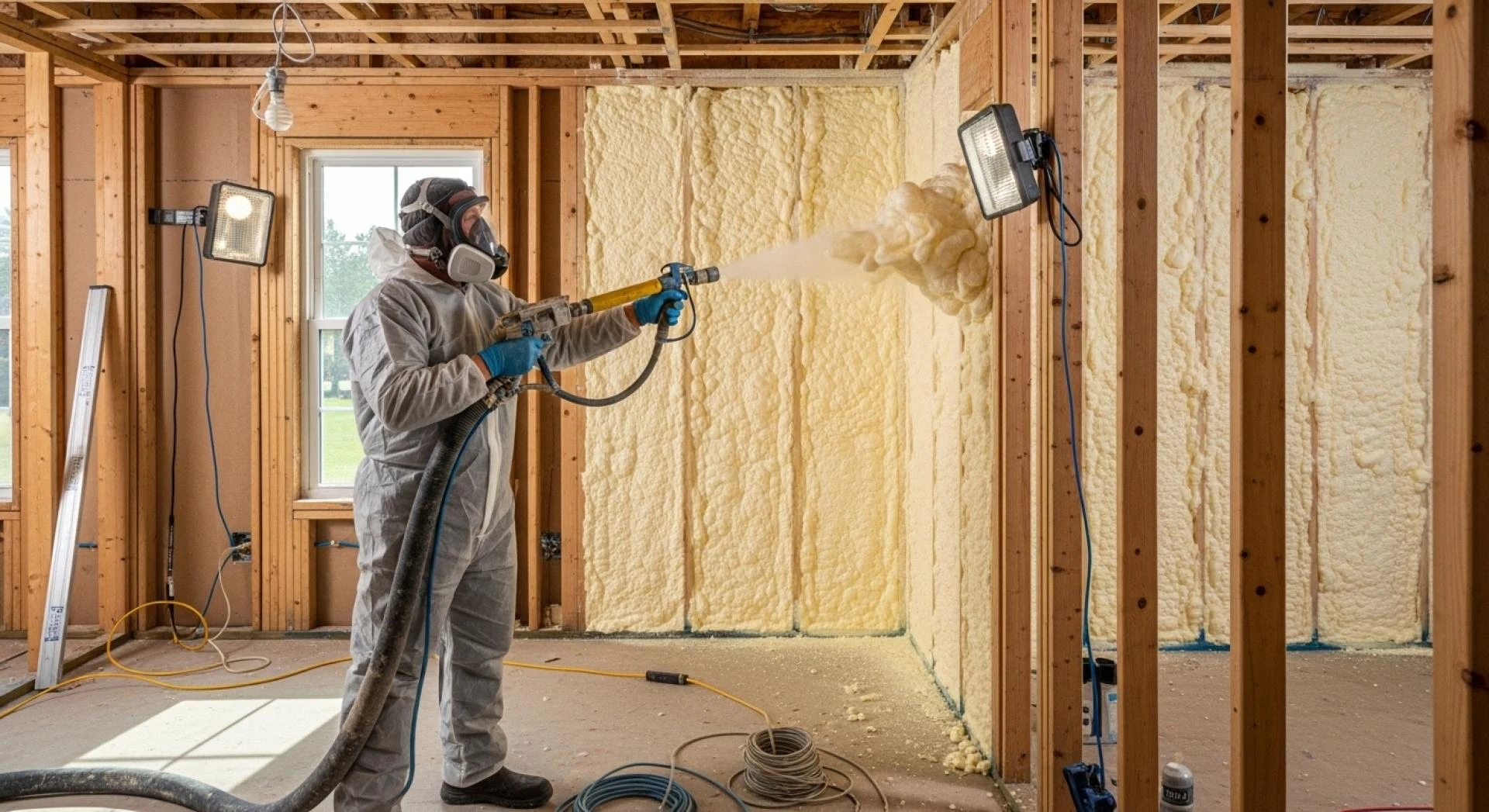
Open-cell foam solves this by expanding up to 100 times its original liquid volume. As it grows, it pushes into every tiny corner and seals the space completely. This creates a tight seal that prevents outdoor air from entering and indoor air from escaping. You notice the difference immediately when your furnace or air conditioner runs less frequently to maintain your desired temperature.
Bonus Tip: Check your attic hatch or pull-down stairs. These are often the biggest sources of air leaks in a home. Applying a seal or using a foam cover in these areas can significantly improve the performance of your new insulation.
How does open-cell spray foam improve indoor quietness?
Homeowners often deal with noise pollution from busy streets, sirens, or even loud neighbors. Standard insulation materials are often too light or porous to block sound waves effectively. Open-cell spray foam has a unique, sponge-like structure that is specifically designed to absorb sound.
Because the cells in the foam are not completely closed, they act as tiny chambers that trap sound vibrations. When sound hits the foam, the energy is dissipated within the material rather than passing through to the next room. This makes it an excellent choice for interior walls, media rooms, or bedrooms where you want a quieter environment.
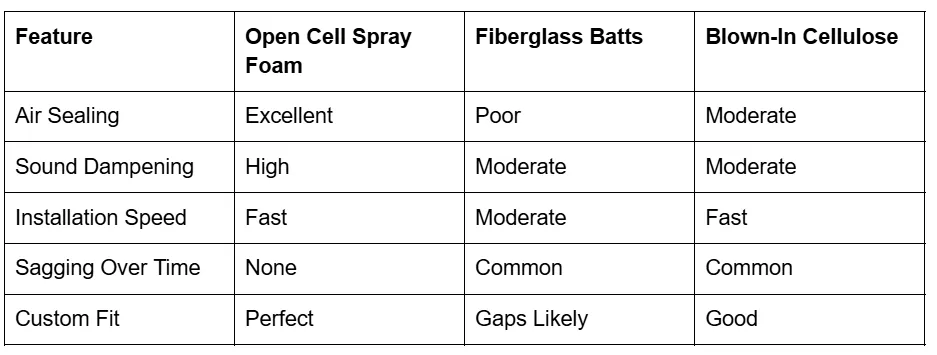
Performance comparison of common materials
Managing moisture and breathability in the home
One of the biggest worries for any property owner is mold or wood rot caused by trapped moisture. Some people assume that a tighter house is more prone to these issues, but the opposite is true if you use the right materials. Open-cell spray foam is vapor-permeable, which means it allows moisture to move through it at a controlled rate.
This breathability is helpful in many climates because it allows the wooden components of your home to dry out if they ever get wet. If a roof leak occurs, the water will travel through the open-cell foam, making the leak visible so you can fix it. Other materials might trap the water against the wood, leading to hidden rot that you won't notice until the damage is severe.
Solving the problem of hot and cold spots
You might have a room that is always five degrees colder than the rest of the house in the winter. This usually happens because of "thermal bridging" or poor air sealing in a specific wall or floor section. Conventional insulation can settle or sag over several years, leaving the top of the wall cavity empty and uninsulated.
Spray foam adheres directly to the building materials and does not settle or shrink. Once it is installed, it stays in place for the life of the building. This permanent bond ensures that your insulation values remain consistent from the day of installation through the next several decades. By maintaining a steady R-value across every square inch of the wall, you eliminate the cold spots that make certain rooms uncomfortable.
Regional climate guidance for insulation projects
In regions like the Pacific Northwest or the Inland Northwest, homes face a wide variety of weather patterns. You might deal with freezing temperatures in the winter and dry heat in the summer. Open-cell foam is particularly effective in these areas because it handles the expansion and contraction of wood framing quite well.
Because it is flexible, the foam moves with your house as the seasons change. In colder climates, it is often used in unvented attic designs. This moves the thermal boundary of your home to the roofline, keeping your HVAC equipment and ductwork inside a conditioned space. This single change can lower your heating costs by a significant margin.
Bonus Tip: If you are insulating a crawl space in a damp climate, ensure you also look at a vapor barrier on the ground. Combining spray foam on the walls with a floor liner provides the best protection against humidity.
Factors to consider before starting your insulation upgrade
Before you decide on a specific material, you should look at the existing state of your home. If you have old insulation that is wet or infested with pests, it must be removed completely before applying new foam. Spraying over dirty or wet surfaces will prevent the foam from sticking properly.
You should also think about the depth of your wall studs. Open-cell foam has a lower R-value per inch than closed-cell foam, so you need more thickness to reach the same insulation level. However, since it is more cost-effective, it is often the better choice for standard 2x6 or 2x4 walls where you have enough space to fill the cavity.
- Check for any active roof leaks or plumbing issues.
- Ensure your home has proper ventilation for gas appliances.
- Clear out personal items from the attic or crawl space to give the crew room to work.
- Confirm that the temperature is within the right range for the chemical application.
Thermal efficiency and long-term savings
While the initial cost of spray foam might be higher than traditional fiberglass, the long-term savings often make up for the difference. Market data suggests that homes with professional air sealing and high-quality insulation can save up to 15 percent on heating and cooling costs annually. Over ten or twenty years, these savings pay for the installation itself.
Additionally, a well-insulated home has a higher resale value. Buyers today are very conscious of energy efficiency and utility costs. Showing that your home is sealed with modern spray foam can be a strong selling point when it comes time to move. It demonstrates that the property has been maintained with high-quality materials that prioritize comfort and durability.
Reaching difficult areas with spray foam technology
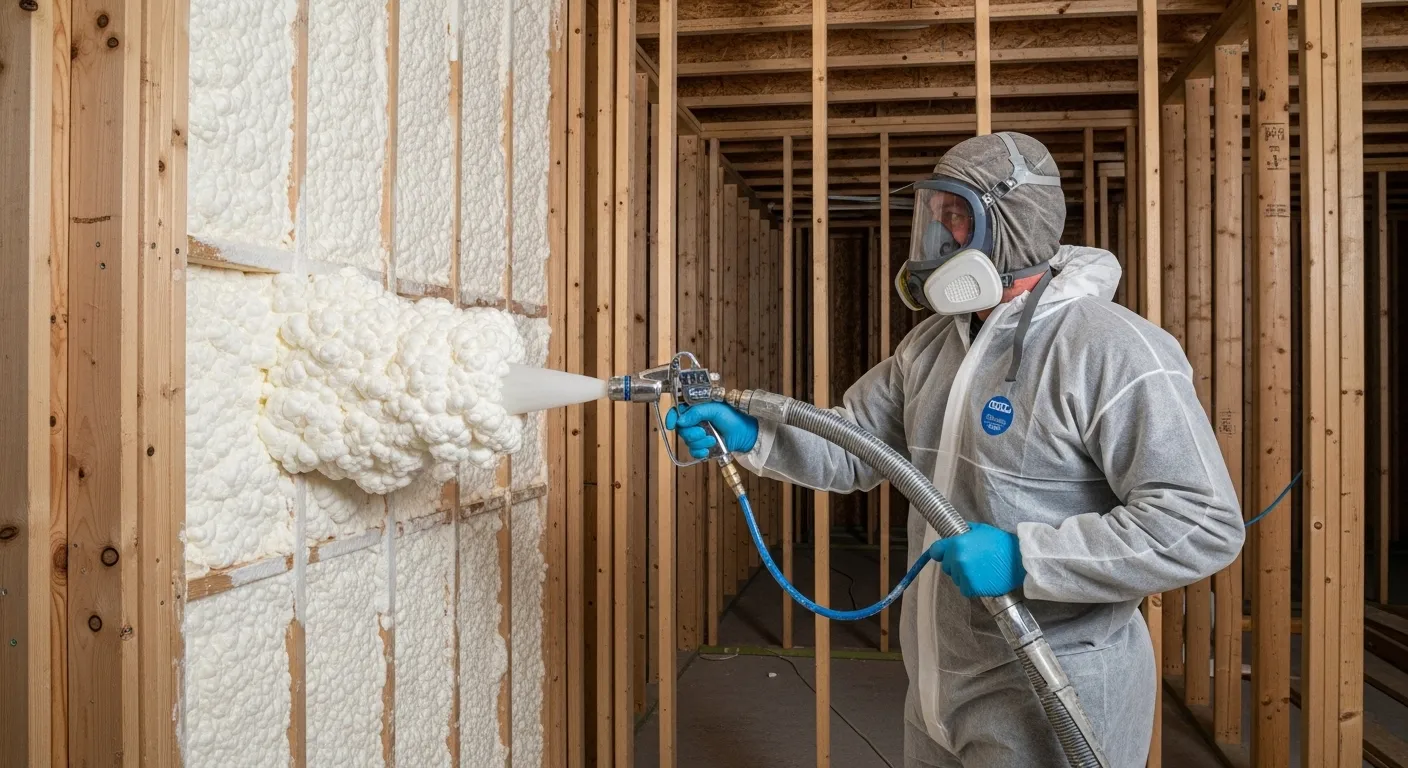
Many older homes have "unreachable" spaces like knee walls, cathedral ceilings, or narrow rim joists. Trying to fit fiberglass batts into these areas is often frustrating and ineffective, as the gaps left behind allow air to bypass the insulation. Spray foam is the only material that can be injected or sprayed into these tight spots to create a perfect fit.
The liquid application allows the material to flow behind wires and pipes before it starts to expand. This ensures that the most difficult parts of your home's structure are just as well-protected as the flat, open walls. This level of coverage is what separates a standard insulation job from a high-performance energy retrofit.
Direct advice for your home comfort goals
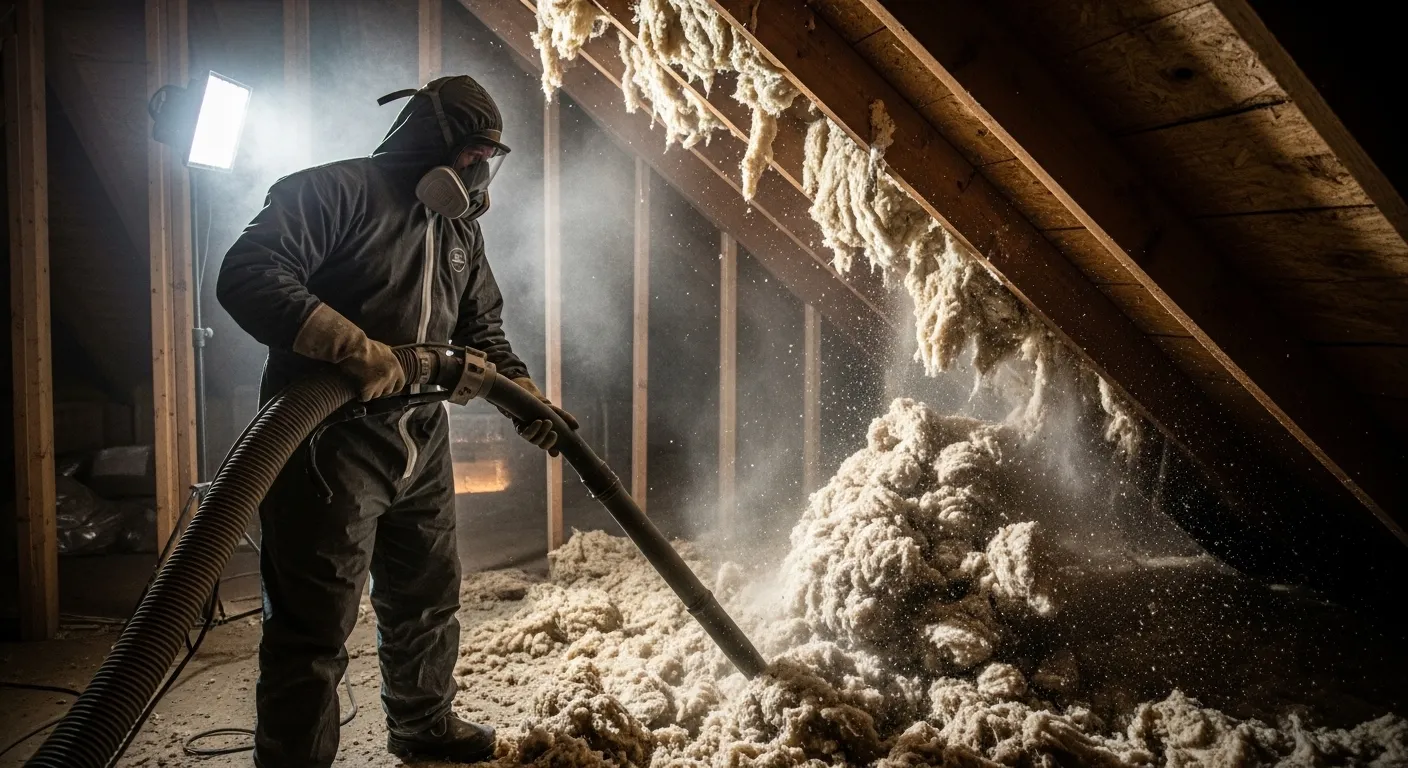
Evaluating your home's needs requires looking at your local weather, the age of your structure, and your budget. Open-cell spray foam is a versatile tool that solves air leakage and noise issues simultaneously. You should weigh the benefits of a permanent, airtight seal against the temporary fix of adding more blown-in material. Taking the time to plan your insulation strategy now will result in a more comfortable and efficient home for years to come.
Expert assistance for your next insulation project
If you want to improve your home's efficiency, contacting a professional can help you choose the right approach. For residents looking for reliable service, Selkirk Energy Solutions provides expertise in both residential and commercial projects. They offer a wide range of services, including air sealing and crawl space encapsulation to ensure your property is fully protected. You can reach their team at (208) 295-9780 or by sending an email to [email protected] for more information or to request a free quote for your project. Their staff can help you determine if open-cell foam is the best fit for your specific building challenges.
Common questions about open-cell spray foam
Does open-cell spray foam have an odor after installation?
The foam may have a slight odor during the application process, but this dissipates quickly with proper ventilation. Most people can return to their homes within 24 hours of the job being completed.
Can open-cell foam be used in a basement?
Yes, it is often used on basement walls above the grade line. However, it should not be used in areas where it will be in direct, constant contact with bulk water or submerged.
Is this material safe for the environment?
Modern spray foam products are designed with low global warming potential and do not contain ozone-depleting chemicals. Once cured, the foam is inert and does not release harmful gases into your living space.
Will spray foam stop my pipes from freezing?
By sealing the gaps where cold air enters the wall cavity, spray foam significantly reduces the risk of frozen pipes. It keeps the warmth of your home around the plumbing.
How long does the installation take for a standard house?
Most residential insulation projects can be finished in one to two days. The speed depends on the size of the area and how much prep work is needed to remove old materials.
























Sign in to leave a comment.