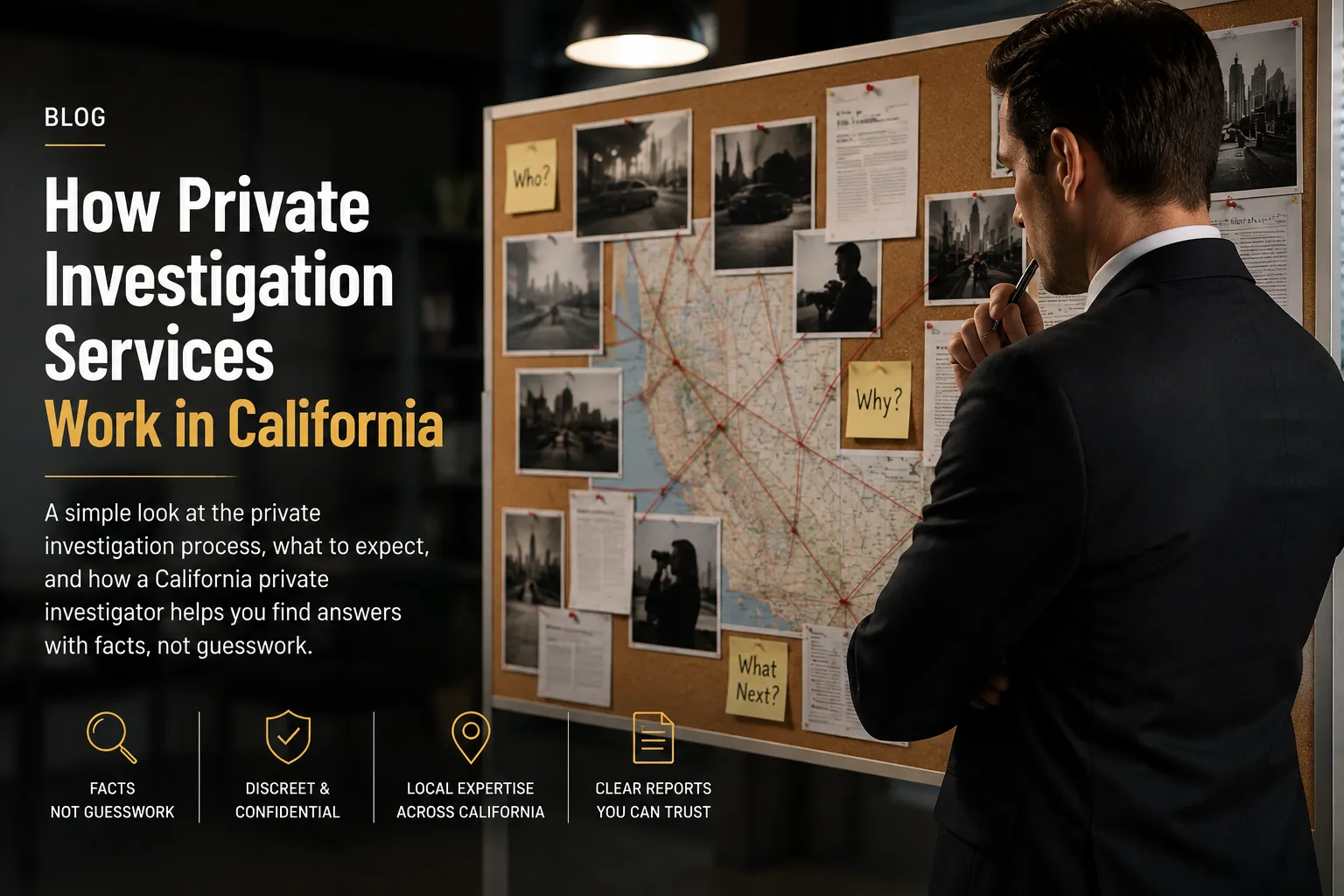

If you've never hired a private investigator before, the whole idea can feel a little mysterious. What actually happens once you make that first call? How do they gather information? Is any of it going to hold up if you need it for something official?
A California private investigator does much more practical work than most people expect. It's mostly research, patience, and careful documentation, not car chases or dramatic confrontations. This article walks through how the process actually works, from the first conversation to the final report.
What Is a Private Investigator, Exactly?
A private investigator is a licensed professional who gathers information and evidence for individuals, attorneys, or businesses. In California, this work falls under private investigation, which is regulated by the state to make sure the person doing it has met certain background and training requirements.
People hire a private investigator California wide for all kinds of reasons. Some are personal, like confirming a suspicion about a relationship. Others are legal or financial, like supporting a court case or looking into a fraud claim.
How the Investigation Process Usually Works
Every case is a little different, but most investigations follow a similar path from start to finish.
Step 1: The Initial Consultation
This is where you explain your situation and what you're hoping to find out. A good investigator will ask questions to understand the full picture before offering any opinions on what's possible.
This conversation is also where you should ask about licensing, experience, and how they typically handle cases like yours.
Step 2: Case Evaluation
Once the investigator understands your goal, they'll explain what a realistic plan looks like. This includes what methods they'll use, roughly how long it might take, and what it's likely to cost.
Not every case needs the same approach. A records search is very different from an ongoing surveillance case, so this step helps set expectations early.
Step 3: The Investigation Itself
This is where the actual work happens. Depending on the case, it might include:
- Surveillance in public places
- Reviewing public records
- Interviewing people who are willing to talk
- Verifying documents, addresses, or employment information
- Locating someone who has been hard to find
Every California private investigation has to stay within legal boundaries. Investigators can't trespass on private property, tap phones without consent, or pretend to be law enforcement.
Step 4: Reporting the Findings
Once the investigation is complete, you'll receive a report. Depending on the case, this might include photos, timestamps, written summaries, or copies of records. If the findings are meant to support a legal case, the investigator may also coordinate directly with your attorney.
Step 5: Next Steps
Some cases end once you have your answer. Others continue if new information comes up or if the findings lead to a legal process, like a custody hearing or an insurance dispute.
Common Private Detective Services in California
People search for private detective services California wide for a wide range of situations. Some of the most common include the following.
Infidelity and Relationship Cases
This is one of the most common reasons people reach out. Someone wants clarity about a relationship before making a major decision, and surveillance or verification work can help provide real answers instead of guesswork.
Child Custody and Family Law Cases
Family court often depends on documentation, not just testimony. An investigator can help confirm whether a custody agreement is being followed or document living conditions that may affect a child's safety.
Missing Persons
Whether it's a family member who has gone quiet or someone who needs to be located for legal reasons, investigators use records, interviews, and tracing techniques to help track people down.
Corporate and Workplace Investigations
Businesses hire investigators for background checks, internal theft concerns, workers' compensation claims that seem inconsistent, or general due diligence before a major decision.
Fraud and Financial Cases
This can include insurance fraud, scams targeting family members, or general financial disputes that require a documented timeline of events.
What Clients Should Expect During an Investigation
Clear Communication
You should never feel left in the dark. A professional investigator will keep you reasonably updated and explain what's happening without oversharing sensitive details that could complicate the case.
Legal and Ethical Boundaries
A licensed investigator will always explain what is and isn't legally possible. If someone offers to do something that sounds questionable, that's a sign to look elsewhere.
Realistic Timelines
Simple cases, like verifying an address, might only take a few days. More involved cases, like ongoing surveillance, could take several weeks depending on the person's schedule and habits.
Privacy and Confidentiality
Your information should stay private. A reputable investigator only shares findings with you or your legal representative, unless the law requires otherwise.
How Much Do Private Investigator Services Cost in California?
Costs vary depending on the type of case and how much work is involved. A basic records search usually costs far less than a multi day surveillance case, since surveillance requires more time, and sometimes more than one investigator.
Rather than expecting a flat rate, most firms will give you a direct quote once they understand your specific situation. It's reasonable to ask for this in writing before agreeing to move forward.
How Long Does a Private Investigation Take?
There's no single answer, since timelines depend entirely on the case.
- A records search or background check might take a few days.
- Locating a person could take anywhere from a few days to a couple of weeks.
- Surveillance cases often take longer, especially if the person being observed has an unpredictable schedule.
If timing matters for your situation, mention this during your first conversation so the investigator can be upfront about what's realistic.
Is Private Investigation Legal in California?
Yes. Private investigators in California must be licensed through the California Bureau of Security and Investigative Services, known as BSIS. This involves background checks, meeting experience requirements, and passing a state exam.
Because legal boundaries around surveillance and evidence gathering can be detailed, it's a good idea to confirm anything you're unsure about directly with BSIS or an attorney, especially if your case may end up in court.
Final Thoughts
Private investigation work in California is a lot more practical than most people expect. It's built on research, patience, and careful documentation rather than anything dramatic. Whether you're dealing with a personal matter, a legal case, or a business concern, understanding how the process works can make the experience feel a lot less uncertain.
If you're considering hiring a California private investigator, take the time to ask questions, confirm their licensing, and be clear about your goals from the start. A good investigator won't just hand you information. They'll help you understand what it means and what steps make sense next.
Frequently Asked Questions
What does a private investigator actually do day to day?
Most of the work involves research, records review, interviews, and surveillance in public spaces. It's careful and methodical rather than dramatic.
How do I know if a private investigator is licensed?
Ask for their BSIS license number and verify it directly through the state. Any legitimate investigator will provide this without hesitation.
Can the evidence be used in court?
Often, yes, as long as it's gathered legally and documented properly. It's best to involve your attorney early if the case may go to court.
Is hiring a private investigator confidential?
Yes, in most cases. A professional investigator only shares findings with you or your attorney, unless the law requires otherwise.
How much does it usually cost?
It depends on the case. Simple searches cost less than ongoing surveillance, so it's best to get a direct quote based on your situation.





























Sign in to leave a comment.