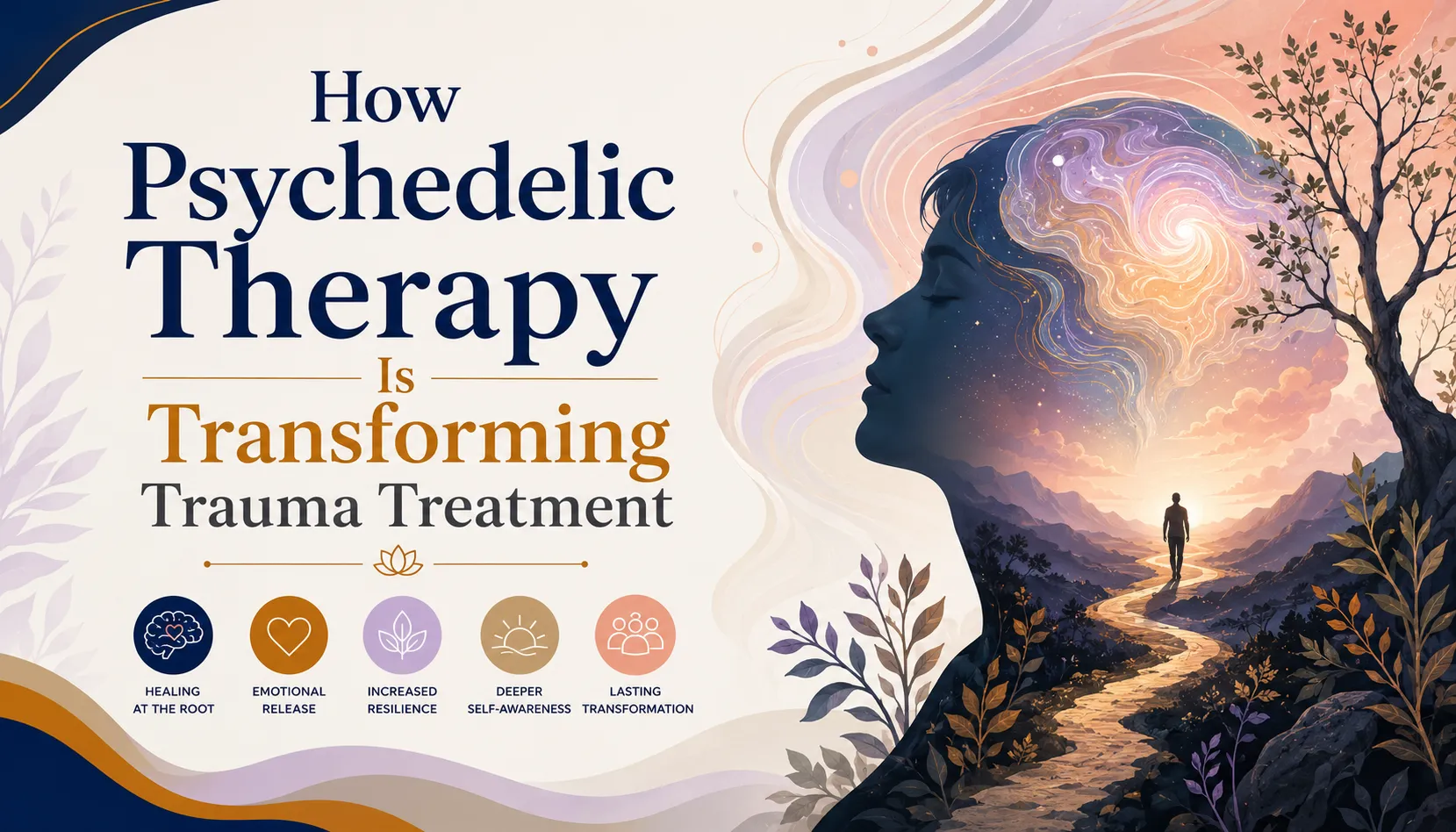

For many people living with trauma, traditional approaches like talk therapy and medication can feel like they only skim the surface of what hurts. While these methods remain essential, a new wave of clinical research is opening different pathways for healing. psychedelic therapy has emerged as one of the most closely studied and cautiously promising approaches for conditions rooted in deep psychological distress, including PTSD, childhood trauma, and treatment-resistant depression. Rather than focusing only on symptom management, this approach aims to support individuals in revisiting and processing traumatic experiences in a way that may feel more integrated and less overwhelming.
Rethinking Trauma Treatment Pathways
Trauma is not just a memory—it is often stored in the body and nervous system. Many individuals with PTSD experience heightened alertness, emotional numbing, or intrusive memories that feel difficult to control. Conventional therapies such as Cognitive Behavioral Therapy (CBT) and Eye Movement Desensitization and Reprocessing (EMDR) can be effective, but they sometimes require prolonged engagement before significant relief is felt.
Newer clinical models are exploring how altered states of consciousness, when carefully guided in a medical setting, may help patients access emotional material that is otherwise difficult to reach. This is not about escaping reality, but rather creating a controlled environment where deeply embedded memories can be processed with professional support.
How It Works in Clinical Settings
In structured therapeutic environments, patients are typically supported by trained clinicians before, during, and after sessions involving psychedelic compounds. The experience itself is not meant to be recreational; it is intentionally guided with safety protocols, screening processes, and psychological preparation.
During sessions, individuals often report a shift in perspective—memories that once felt fragmented or overwhelming may be experienced with greater emotional distance or clarity. This can allow patients to engage with traumatic material without becoming fully overwhelmed by fear responses that usually accompany recall.
Importantly, the therapeutic value is not only in the session itself but also in the integration process that follows. Integration therapy helps individuals make sense of their experiences, translate insights into daily life, and build healthier coping mechanisms over time.
Neuroscience Behind Healing
Research suggests that certain psychedelic compounds may temporarily reduce activity in the brain’s default mode network (DMN), a system associated with self-referential thinking and rigid thought patterns. In trauma survivors, this rigidity can reinforce cycles of fear, shame, or avoidance.
By loosening these patterns, the brain may become more flexible, allowing new neural connections to form. This state of increased neuroplasticity is one reason researchers are interested in how these therapies might support long-term emotional processing. Early clinical trials have shown promising outcomes, particularly in individuals who have not responded well to conventional treatments.
That said, researchers continue to emphasize that these interventions are not standalone cures. They are most effective when combined with psychotherapy, structured support, and careful medical oversight.
Integration and Emotional Processing
One of the most critical components of this approach is integration. Without it, even profound experiences may not translate into lasting psychological change. Integration sessions often involve discussing emotional insights, identifying behavioral shifts, and reinforcing grounding techniques.
For trauma survivors, this phase can be especially important. It helps bridge the gap between altered states of awareness and everyday functioning. Therapists may also help patients navigate difficult emotional reactions that arise after sessions, ensuring that the healing process remains stable and supported.
Evidence and Clinical Research
Clinical interest in this field has grown significantly over the past decade. Studies conducted at major research institutions have examined compounds like psilocybin and MDMA-assisted protocols for PTSD, with some showing reductions in symptom severity after a limited number of sessions.
MDMA-assisted therapy, in particular, has received attention for its ability to reduce fear responses while allowing individuals to remain emotionally engaged with traumatic memories. However, regulatory approval is still evolving, and access remains limited to clinical trials and approved treatment programs in certain regions.
Despite the optimism, experts continue to stress the importance of ethical safeguards, therapist training, and long-term data collection before widespread adoption.
Challenges and Ethical Considerations
As with any emerging mental health treatment, there are important concerns to address. These include ensuring informed consent, preventing misuse outside clinical settings, and maintaining rigorous standards for practitioner training. There is also ongoing discussion about accessibility, as these treatments may initially be limited to specialized clinics.
Another key consideration is psychological safety. Because trauma work can be emotionally intense, not all individuals are suitable candidates. Careful screening and medical supervision are essential components of responsible practice.
Conclusion
The evolving field of trauma treatment is expanding beyond traditional boundaries, offering new possibilities for individuals who have struggled to find relief through conventional methods. As research continues to develop, psychedelic therapy is being studied not as a replacement for existing care, but as a potential complement that may deepen and accelerate healing for certain patients.
For those exploring options beyond standard talk therapy, especially those interested in structured, evidence-informed care pathways, it may be worth considering emerging clinical approaches such as Psychedelic Assisted Therapy in New Jersey as a thoughtfully guided extension of modern mental health treatment.



























Sign in to leave a comment.