
Airport transfer services operate in a highly time-sensitive environment. A small delay in flight arrival data or dispatch communication can quickly turn into missed pickups, long passenger wait times, and operational inefficiencies. Despite this, many airport transfer operators still rely on disconnected systems that make real-time coordination difficult.
The growing complexity of airport transportation has made traditional workflows inadequate. Manual flight tracking, separate booking systems, and limited driver visibility often lead to delayed decision-making. As passenger expectations continue to rise, airport transfer businesses are increasingly turning to real-time software integrations to modernize operations.
The Core Challenges in Airport Transfer Operations
One of the most common challenges is the unpredictability of flight schedules. Delays, early arrivals, gate changes, and cancellations are part of daily airport operations. When dispatch teams depend on static schedules or manual updates, they struggle to react quickly to these changes.
Another issue is fragmented dispatch management. When booking platforms, driver tracking tools, and communication systems operate independently, staff are forced to update multiple systems simultaneously. This not only slows operations but also increases the risk of human error during peak airport hours.
Limited visibility into driver locations further complicates matters. Without real-time GPS tracking, operators cannot efficiently reassign drivers or optimize routes when traffic conditions change.
How Real-Time Integrations Improve Coordination
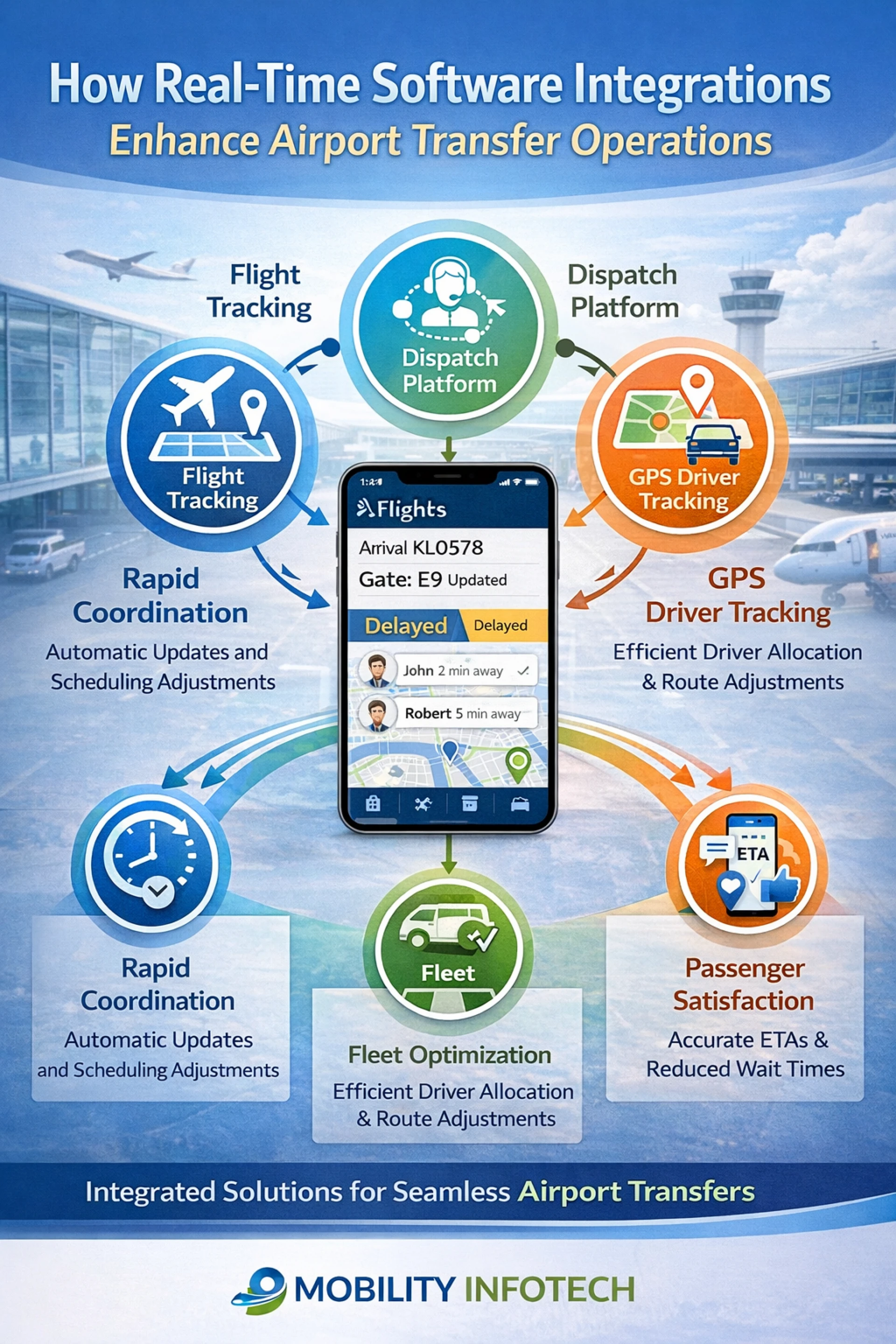
Real-time software integrations address these challenges by connecting critical systems into a single operational ecosystem. Flight tracking APIs provide continuous updates on arrival times, while GPS-enabled driver tracking ensures dispatchers know exactly where each vehicle is located.
When flight data is integrated directly into dispatch workflows, pickup schedules adjust automatically. Drivers receive updated instructions without the need for manual calls or messages, allowing operations to remain fluid and responsive.
These integrations also support intelligent driver reassignment. If a flight is delayed significantly, drivers can be reassigned to other bookings instead of waiting idle at the airport. This improves fleet utilization and reduces unnecessary operating costs.
Operational Visibility and Data-Driven Decisions
Integrated systems offer more than just automation—they provide insight. Fleet managers gain access to dashboards that display on-time performance, driver availability, and average passenger wait times. These metrics help identify inefficiencies and guide long-term operational improvements.
With better data visibility, airport transfer businesses can optimize staffing, plan routes more effectively, and prepare for peak travel periods with confidence.
Enhancing Passenger Experience
From the passenger’s perspective, real-time integrations lead to smoother and more reliable airport pickups. Accurate ETAs, timely notifications, and reduced waiting times all contribute to a better travel experience. Clear communication also reduces frustration and increases customer trust.
As competition in the airport transfer market grows, reliability and transparency are becoming key differentiators.
The Shift Toward Integrated Mobility Platforms
According to industry trends, airport transfer operators are moving away from fragmented tools and adopting unified mobility platforms. These platforms combine booking management, flight tracking, driver monitoring, and customer communication into a single system.
Companies like Mobility Infotech focus on building such integrated solutions, helping airport transfer businesses reduce delays, streamline operations, and scale efficiently.
Final Thoughts
Real-time software integrations are no longer optional for airport transfer operators. They are a critical component of modern, scalable operations. By embracing integrated systems, businesses can reduce delays, improve service reliability, and meet the evolving expectations of today’s travelers.
Airport transfer software integrations play an important role in reducing operational delays and improving dispatch accuracy.




























Sign in to leave a comment.