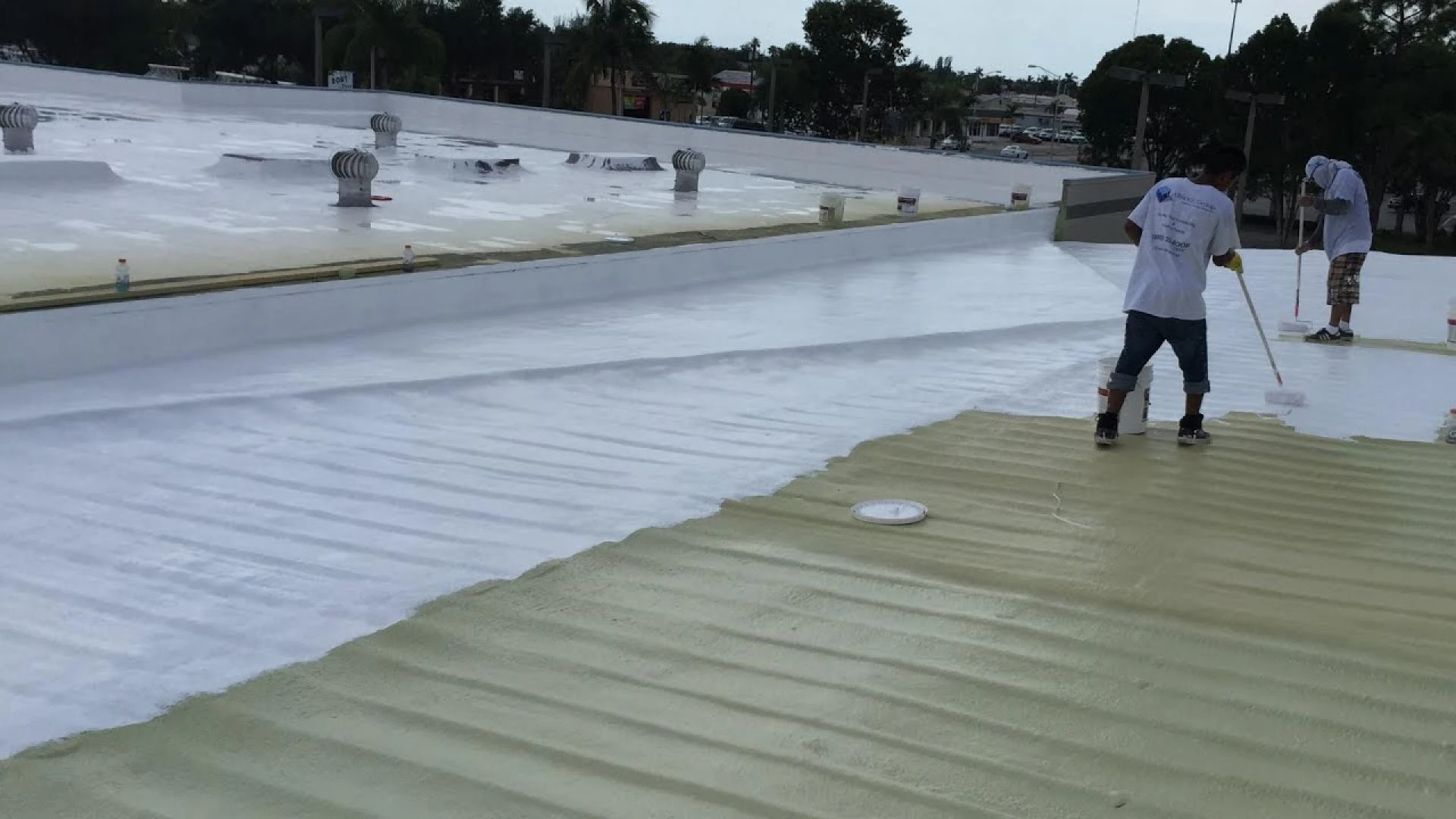

Spray foam roofing handles heat, humidity, and moisture by creating a seamless, closed-cell barrier that functions as both insulation and a waterproof membrane. The material reflects solar radiation, lowering surface temperatures, while its airtight nature prevents humid air from infiltrating the building structure. This specific roofing system eliminates the seams and joints where traditional roofs often fail, providing a durable shield against the most challenging weather conditions.
By combining high R-value insulation with a protective elastomeric coating, spray polyurethane foam (SPF) systems address all three environmental threats simultaneously. They stop heat transfer during summer peaks and prevent condensation buildup during periods of high humidity. This guide explains the technical performance of these systems and why they have become a standard for modern energy-efficient buildings.
The following information is based on extensive field experience and yearly technical training in the latest building science practices. Certified professionals use this knowledge to help property owners diagnose performance issues and select materials that withstand varied climates. Understanding these technical details ensures that a roofing investment provides maximum protection and long-term value.
Thermal Resistance and Solar Reflectivity
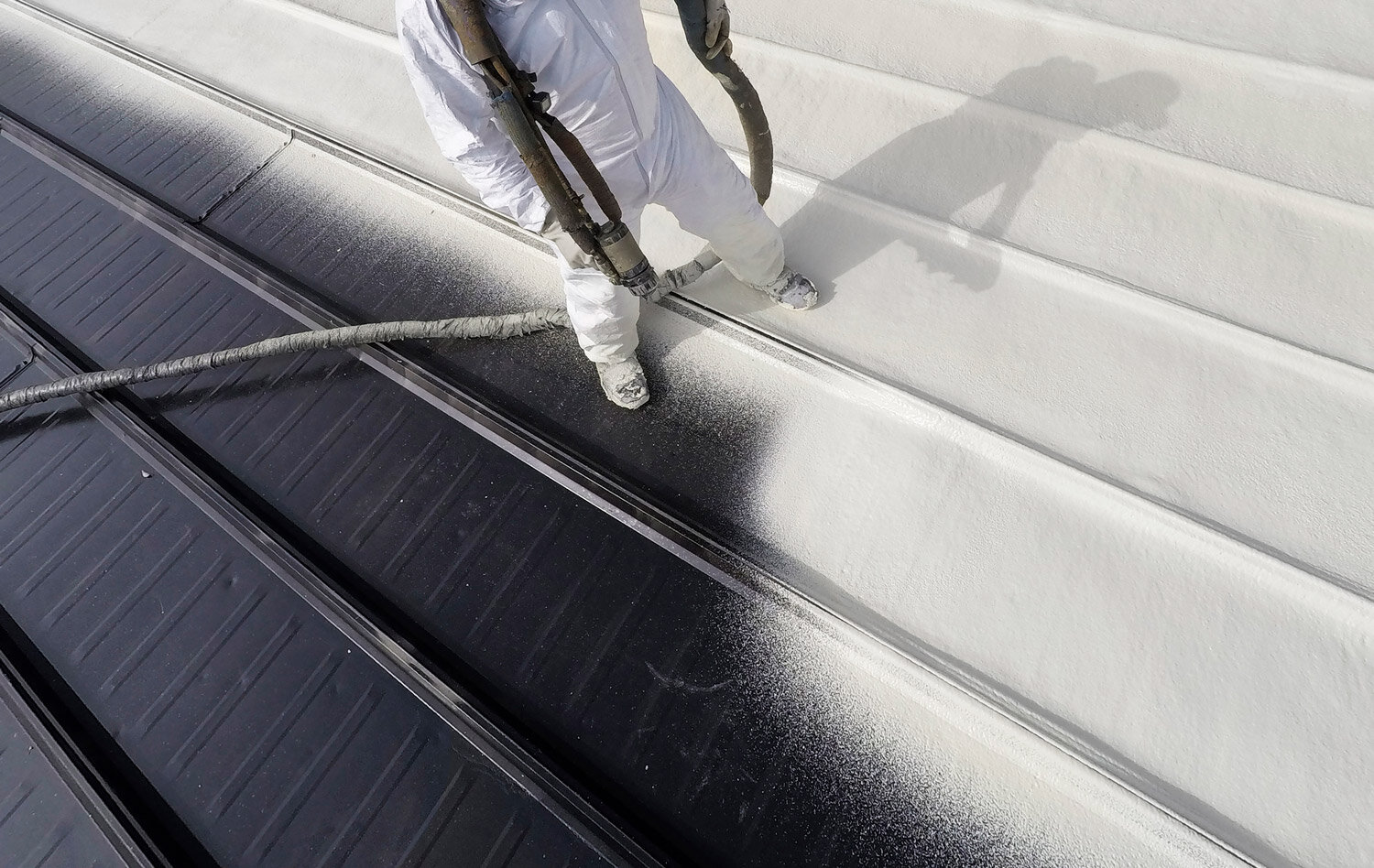
Heat management is one of the primary functions of a modern roofing system. Spray foam roofing provides a double layer of protection by using a high-performance insulation core topped with a reflective topcoat. This combination significantly reduces the amount of thermal energy that enters the building through the roof deck.
Market data indicates that cool roofing systems can reduce peak cooling demand by up to 15 percent in many commercial buildings. This reduction is achieved through the material's ability to resist heat flow and reflect UV rays. Because the foam is applied as a liquid, it covers every inch of the roof, leaving no thermal bridges or gaps.
Reducing Heat Gain with Reflective Coatings
The top layer of an SPF roof is usually a white or light-colored coating designed to bounce sunlight away from the surface. This prevents the roof from absorbing heat, keeping interior spaces cooler. Lower surface temperatures also reduce the thermal expansion and contraction that can damage traditional roofing materials over time.
Decreasing HVAC Workload
When a roof stays cool, the building's air conditioning system does not have to work as hard to maintain a steady temperature. This leads to lower monthly utility costs and less mechanical wear on expensive equipment. The foam's consistent R-value ensures the thermal barrier remains effective regardless of outdoor temperature.
Understanding Thermal Bridging
Traditional roofing often uses metal fasteners that can conduct heat directly from the roof surface into the building. Spray foam roofing is self-adhering and does not require these fasteners, which eliminates hundreds of tiny heat leaks. This seamless application ensures the entire roof surface performs at its rated insulation level.
Bonus Tip for Solar Efficiency
Property owners should consider the solar reflectance index (SRI) when choosing a topcoat for their foam roof. A higher SRI rating means the material is better at reflecting solar energy and emitting heat. Using a high-SRI coating can help buildings meet specific energy standards and qualify for certain local efficiency programs.
Air Sealing and Humidity Management
Humidity control is a major challenge in many regions, as damp air can lead to mold growth and structural damage. Spray foam roofing acts as an air barrier, preventing moist air from entering the building through the roof. This seal is necessary to maintain a healthy indoor environment and protect the building's interior.
The airtight nature of SPF roofing provides several advantages for humidity management:
- It stops the "stack effect" by preventing conditioned air from escaping through the top of the building.
- The material eliminates gaps around vents, pipes, and HVAC curbs where humid air often leaks in.
- It reduces the risk of condensation forming on the underside of the roof deck during temperature shifts.
- The system helps maintain stable indoor humidity levels in sensitive environments such as warehouses and offices.
Blocking Vapor Transmission
Closed-cell spray foam insulation has low vapor permeability, meaning it resists the passage of water vapor. This is a critical feature for buildings that experience significant differences between indoor and outdoor humidity levels. By blocking vapor, the foam protects the roof deck from rot and moisture-related degradation.
Moisture Protection and Leak Prevention
Moisture is the most common cause of roof failure, usually starting at the seams or around penetrations. Spray foam roofing is unique because it has no seams, joints, or overlaps where water can enter. The material forms a monolithic layer that fully adheres to the substrate, providing superior waterproofing.
Technical specifications show that closed-cell SPF has a high compressive strength and remains water-resistant even if the top coating is damaged. This provides an extra layer of security that traditional single-ply membranes cannot match. The following table compares spray foam with other common roofing materials.
| Feature | Spray Polyurethane Foam | EPDM (Rubber) | TPO (Thermoplastic) |
|---|---|---|---|
| Seams and Joints | None (Seamless) | Multiple Seams | Multiple Seams |
| Self-Flashing | Yes (Contours to pipes) | No (Requires boots) | No (Requires boots) |
| R-Value per Inch | 6.5 to 6.9 | Negligible | Negligible |
| Adhesion | Fully Bonded | Mechanical or Ballast | Mechanical or Bonded |
| Leak Migration | None (Water can't travel) | High (Water travels) | High (Water travels) |

Seamless Waterproofing Capabilities
Because the material is sprayed as a liquid, it naturally flows into every corner and around every penetration. It creates a "self-flashing" seal around pipes, skylights, and parapet walls. This eliminates the need for manual flashing, which is where most traditional roof leaks originate.
Resilience Against Standing Water
Flat roofs often struggle with ponding water, which can weigh down the structure and lead to leaks. Spray foam can be applied in varying thicknesses to create a slight slope, helping water drain toward the gutters. The closed-cell structure of the foam ensures that even if water sits on the surface, it will not soak through into the building.
Impact Resistance and Durability
Modern SPF roofs are designed to withstand foot traffic and environmental impacts, such as hail. The foam acts as a shock absorber, protecting the building's structural components from damage. This durability contributes to the system's long lifespan, which can often exceed 30 years with basic maintenance.
Bonus Tip for Maintenance
Regularly clearing debris from roof drains and gutters is the simplest way to extend the life of a foam roof. While the material handles water well, ensuring that the drainage system works correctly prevents unnecessary stress on the coating. A quick inspection twice a year is usually enough to keep the system in top condition.
Factors for Choosing Spray Foam Roofing
Deciding on a new roofing system involves evaluating several variables related to the building's current state and long-term goals. While spray foam offers many benefits, the system's success depends on proper application and site preparation. Property owners should consider these factors before moving forward with a project.
The following points are essential for a successful roof installation:
- The condition of the existing roof substrate and whether it can support a new application.
- The typical local weather patterns and the best time of year for a spray application.
- The specific insulation requirements for the building's use and local energy codes.
- The level of experience and certification of the chosen installation team.
Helpful Answers for Property Owners
How long does a spray foam roof last?
When properly maintained and recoated every 10 to 15 years, a spray foam roof can last the entire life of the building. The base foam layer does not degrade when protected from UV light by the top coating. This makes it one of the most sustainable roofing options available, as it does not require a full tear-off at the end of its coating life.
Can it be applied over an existing roof?
In many cases, they can apply spray foam directly over an existing roof system, such as built-up roofing or modified bitumen. This saves on labor costs and prevents tons of waste from entering local landfills. A professional inspection is required to ensure the existing roof is dry and structurally sound before the application begins.
Is spray foam roofing expensive?
The initial cost is often comparable to or slightly higher than that of other high-quality commercial roofing systems. However, when considering the energy savings and the lack of expensive maintenance or replacement costs, it is often the most cost-effective choice over the life of the building. The reduction in utility bills provides an immediate return on the investment.
How does the foam handle extreme wind?
Spray foam roofing has excellent wind uplift resistance because it is fully adhered to the roof deck. During high-wind events, there are no edges for the wind to catch and peel back, a common problem with single-ply membranes. This makes it a preferred choice for buildings in areas prone to severe storms or high winds.
What happens if the roof is punctured?
If a puncture occurs from a sharp object, the damage is usually localized because the foam is closed-cell. Water cannot travel through the foam to other parts of the roof. Repairs are simple and typically involve filling the small area with a professional-grade sealant or additional foam, restoring the waterproof integrity immediately.
Final Considerations for Roof Performance
A roof is the most important barrier against the elements, and choosing the right material is a decision that affects a building for decades. Spray foam roofing provides a modern solution for managing heat, humidity, and moisture in a single application. By addressing these three factors, property owners can ensure their building remains comfortable, energy-efficient, and structurally sound for the long term.
Professional Roofing Solutions
For those looking to improve their building's performance, South Chicago Insulation provides expert guidance and installation. They specialize in high-performance roofing and insulation systems designed to handle the toughest environmental conditions. Property owners can contact the team at (779) 803-8025 or reach them via email at [email protected] for a detailed evaluation. Their experienced technicians focus on solving complex moisture and air infiltration issues to ensure every project meets the highest standards of durability and efficiency.
Author: Bob Gasca is a certified Spray Foam Master Installer and SPFA member with nearly two decades of experience in building science and thermal management.
Reviewer: Noah Gonzalez draws on 9 years of industry experience to provide practical suggestions for improving home and building performance through advanced insulation.
Sign in to leave a comment.