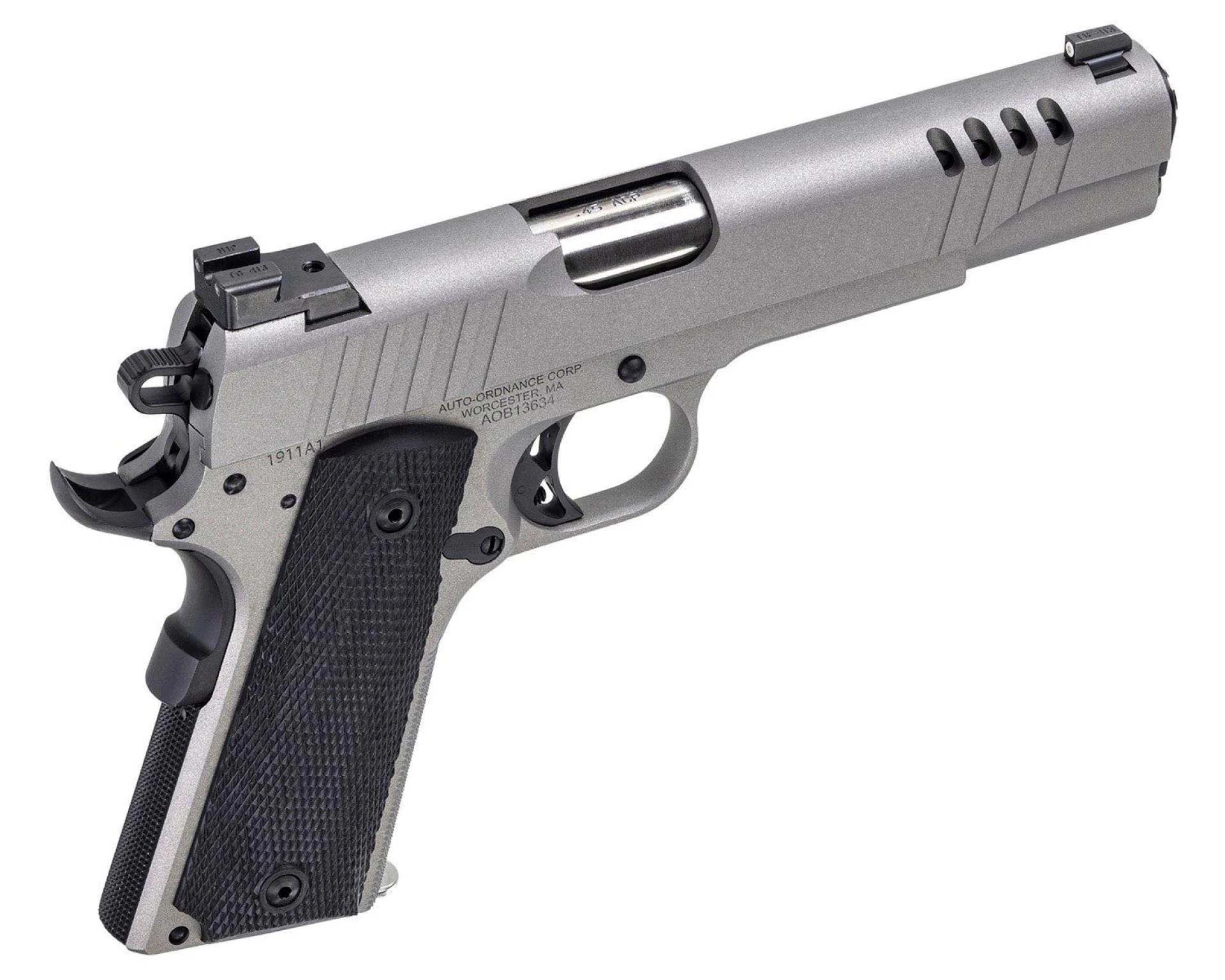

One reason the 1911 platform continues to draw interest is its ability to chamber multiple calibers while maintaining its core design. Originally built around a single cartridge, it has since adapted to a range of options that suit different needs.
From range practice to competition settings, caliber choice influences recoil, capacity, and overall shooting experience.
The beauty of the 1911 lies in how it preserves its familiar trigger feel and ergonomics even as chamberings change. That blend of consistency and variety keeps shooters coming back to explore what each caliber brings to the table.
The Classic Forty Five ACP Experience
The cartridge most closely associated with the 1911 is the 5 ACP. Known for a heavier bullet and moderate velocity, it produces a steady push rather than a sharp snap. Many shooters describe the recoil as smooth and predictable, especially in a steel-framed pistol.
That impulse pairs naturally with the platform’s weight and trigger system. Accuracy potential remains strong, particularly at common defensive distances. For traditionalists, this caliber represents the original character of the 1911 and continues to define its reputation.
Nine Millimeter Variants
Nine millimeter versions of the 1911 have gained popularity for several reasons. Recoil tends to feel lighter, allowing quicker follow-up shots and extended practice sessions with less fatigue. Ammunition cost is often lower, which encourages more time at the range.
The reduced recoil impulse can make the pistol feel softer in the hand while preserving the crisp trigger and slim grip profile. Many competitive shooters appreciate the balance between controllability and capacity that the nine mm offers within the 1911 format.
Ten Millimeter Power
For those seeking higher velocity and energy, ten millimeter options provide a different experience. This caliber generates more noticeable recoil, yet the weight and design of the 1911 help manage that energy.
Shooters who choose ten millimeter often value its performance characteristics for specific applications. The platform’s solid construction supports the pressures involved while maintaining accuracy potential. Although recoil increases, many find that proper grip and technique keep the pistol controllable and consistent.
Thirty-eight Super and Competition Use
Thirty-eight Super has a long history in competition circles. It offers flat shooting characteristics and reliable feeding in tuned pistols. In 1911, this caliber can feel quick and responsive, with recoil that is manageable for rapid strings of fire.
Competitive shooters often appreciate its balance of velocity and control. The platform’s trigger system complements the precision needed for match environments. While not as common as other calibers, the eight Super continues to hold a niche following.
Recoil Differences Across Calibers
Caliber choice directly affects recoil impulse and muzzle rise. Heavier bullets may create a steady push, while lighter and faster rounds can produce a sharper feel. The steel construction typical of many 1911 models helps absorb these differences.
Regardless of caliber, the straight-to-the-rear trigger press remains consistent. That familiar trigger behavior provides a stable foundation even as recoil characteristics change. Shooters can adapt to different chamberings without relearning the core handling traits of the pistol.
Magazine Capacity Considerations
Different calibers also influence magazine capacity. Smaller diameter cartridges often allow additional rounds within the same grip dimensions. For some shooters, increased capacity adds practical appeal. Others prioritize traditional chamberings over round count.
The single-stack design keeps the grip slim regardless of caliber, preserving ergonomics. Capacity changes may be modest compared to double-stack designs, but they still factor into overall performance decisions.
Maintaining Accuracy and Reliability
Across calibers, the 1911 maintains its reputation for precision when properly built and maintained. Barrel fit, slide lockup, and quality magazines all contribute to reliable operation.
While each cartridge introduces unique characteristics, the platform’s consistent geometry supports dependable performance. Shooters can choose a caliber that matches their goals without sacrificing the crisp trigger and balanced feel that define the design.
Ultimately, the 1911 performs reliably across different calibers because its core architecture remains steady. Whether chambered in forty-five ACP, nine millimeter, or other options, the platform delivers a familiar shooting experience shaped by caliber choice but grounded in timeless design.





























Sign in to leave a comment.