

Most above-ground pool collapses have nothing to do with a bad liner or a weak frame, they happen because the ground underneath gives out. The short answer is that a collapse is almost always preventable: excavate the site properly, grade it flat, and build a base that can carry the weight of a full pool without shifting. Once you understand what actually fails and why, the fix is straightforward and doesn't require guesswork or luck.
What actually causes an above-ground pool to collapse
A collapse happens when the ground under one section of the pool loses its ability to support the weight above it, usually because of erosion, settling, or a soft spot that was never compacted. A single 15 foot round pool holds well over 5,000 gallons of water, and that weight presses down unevenly the moment the ground beneath it isn't uniform. Once a low spot forms, water inside the pool naturally shifts toward it, adding even more pressure to the weak point and accelerating the failure. Wall panels buckle, seams split, or the entire structure leans and tips within minutes once that tipping point is reached.
Early warning signs your pool is at risk
The clearest warning sign is a visible lean, dip, or bulge anywhere along the wall, and any of these should be treated as urgent, not cosmetic.
- A section of the top rail sitting noticeably lower than the rest;
- Wrinkles or bulges forming in the liner near the bottom of one wall;
- Water pooling or mud showing up outside the pool on one side after rain;
- A wall panel that feels soft, spongy, or bows outward when pressed;
- Cracks or gaps opening up in the ground within a foot or two of the pool's edge.
Building a base strong enough to prevent it
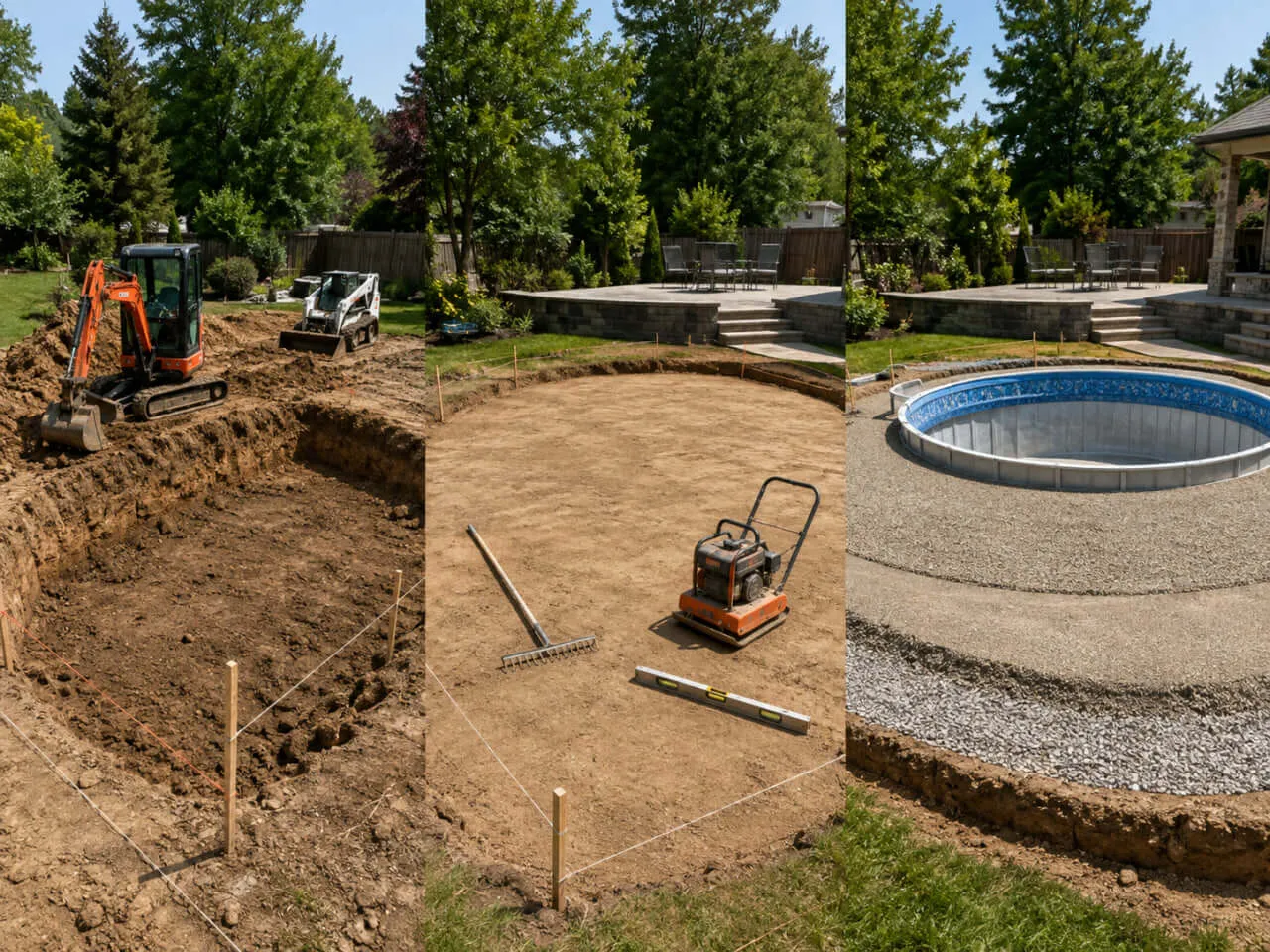
A solid base starts below the surface, not with what you spread on top. The ground has to be excavated down to firm, undisturbed soil, graded level within an inch across the entire footprint, and compacted before any sand or stone goes down. Skipping straight to a proper above ground pool base without doing that groundwork first is the single biggest reason pools that look fine on installation day start failing within a season.
Once the compacted grade is level, a thin layer of masonry sand or crushed limestone screenings gives the liner a smooth, draining surface to rest on, and a sheet of geotextile fabric underneath keeps weeds and soil migration from undermining it later. This layered approach, firm soil first, then a thin protective base, is what actually holds up under thousands of gallons of standing water.
Step by step: getting the base right
- Mark the pool's footprint with an extra one to two feet of buffer on all sides;
- Strip sod and topsoil down to firm, undisturbed subsoil;
- Remove roots, rocks, and any buried debris that could shift or puncture the liner;
- Grade the area level within one inch using stakes, string, and a long level;
- Compact the soil thoroughly with a plate compactor or hand tamper;
- Spread and compact a thin layer of sand or crushed stone before installing the liner.
Ground-prep mistakes that lead directly to collapse
Nearly every collapse traces back to one of the same handful of shortcuts taken during setup.
- Filling a low spot with loose dirt instead of cutting down the high ground around it;
- Skipping compaction and assuming the pool's weight will settle everything evenly;
- Grading the site so runoff drains toward the pool instead of away from it;
- Setting the pool on patio blocks or pavers that shift independently over time;
- Ignoring a small lean or dip in the first weeks instead of correcting it right away.
When to bring in a professional excavation crew
Clay soil, a steep yard, or a site with buried rock usually needs equipment beyond a shovel and a rented tamper. In those situations, a high-standard construction prep "Site Prep" company can excavate, grade, and compact the entire footprint in a single visit, using the same equipment and drainage know-how that keeps commercial foundations from settling. That upfront work costs less than replacing a collapsed pool and redoing the yard from scratch.
How to check your base once the pool is filled
Walk the perimeter every few weeks during the first season and run a level along the top rail, since this is when new settling shows up first. Catching a half inch dip early means adding a bit more compacted base material before it grows, while waiting until a wall visibly bulges usually means draining the pool and starting the leveling process over.




























Sign in to leave a comment.