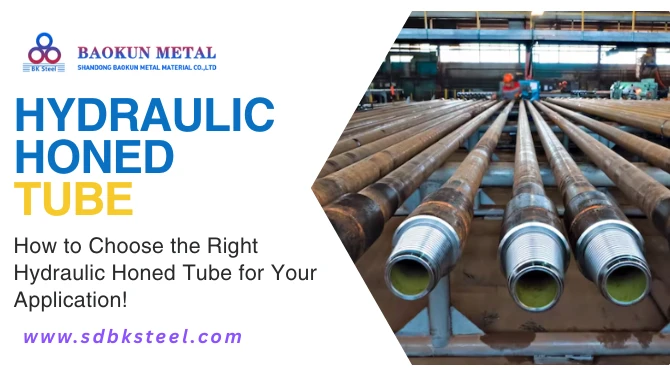
Hydraulic systems play a critical role in powering heavy-duty machinery across multiple industries—from manufacturing and construction to agriculture and logistics. At the heart of these systems lies a vital component that ensures precision, efficiency, and long service life: the Hydraulic Honed Tube. Selecting the right hydraulic honed tube is not just a technical decision—it also impacts the system’s durability, operational efficiency, and overall cost-effectiveness.
Hydraulic honed tubes are crucial components in hydraulic cylinders, playing an essential role in the functionality, durability, and efficiency of hydraulic systems used across heavy machinery, industrial applications, and fluid power engineering. These tubes are meticulously engineered to meet high precision standards, especially in terms of inner dimensional accuracy and surface finish.
At Shandong Baokun Metal Material Co., Ltd, we specialize in the manufacturing and supply of high-quality hydraulic honed tubes tailored to meet the demanding requirements of modern hydraulic applications. Whether you're designing a hydraulic cylinder from scratch or replacing worn-out components in an existing hydraulic system, understanding the critical factors involved in choosing the right honed tube can save you both time and money.
What Is a Hydraulic Honed Tube?
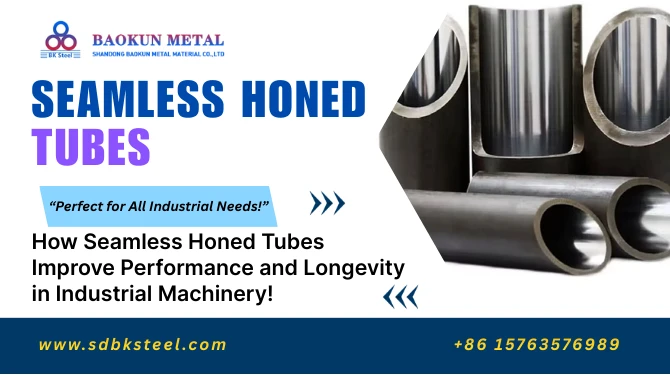
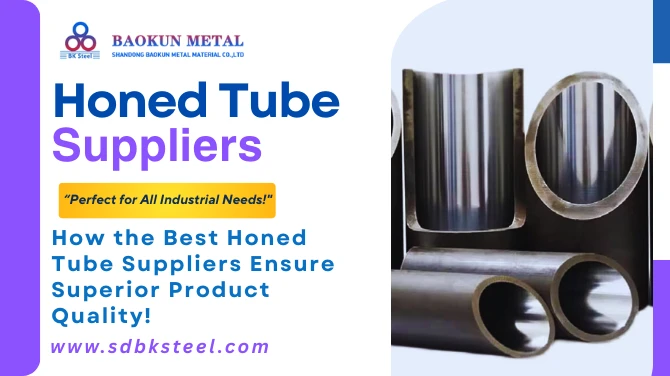
A hydraulic honed tube, also known as a cylinder tube or barrel, is a precisely machined tubular component used in hydraulic cylinders. These tubes undergo a honing process that polishes the internal surface to achieve an ultra-smooth finish—typically within 0.2–0.4 μm Ra. This finish is crucial because it minimizes friction between the bore and the moving piston/seal, thereby improving cylinder performance and extending the lifespan of the components.
Hydraulic honed tubes are used in both single- and double-acting cylinders and must withstand high pressures, temperature variations, and demanding mechanical loads without deforming or corroding.
Key Features of a Hydraulic Honed Tube
- Precision Tolerances: Tolerance classes like H8 or H9 are common (e.g., for ID accuracy).
- Smooth Surface Finish: Typically ≤ 0.4 μm Ra roughness to reduce friction and ensure proper sealing.
- Roundness Control: Ensures symmetrical movement of the piston.
- High Strength & Wear Resistance: Designed to tolerate high internal pressures and constant motion.
- Corrosion-Resistant Options: Available in stainless or coated forms to resist harsh environments.
How Are Hydraulic Honed Tubes Made?
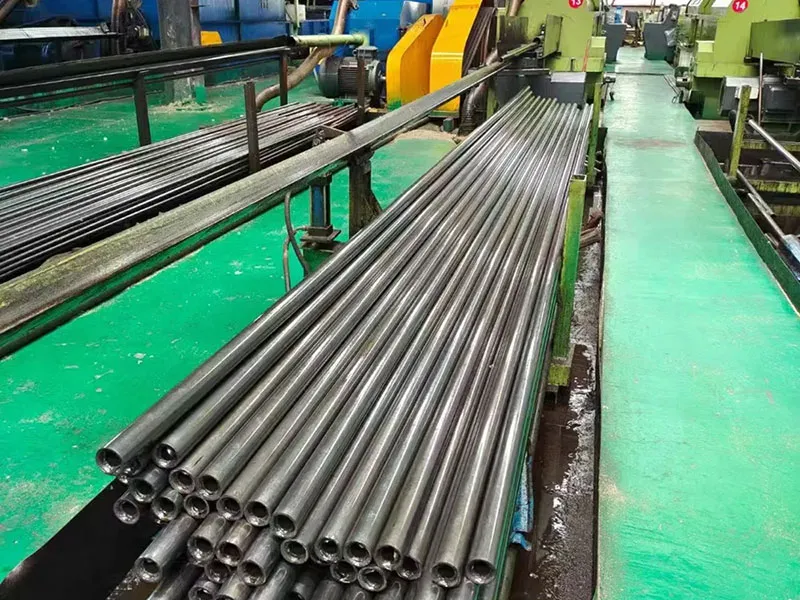
The manufacturing of hydraulic honed tubes generally follows these steps:
1. Raw Tube Selection
Initial material is chosen based on carbon or alloy steel such as ST52, CK45, or 42CrMo4.
2. Cold Drawing Process
The tube is cold drawn to achieve desired outer diameter and straightness.
3. Normalizing or Stress Relieving
Heat treatments are performed to enhance mechanical properties, reduce residual stress, and improve machinability.
4. Honing or Skiving & Roller Burnishing
- Honing: A rotating abrasive tool grinds the inner surface to achieve exact ID and surface finish.
- Skiving & Roller Burnishing: An alternative, faster process where the internal surface is cut and polished simultaneously.
5. Quality Inspection
Each tube is inspected for dimensional accuracy, surface finish, roundness, and mechanical performance.
Benefits of Hydraulic Honed Tubes
- Longer Lifespan of Seals and Pistons
By ensuring a defect-free inner surface, they reduce seal wear and damage caused by friction or uneven contact. - Higher System Efficiency
Reduced internal fluid resistance due to the smooth bore finish. - Minimal Maintenance
With greater resistance to wear and corrosion, less downtime is required over the equipment’s operational life. - Leak-Free Operation
The superior surface finish prevents micro-leaks between the piston and the bore. - Compatibility with High Pressures
Strong material properties and accurate tolerances enable them to withstand high operating pressures.
Importance of Hydraulic Honed Tubes in Cylinder Applications
Selecting the right hydraulic honed tube is integral to the overall performance of the hydraulic cylinder. Here’s why:
- Reduced Friction: A properly honed surface ensures minimal resistance between internal moving parts, boosting energy efficiency.
- Improved Seal Performance: Enhanced surface quality reduces the risk of fluid leakage.
- Extended Component Life: High-quality honing prevents premature wear and scuffing.
- Tight Tolerances: Precise ID tolerances ensure smooth piston movement and consistent performance.
In other words, investing in the right hydraulic honed tube pays off in reliability and reduced maintenance downtime.
Key Factors to Consider When Choosing a Hydraulic Honed Tube
1. Material Type
The first and most critical factor is choosing the appropriate material. Commonly used materials include:
- ST52 / E355 Steel: Known for its strength, machinability, and cost-effectiveness.
- CK45 / C1045: A medium carbon steel offering excellent wear resistance.
- Stainless Steel (e.g., SUS304, SUS316): Ideal for corrosive or marine environments.
- 4140/42CrMo4 Alloy Steel: Suitable for extremely high-pressure applications due to enhanced tensile strength.
Your application environment—whether it's corrosive, high-temperature, or high-load—will dictate your material choice.
2. Inner Diameter (ID) Tolerance
Honed tubes are manufactured within tight ID tolerances, ensuring perfect fitment with the piston and seals. Typical tolerance classes include H8, H9, and H10, with H8 offering tighter control.
Tip: For high-speed or high-pressure cylinders, opt for honed tubes with tighter H8 tolerances.
3. Surface Finish
Achieving a low surface roughness (Ra) is essential. A standard hydraulic honed tube should have an internal finish of Ra ≤ 0.4 μm. This minimization in surface deviation prevents micro-tears in seals and improves overall performance.
4. Wall Thickness
Thicker walls mean higher pressure handling capabilities. When selecting a hydraulic honed tube, always calculate the required wall thickness based on internal pressure and cylinder stroke length.
5. Corrosion Resistance
If the hydraulic system operates in outdoor or marine environments, corrosion protection becomes paramount. In such cases, chrome-plated, electroless nickel-plated, or stainless steel honed tubes are ideal.
6. Operating Pressure
Each tube is rated for a specific pressure range. Ensure the honed tube is rated for at least 10-20% above your system’s working pressure to factor in safety margins.
Metric vs. Inch Sizes – What Should You Choose?
Hydraulic honed tubes are available in both metric and imperial dimensions. The decision depends on:
- System Requirements: Check compatibility with international standards: DIN (EU) vs SAE (USA).
- Spare Part Availability: Select based on the standard commonly used in your region.
Honing Standards and Classifications
- DIN 2391: Widely used for cold-drawn seamless tubes.
- EN 10305-1: European standard for precision steel tubes.
- ASTM A513 / A519: American standard for mechanical tubing.
Choose tubes that conform to these standards, ensuring consistent quality.
Applications Across Different Industries
Hydraulic honed tubes serve vital roles in:
- Construction Equipment: For loaders, bulldozers, and excavators.
- Industrial Machinery: For press machines, hydraulic lifts, and automation systems.
- Agricultural Equipment: Including harvesters, plows, and tractors.
- Marine Systems: Stainless steel options for anti-corrosive properties.
- Energy Sector: For wind turbine brakes and mining equipment.
Tips for Maintenance and Longevity
- Regular Inspection: Check for internal pitting or scuffing at routine intervals.
- Seal Maintenance: Replace seals on time to prevent bore wear.
- Proper Lubrication: Use correct hydraulic fluids to reduce internal abrasion.
- Cleanliness: Contaminated fluids can damage the tube surface and seals.
Why Choose Shandong Baokun Metal Material Co., Ltd?
At Shandong Baokun Metal Material Co., Ltd, we pride ourselves on delivering precision-engineered hydraulic honed tubes made from top-grade materials. Here's why our customers trust us:
- State-of-the-art Honing Machines: For accurate ID finishes.
- Custom Size Availability: We provide a wide range of dimensions and tolerances.
- Material Certification: Every tube comes with full traceability and inspection certificates.
- Fast Lead Times: Quick turnaround and reliable global shipping.
- Competitive Pricing: High quality at cost-effective rates.
With decades of experience and a commitment to excellence, we are your reliable partner in hydraulic solutions.
Choosing the right hydraulic honed tube is essential for achieving long-term hydraulic system efficiency, safety, and optimal performance. By understanding the key specifications and working with a trusted supplier like Shandong Baokun Metal Material Co., Ltd, you can ensure your equipment remains productive and durable for years to come.
FAQs (Frequently Asked Questions)
Q1: What exactly is the difference between a hydraulic honed tube and a regular steel pipe?
A: A hydraulic honed tube has a finely honed internal surface with tight ID tolerances, while regular steel pipes often lack the smoothness and precision required for hydraulic systems.
Q2: How do I know what size honed tube to use for my cylinder?
A: You should determine the required ID based on your piston design and pressure rating needs. Consult industry guidelines or reach out to our technical team for support.
Q3: Can I use a welded tube instead of a seamless honed tube?
A: While welded tubes can be honed, seamless honed tubes are generally stronger and more reliable under high pressures.
Q4: What is the typical lead time for orders?
A: Lead times vary by quantity and size, but we generally ship standard sizes within 7–10 days.
Q5: Do you provide custom lengths and coatings?
A: Yes! We supply customized lengths, chrome plating, and special corrosion-resistant coatings on request.



























Sign in to leave a comment.