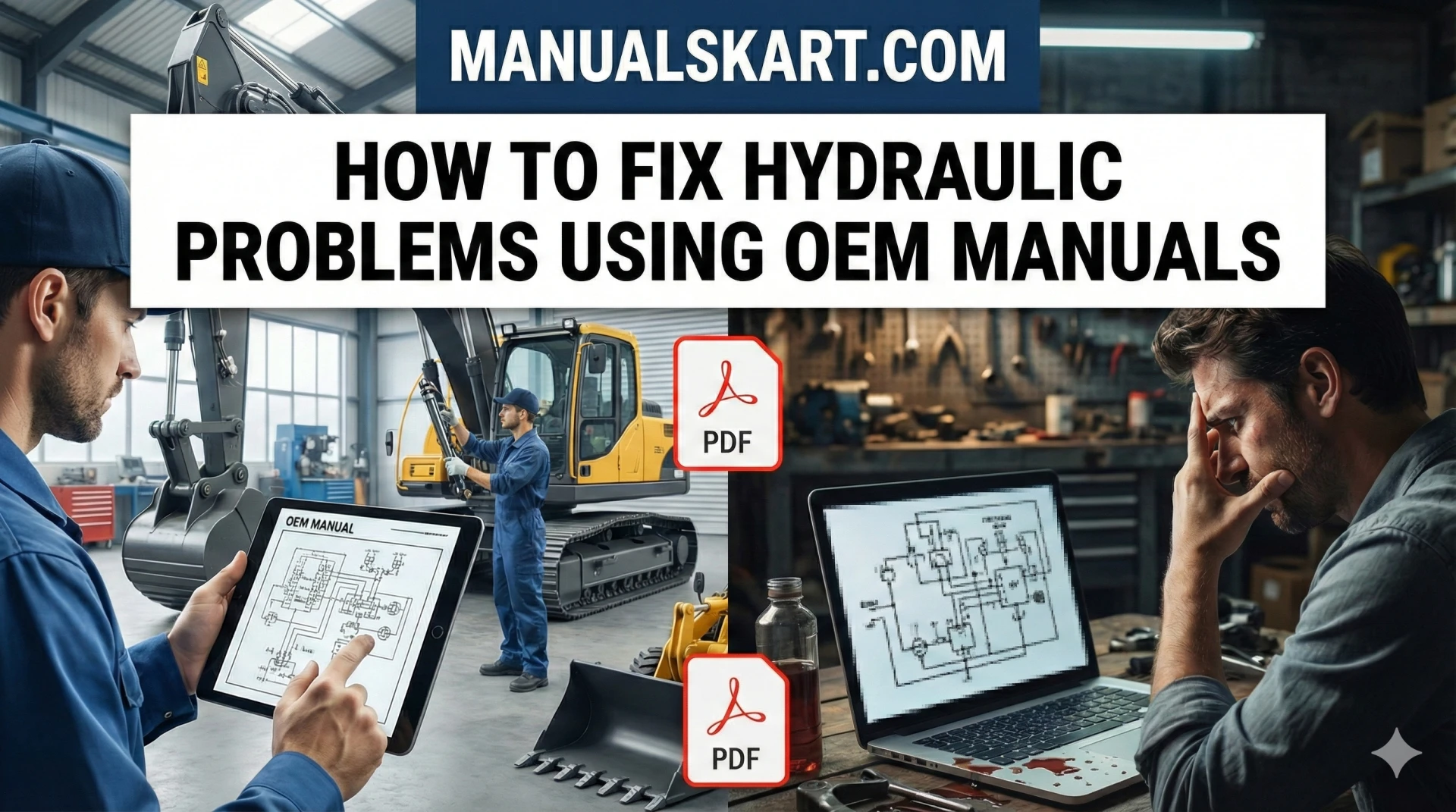

Hydraulic systems are the backbone of heavy equipment like excavators, bulldozers, and loaders from brands such as Caterpillar, John Deere, and Komatsu. When issues arise, knowing how to fix hydraulic system problems using OEM manuals can save time, money, and downtime. These manufacturer-provided guides offer detailed diagrams, specifications, and step-by-step instructions tailored to your machine. In this post, we'll explore common problems, troubleshooting methods, and repair tips to help mechanics, owners, and enthusiasts get back to work efficiently. Whether you're dealing with leaks or pressure loss, OEM manuals are your best resource for accurate repairs.
Table of Contents
- What Are Common Hydraulic System Problems in Heavy Equipment?
- Why Should You Use OEM Manuals for Hydraulic Repairs?
- How Do You Troubleshoot Hydraulic Issues Step by Step?
- What Tools Do You Need to Fix Hydraulic Problems?
- How Can You Prevent Future Hydraulic System Failures?
- Conclusion
- FAQ
What Are Common Hydraulic System Problems in Heavy Equipment?
Hydraulic systems power essential functions in heavy machinery, but they can encounter various issues due to wear, contamination, or improper maintenance. Understanding these problems is the first step toward effective repairs.
Leaks in Hoses and Seals
Leaks are one of the most frequent hydraulic issues, often caused by damaged hoses, worn seals, or loose connections. They lead to fluid loss, reduced performance, and potential environmental hazards.
- Symptoms: Visible fluid puddles, hissing sounds, or decreased system pressure.
- Causes: Age, vibration, or over-pressurization.
- Example: In a Caterpillar excavator, a leaking cylinder seal might cause sluggish arm movement. Refer to the service repair manual for seal replacement procedures.
Low or Erratic Pressure
If your equipment isn't lifting or moving as it should, low pressure could be the culprit. This affects brands like Volvo or New Holland, where precise pressure is crucial.
- Symptoms: Slow operation, inability to hold loads, or jerky movements.
- Causes: Clogged filters, faulty pumps, or air in the system.
- Example: For Komatsu loaders, check the pump specifications in the OEM manual to diagnose pressure drops.
Overheating of Hydraulic Fluid
Overheating reduces fluid viscosity, leading to inefficiency and component damage in machines from Case or Kubota.
- Symptoms: Hot reservoir, unusual odors, or system shutdowns.
- Causes: Contaminated fluid, blocked coolers, or excessive load.
- Example: John Deere tractors might overheat due to dirty filters; the operator's manual outlines fluid change intervals.
Short paragraphs like this keep things digestible. Always start with the basics before diving into fixes.
Why Should You Use OEM Manuals for Hydraulic Repairs?
OEM (Original Equipment Manufacturer) manuals are indispensable for accurate diagnostics and repairs. Unlike generic guides, they provide model-specific information, ensuring you don't void warranties or cause further damage.
Accuracy and Reliability
These manuals include precise torque specs, wiring diagrams, and parts lists tailored to your equipment.
- Bullet point: Avoid guesswork with step-by-step disassembly instructions.
- Bullet point: Access troubleshooting flowcharts for quick issue identification.
For instance, Cummins engine-equipped machinery often requires specific hydraulic schematics found only in official documents.
Cost-Effective and Time-Saving
Using OEM manuals prevents trial-and-error repairs, reducing labor costs for owners and mechanics.
- Example: A Case IH tractor's parts catalog helps order the exact replacement valve, minimizing downtime.
- Short paragraph: Enthusiasts appreciate the clear diagrams for DIY fixes, turning complex tasks into manageable ones.
Compliance and Safety
Manuals ensure repairs meet safety standards, protecting users from hazards like high-pressure fluid injections.
Integrating these resources into your workflow builds confidence in handling brands like Hyundai or Mitsubishi.
How Do You Troubleshoot Hydraulic Issues Step by Step?
Troubleshooting hydraulic problems requires a systematic approach. Follow these steps using your OEM manual as a guide.
Step 1: Gather Information and Safety Check
Before starting, review the operator's manual for your machine's baseline specs.
- Inspect visually for obvious leaks or damage.
- Ensure the equipment is powered off and depressurized.
- Example: For JCB equipment, the service manual details safe lockout procedures.
Step 2: Check Fluid Levels and Quality
Low or contaminated fluid is a common issue across brands like Yanmar or Perkins.
- Measure levels using the dipstick or sight glass.
- Test for water or debris; replace if needed.
- Short paragraph: Refer to the manual's fluid recommendations to avoid incompatibility.
Step 3: Inspect Components
Examine pumps, valves, and cylinders methodically.
- Use pressure gauges to test system readings.
- Listen for unusual noises indicating cavitation.
- Example: In Volvo excavators, the repair manual provides diagnostic codes for valve malfunctions.
Step 4: Perform Tests and Adjustments
Run operational tests as outlined in the manual.
- Adjust relief valves if pressure is off.
- Bleed air from lines to restore smooth function.
- Bullet point: Document findings for future reference.
Step 5: Repair and Verify
Replace faulty parts using the parts catalog, then retest the system.
This methodical process ensures thorough fixes for enthusiasts and professionals alike.
What Tools Do You Need to Fix Hydraulic Problems?
Having the right tools makes hydraulic repairs safer and more efficient. OEM manuals often list required items for specific tasks.
Basic Diagnostic Tools
Start with essentials for initial assessments.
- Pressure gauges for measuring system PSI.
- Thermometers to check fluid temperature.
- Multimeters for electrical-related hydraulic issues.
Repair and Maintenance Tools
For hands-on fixes in equipment from New Holland or Cub Cadet.
- Wrenches and socket sets for fittings.
- Seal installation kits to prevent damage.
- Fluid extraction pumps for clean changes.
Specialized Equipment
Advanced tools for complex problems.
- Hydraulic test benches for pump evaluation.
- Endoscopes for internal inspections.
- Short paragraph: Always consult the manual, like those for Komatsu, to match tools to your model.
Mechanics and owners can build a toolkit over time, starting with versatile items.
How Can You Prevent Future Hydraulic System Failures?
Prevention is key to avoiding costly downtime. Incorporate these practices into your routine.
Regular Maintenance Schedules
Follow the OEM manual's guidelines for inspections.
- Change filters and fluids at recommended intervals.
- Lubricate moving parts to reduce wear.
- Example: Case construction equipment manuals specify seasonal checks.
Proper Operation Techniques
Train operators to avoid overloading or abrupt movements.
- Monitor gauges during use.
- Shut down at signs of trouble.
- Bullet point: For heavy equipment enthusiasts, understanding limits extends machine life.
Quality Parts and Fluids
Use manufacturer-approved replacements.
- Avoid cheap alternatives that cause contamination.
- Short paragraph: Resources like parts catalogs ensure compatibility for brands such as Caterpillar.
By staying proactive, you'll minimize hydraulic issues long-term.
Conclusion
Fixing hydraulic system problems using OEM manuals empowers heavy equipment mechanics, owners, and enthusiasts to handle repairs confidently and efficiently. From identifying leaks to preventing overheating, these guides provide the detailed insights needed for success. Remember, regular maintenance and the right tools go a long way in keeping your machinery running smoothly.
If you're looking for reliable service repair manuals, parts catalogs, or operator's guides, explore high-quality options at Manualskart.com. They offer affordable PDFs for brands like Caterpillar, Komatsu, and more to support your next project. Get started today and keep your equipment in top shape!



























Sign in to leave a comment.