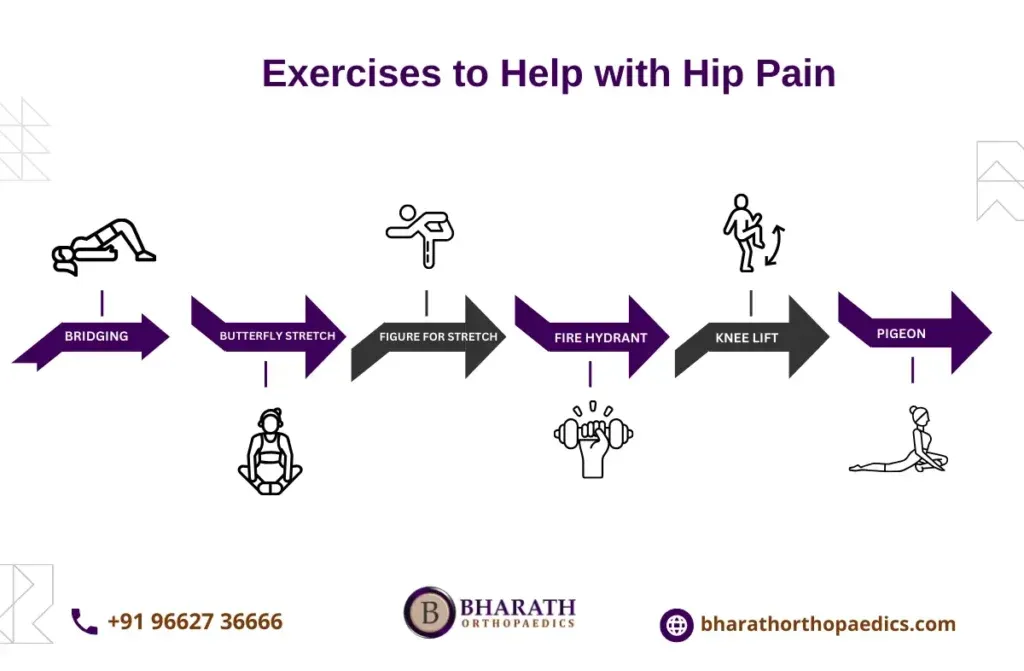

Hip pain can make daily activities like walking, climbing stairs, sitting, or exercising uncomfortable. While staying active is important for healthy joints, knowing the right Hip Pain Exercises To Avoid is also important. Some exercises can put extra pressure on the hip joint, increase swelling, and make pain or stiffness worse.
Hip pain may happen due to arthritis, bursitis, muscle strain, tendon problems, or hip impingement. Avoiding the wrong exercises can help protect the hip joint and support better movement and recovery.
Why Some Exercises Can Increase Hip Pain
The hip is one of the body’s main weight-bearing joints. It helps with walking, bending, standing, and many daily movements. When the hip becomes irritated or injured, certain exercises may place extra stress on the joint and nearby muscles.
Exercises with repeated impact, deep bending, sudden twisting, or heavy weights may:
- Increase irritation
- Worsen swelling
- Cause muscle strain
- Increase stiffness
- Slow down recovery
If an exercise causes sharp or increasing pain, it is better to stop and choose a gentler option.
High-Impact Running
Running places repeated pressure on the hips. Long-distance running or sprinting may increase pain in people with arthritis, bursitis, or tendon problems.
Running on hard surfaces like concrete may make symptoms worse.
Why It May Be Difficult On The Hips
- Increases pressure on the joints
- May irritate tendons
- Can increase stiffness after exercise
Better Options
- Walking
- Swimming
- Cycling
- Elliptical workouts
Low-impact activities are usually easier on painful hips.
Deep Squats
Deep squats need good hip flexibility and strength. Squatting too low may place extra pressure on the hip joint.
Some people may feel pinching pain in the groin area during deep squats.
Why It May Be Difficult On The Hips
- Increases pressure inside the joint
- May increase stiffness
- Can irritate the hip area
Better Options
- Partial squats
- Chair squats
- Wall-supported squats
Keeping the movement small and controlled may feel more comfortable.
Lunges With Poor Form
Lunges can help strengthen the legs, but poor form may place too much stress on the hips. Long steps or unstable movements may increase discomfort.
Jumping lunges can be especially difficult for painful hips.
Why It May Be Difficult On The Hips
- Places uneven pressure on the joint
- May strain hip muscles
- Can increase discomfort
Better Options
- Short-step lunges
- Static lunges
- Supported exercises
Proper posture is important during exercise.
High-Impact Aerobic Exercises
Exercises that include jumping or fast movements may worsen hip pain. Activities such as jump squats, burpees, and intense cardio workouts can place extra stress on the hips.
Why It May Be Difficult On The Hips
- Increases impact on the joints
- May irritate muscles and tendons
- Can cause pain after exercise
Better Options
- Water aerobics
- Gentle yoga
- Pilates
- Low-impact cardio exercises
These activities may help improve movement with less stress on the hips.
Heavy Leg Press Exercises
Heavy leg press exercises may place too much pressure on the hip joint, especially when the knees move too close to the chest.
Why It May Be Difficult On The Hips
- Adds extra load to the joint
- May increase hip discomfort
- Can irritate muscles and tendons
Better Options
- Resistance band exercises
- Light strengthening exercises
- Bodyweight workouts
Slow and controlled movements are usually safer.
Stair Climbing Machines
Stair climbing machines involve repeated stepping movements that may increase hip pain and stiffness.
Why It May Be Difficult On The Hips
- Repeated motion stresses the hips
- May tire weak hip muscles
- Can increase irritation
Better Options
- Flat walking
- Swimming
- Stationary cycling
These activities can improve fitness with less joint pressure.
Exercises With Sudden Twisting
Sports and workouts with quick turning or twisting movements may place stress on the hips. Tennis, basketball, and certain dance workouts may increase discomfort.
Why It May Be Difficult On The Hips
- May strain muscles and ligaments
- Can increase hip irritation
- May worsen existing hip problems
Better Options
Gentle balance and strengthening exercises are often easier on the hips.
Heavy Resistance Leg Raises
Leg raises can strengthen hip muscles, but using heavy ankle weights or too many repetitions may worsen pain.
Why It May Be Difficult On The Hips
- May strain hip flexor muscles
- Can increase groin discomfort
- May cause tightness
Better Options
- Light resistance bands
- Gentle physical therapy exercises
- Core strengthening workouts
Controlled movements are important.
Overstretching The Hip
Stretching may help flexibility, but stretching too aggressively can irritate the hip area further.
Why It May Be Difficult On The Hips
- May strain muscles
- Can increase soreness
- May worsen swelling
Better Options
Gentle stretching within a comfortable range is usually safer.
Exercises To Avoid During Hip Arthritis
People with hip arthritis should be careful with high-impact exercises because damaged joints may not handle repeated stress well.
Exercises often avoided during flare-ups include:
- Jump squats
- Burpees
- Deep lunges
- Running
- Box jumps
Low-impact strengthening exercises are usually more comfortable.
Warning Signs During Exercise
Stop exercising and speak with a doctor if you notice:
- Sharp hip pain
- Swelling
- Difficulty walking
- Locking or catching sensations
- Pain that becomes worse after exercise
- Limping
Ignoring these signs may increase joint problems.
Safe Exercises For Hip Pain
Although some exercises should be avoided, staying completely inactive may increase stiffness and weakness.
Exercises that are often easier on the hips include:
- Swimming
- Water walking
- Gentle yoga
- Walking
- Cycling
- Stretching
- Core strengthening exercises
A physiotherapist or orthopedic specialist can help create a safe exercise plan.
Tips To Exercise Safely With Hip Pain
Warm Up Before Exercise
Gentle warm-ups help prepare muscles and joints.
Use Proper Form
Good posture helps reduce stress on the hips.
Wear Supportive Shoes
Comfortable shoes with cushioning may reduce impact.
Increase Activity Slowly
Avoid sudden increases in exercise intensity.
Listen To Your Body
Stop activities that increase pain.
Take Rest When Needed
Rest helps the body recover and reduces strain on the hips.
When To See A Doctor
You should speak with a doctor if:
- Hip pain continues for several weeks
- Walking becomes difficult
- Pain affects sleep
- Stiffness increases
- You notice weakness or reduced movement
Early care may help manage hip problems more effectively.
Final Thoughts
Knowing the right Hip Pain Exercises To Avoid can help reduce discomfort and protect your joints. High-impact workouts, deep squats, heavy resistance exercises, and sudden twisting movements may increase stress on painful hips.
Choosing gentle, low-impact exercises may help improve strength, flexibility, and movement while reducing pressure on the joints. If hip pain continues, professional medical advice can help you find the safest treatment and exercise plan.





























Sign in to leave a comment.