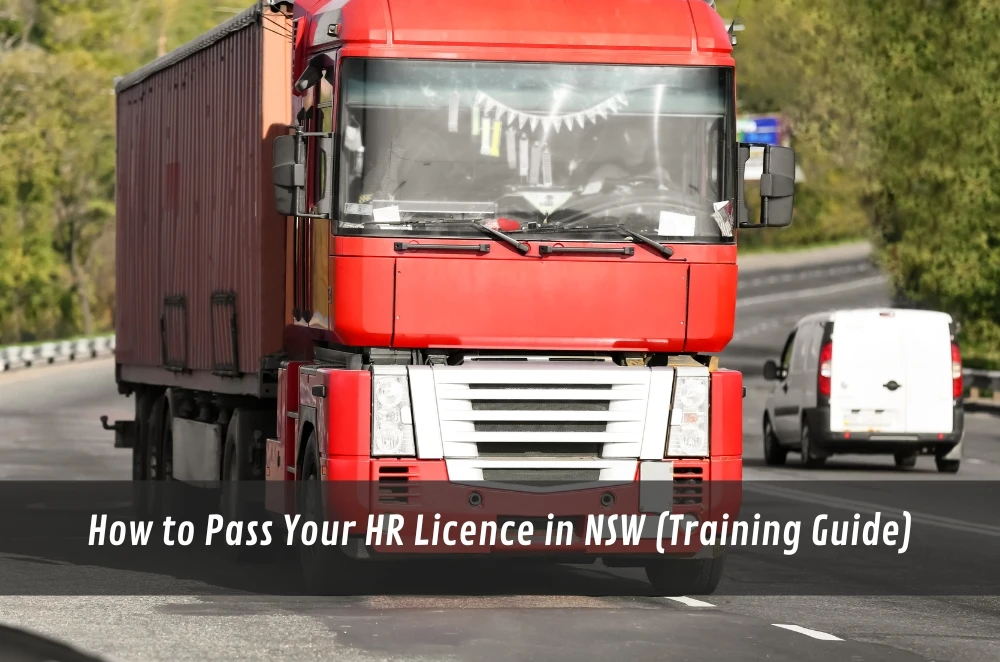

Passing your HR licence test in NSW isn’t just about jumping into a large truck and hoping your instincts kick in. It’s a mix of preparation, steady confidence, and getting practical with the kind of training that sticks. Early on in your journey, you’ll probably look for a heavy rigid licence course in NSW to understand what’s expected and how to get test-ready without guesswork.
If you’ve ever watched HR-class trucks glide through tight corners and thought, How do they make it look so easy?, this guide is for you. Below, I’ll break down the key steps, the biggest pitfalls, what training really looks like, and the simple things that often trip people up.
Understanding what’s involved in passing your HR licence test
Getting your HR licence in NSW involves more than just turning up on test day. You must meet eligibility requirements, get your paperwork sorted, and have a decent grounding in heavy vehicle operation.
The NSW Government provides a solid overview of heavy vehicle licence classes in NSW, which is worth reviewing early in the process so you know exactly where HR sits in the broader licencing system.
What you need before booking your test
- A full Class C (car) licence held for at least two years.
- Medical fitness to drive heavy vehicles.
- Proof of identity and residency.
- A good understanding of road rules (the test examiner won’t spoon-feed you).
Core competencies the test will assess
- Smooth gear changes and clutch control (yes, even in autos – smoothness matters).
- Spatial awareness in tight corridors.
- Safe cornering and lane discipline.
- Proper observation techniques, mirror usage, and hazard anticipation.
- Low-speed manoeuvres like reverse-to-the-dock and three-point turns.
What HR licence training in NSW actually looks like
This is where people often get the wrong idea. HR licence training isn’t about grinding through a set curriculum; good trainers customise sessions in real time. They’ll watch how you brake, how you respond to stress, and whether you anticipate hazards or react late. The best training programs adapt themselves around you.
I remember my first proper session in a rigid truck — the instructor asked me to “drive normally.” I thought I did. He gently said, “You’re driving it like a ute.” That moment snapped me out of my habits and into the reality of what HR training is: unlearning the small mistakes you’ve been getting away with for years.
What you’ll experience in a typical session
- Cab familiarisation: Getting used to mirrors, blind spots, and vehicle height.
- Urban routes: Roundabouts, traffic lights, merging traffic, and tight corners.
- Industrial backstreets: Great for slow manoeuvres, wide turns, and practising spatial awareness.
- Load dynamics: You’ll learn how a truck behaves differently under various load weights.
- Pre-start checks: Tyres, brakes, indicators, load security — the little details that show competence.
Common mistakes that cause people to fail the HR test
Even capable drivers can misjudge a corner or forget a mirror check under pressure. After seeing dozens of learners go through the process, I’ve noticed the same problems crop up repeatedly.
1. Rushing manoeuvres
Heavy vehicles reward calm and punish haste. The examiner watches for deliberate control, not speed.
2. Under-using mirrors
In a rigid truck, mirrors are your lifeline. Learners often look but don’t see — they flick their eyes rather than scanning properly.
3. Misjudging turning points
A rigid truck’s swept path is often wider than beginners expect. Cutting corners or oversteering are classic fail points.
4. Poor clutch control
Even in automatic vehicles, jerky acceleration signals nervousness or poor anticipation.
5. Forgetting observation routines
Examiners look for predictable patterns: check mirrors, indicate, check mirrors again. It should feel like a rhythm.
A realistic example of what test day feels like
To give you a grounded picture, here’s how a typical HR test has played out for many trainees I’ve worked with.
You’ll start with pre-start checks. This isn’t a trick — they genuinely want to see that you know what a safe truck looks like. From there, you head out into traffic. The examiner often stays quiet, scribbling notes, which can feel like judgment, but honestly, they’re usually marking routine observations.
About halfway in, you’ll complete a low-speed manoeuvre. This is usually where nerves spike. One trainee I worked with panicked during a reverse-to-dock because a pedestrian walked past behind us. She immediately paused, checked mirrors, assessed the space, and waited. The examiner later said that pause — not the manoeuvre — was what passed her. It demonstrated awareness and safe decision-making, which counts far more than perfect technique.
How to prepare effectively for the HR licence test
Most people assume they just need more hours behind the wheel. That helps, but it’s only part of the story. Passing requires layered preparation.
Study smarter, not harder
- Review NSW heavy vehicle rules regularly — even experienced drivers forget details.
- Re-watch your training footage if your trainer provides recordings.
- Build familiarity with common test routes in your area.
Develop strong observation habits
- Do mirror checks at natural intervals, not exaggerated ones just for the examiner.
- Narrate hazards in your mind. “Pedestrian crossing ahead,” “Vehicle emerging left,” etc.
- Anticipate traffic changes rather than reacting late.
Train your spatial awareness
This is one of the biggest differences between car and truck driving. To sharpen it:
- Practise wide turns in quiet industrial zones.
- Use cones to simulate kerbs and loading bays.
- Learn to “feel” the truck’s rear tracking without relying purely on mirrors.
Reinforce confidence under pressure
This is underrated but crucial.
- Simulate test-day conditions in training sessions.
- Ask your instructor to stay silent for long stretches to mimic examiner behaviour.
- Do mock tests, including pre-start checks and surprise manoeuvres.
Navigating the training options available in NSW
Not all HR training is created equal. Some programs emphasise quick test preparation. Others focus on long-term competency — the kind of training that keeps you safe on roads and job sites.
Short intensive courses
Great if you already have solid truck experience or pick things up fast. But intensive sessions can be overwhelming for beginners.
Multi-day courses
Ideal for drivers transitioning from a car or light rigid. You get repetition, different road environments, and stronger muscle memory.
On-site training at depots
Some trainers bring the truck to your workplace. Useful if your employer wants you licensed for specific routes or vehicles.
What good trainers have in common
- They correct mistakes instantly and clearly.
- They adapt to your learning style.
- They build confidence without inflating your ego.
- They balance safety with real-world driving logic.
Putting it all together: your pathway to a confident pass
If you’re serious about earning your HR licence in NSW, approach your training with intention. Anyone who has looked into how to get an HR licence in Australia knows the process isn’t complicated, but it does reward preparation. Understand the fundamentals, practise deliberately, and learn from realistic scenarios — not just textbook examples. On test day, confidence comes not from luck, but from repetition. Smooth, predictable driving. Routine observations. Calm corrections. Examiners don’t want perfection; they want consistency and awareness. With thoughtful preparation and the right training environment, you’re not just passing a test — you’re stepping confidently into the world of heavy vehicle driving.



























Sign in to leave a comment.