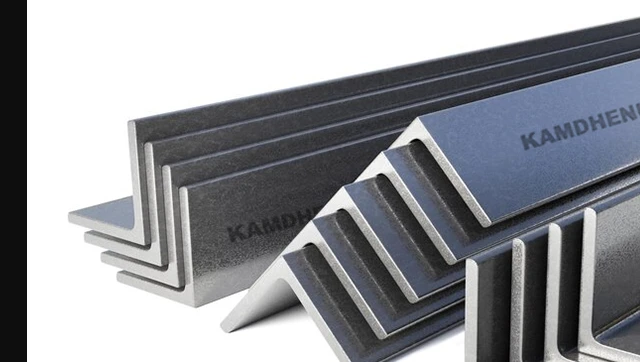

Steel sections form the backbone of many fabrication and construction projects. Buyers often search for MS Angle and MS Round when planning frames, supports, or industrial components. Choosing the right section affects strength, fitment, and project cost.
This article helps Indian buyers understand how to select the correct material based on usage and buying purpose.
What is MS Angle, and where is it commonly used
An MS Angle is a steel section shaped like an L. It is widely used for structural support and load distribution. This section provides stability at joints and corners.
Common applications include factory sheds, platforms, racks, and machine frames. An MS Angle is preferred when rigidity and alignment are critical. Buyers should always match size with load requirements.
What Is MS Round and Its Practical Uses
An MS Round is a solid circular steel bar. It is mainly used in machining, fabrication, and mechanical work. Its shape allows smooth rotation and uniform strength.
Typical uses include shafts, bolts, grills, and custom-fabricated components. An MS Round is chosen when bending, turning, or threading is required.
MS Angle vs MS Round for Buyer Decision Making
Many buyers struggle to choose between sections. The decision depends on function, not price alone.
An MS Angle works best for static support and frameworks. An MS Round suits components that face torsion or movement. Understanding this difference avoids material mismatch and wastage.
Size and Thickness Selection Based on Application
Wrong size selection leads to failure or overdesign. Buyers must check dimensions carefully before ordering MS Angle or MS Round.
Important checks include:
- Section size and thickness
- Load or stress level
- Fabrication method planned
Correct sizing improves safety and material efficiency.
Surface Finish and Straightness Checks
Visual inspection helps identify quality. A good MS Angle has sharp edges and uniform thickness. A quality MS Round remains straight without bends.
Buyers should inspect:
- Surface cracks or scale marks
- Consistent dimensions along length
- Clean edges suitable for welding
These checks reduce fabrication issues later.
Manufacturing Quality and Material Consistency
Manufacturing standards directly impact performance. Reliable suppliers follow controlled rolling and cooling.
Quality MS Angle and MS Round products show consistent mechanical properties. Buyers should ask about the material grade and production process if available.
Price Comparison Without Compromising Quality
Lower prices may indicate thinner sections or mixed material. This affects strength and durability.
When comparing MS Angle or MS Round prices, buyers should consider:
- Weight per meter
- Material grade consistency
- Supplier reliability
Quality material reduces rework and replacement costs.
Storage and Handling After Purchase
Improper storage causes bending or rust. Both MS Angle and MS Round should be stored on level ground.
Avoid moisture contact and uneven stacking. Proper handling preserves material quality until use.
Conclusion
Selecting the right MS Angle and MS Round is essential for fabrication and structural success. Buyers in India should focus on application needs, correct sizing, and material quality. A careful purchase decision improves safety, performance, and cost control. Choosing the right steel section ensures reliable results across projects.

























Sign in to leave a comment.