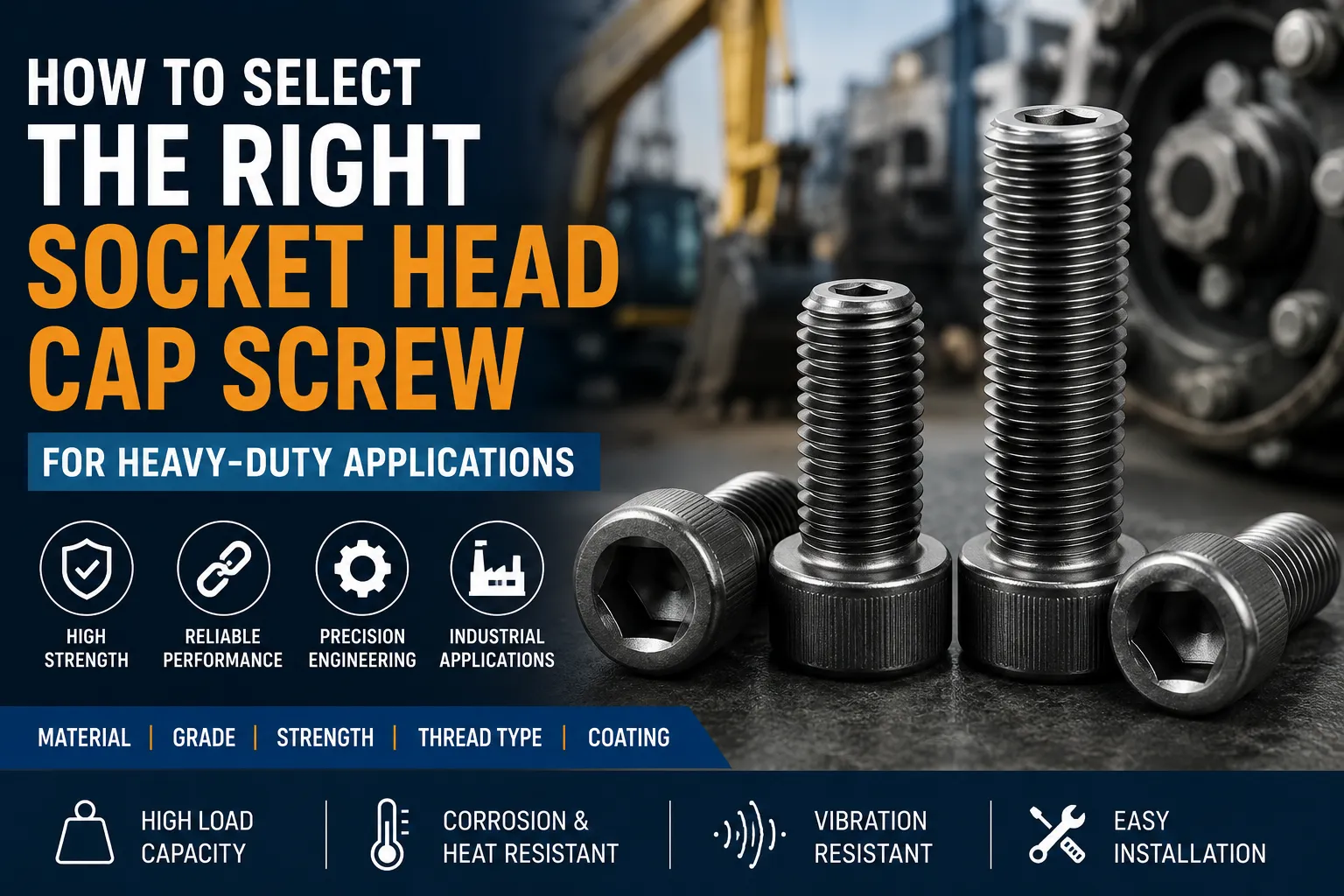

Heavy-duty industrial assemblies demand fasteners that can withstand high loads, vibration, temperature fluctuations, and harsh operating environments. Among the most trusted fastening solutions, socket head cap screws are widely used because they offer exceptional tensile strength, precise clamping force, and reliable performance in compact spaces.
However, selecting the wrong socket head cap screw can lead to joint failure, equipment downtime, increased maintenance costs, and even safety risks. Engineers, procurement managers, and OEM manufacturers should consider several technical factors before choosing a socket head cap screw for demanding industrial applications.
This comprehensive guide explains how to select the right socket head cap screw, covering materials, grades, dimensions, coatings, thread types, industry standards, and application-specific considerations to help you make an informed decision.
What Is a Socket Head Cap Screw?
A socket head cap screw is a high-strength threaded fastener featuring a cylindrical head with an internal hexagonal drive. Unlike conventional hex bolts, these screws are tightened using Allen keys or hex drivers, allowing installation in confined spaces while delivering superior torque.
They are commonly manufactured according to:
- ISO 4762
- DIN 912
- ASTM specifications
- ASME B18.3
Socket head cap screws are widely preferred where high preload, precision alignment, and compact designs are required.
Why Socket Head Cap Screws Are Ideal for Heavy-Duty Applications
Heavy industrial equipment experiences continuous stress, vibration, impact loads, and cyclic fatigue. Socket head cap screws are specifically designed to handle these conditions.
Their advantages include:
- High tensile and yield strength
- Excellent clamping force
- Compact head design
- Better torque transmission
- Reduced stripping compared to standard screws
- Suitable for automated assembly
- Easy maintenance and replacement
- Consistent performance under dynamic loading
These benefits make them suitable for demanding engineering applications.
Key Factors to Consider When Selecting Socket Head Cap Screws
1. Determine the Load Requirements
The first step is understanding the type of load the fastener must withstand.
Consider:
- Static loads
- Dynamic loads
- Shock loads
- Cyclic fatigue loads
- Shear loads
- Tensile loads
Heavy-duty equipment typically requires screws capable of maintaining preload under repeated stress.
Always calculate:
- Maximum operating load
- Safety factor
- Required clamping force
- Joint stiffness
Proper engineering calculations help prevent premature fastener failure.
2. Choose the Correct Material
Material selection significantly affects strength, corrosion resistance, and service life.
Alloy Steel
Most heavy-duty applications use alloy steel socket head cap screws because they offer:
- Extremely high tensile strength
- Excellent fatigue resistance
- High hardness
- Good wear resistance
Common applications include:
- Construction machinery
- Mining equipment
- Industrial presses
- Machine tools
Stainless Steel
Stainless steel is recommended when corrosion resistance is equally important.
Common grades include:
- 304 Stainless Steel
- 316 Stainless Steel
- Duplex Stainless Steel
Ideal for:
- Marine environments
- Food processing
- Pharmaceutical plants
- Chemical industries
Titanium
Titanium fasteners offer:
- Exceptional strength-to-weight ratio
- Corrosion resistance
- Heat resistance
Used in:
- Aerospace
- Defense
- Medical equipment
Nickel Alloys
For extreme environments, nickel-based alloys provide excellent resistance against:
- High temperatures
- Oxidation
- Chemical corrosion
Industries include:
- Petrochemical
- Offshore oil & gas
- Power generation
Select the Appropriate Property Class
The strength grade determines how much load the screw can safely handle.
Common metric property classes include:
| Property Class | Typical Application |
|---|---|
| 8.8 | Medium-duty equipment |
| 10.9 | Heavy machinery |
| 12.9 | High-strength industrial assemblies |
Class 12.9 socket head cap screws are the most common choice for demanding heavy-duty applications because they provide extremely high tensile strength.
Select the Right Thread Type
Thread design influences clamping performance.
Coarse Threads
Advantages:
- Faster installation
- Better resistance to thread damage
- Suitable for softer materials
Used in:
- Structural assemblies
- Heavy equipment
Fine Threads
Advantages:
- Higher preload
- Better vibration resistance
- Improved adjustment accuracy
Used in:
- Precision machinery
- Automotive
- Aerospace
Choose the Correct Screw Length
The screw should provide adequate thread engagement without excessive protrusion.
General guideline:
Minimum thread engagement:
- Steel: 1 × bolt diameter
- Aluminum: 1.5 × diameter
- Cast iron: 1.5 × diameter
Improper screw length may reduce joint strength or damage mating components.
Consider Environmental Conditions
Operating conditions greatly influence fastener selection.
High Temperature
Choose:
- Alloy steel
- Heat-resistant stainless steel
- Inconel
Applications:
- Boilers
- Turbines
- Furnaces
Corrosive Environment
Select:
- Stainless steel
- Duplex stainless steel
- Nickel alloys
Industries:
- Marine
- Chemical processing
- Offshore platforms
Outdoor Applications
Protective coatings become essential.
Options include:
- Zinc plating
- Hot-dip galvanizing
- Black oxide
- PTFE coating
- Geometry coating
Verify Industry Standards
Always ensure compliance with international standards.
Important standards include:
- ISO 4762
- DIN 912
- ASTM A574
- ASME B18.3
- RoHS compliance
- REACH compliance
Certified fasteners offer consistent quality and traceability.
Evaluate Head Size and Installation Space
Socket head cap screws are particularly useful where wrench clearance is limited.
Advantages include:
- Compact cylindrical head
- Easy access
- Better aesthetics
- Higher torque capacity
This makes them ideal for precision equipment and compact mechanical assemblies.
Consider Vibration Resistance
Heavy machinery often generates continuous vibration.
Additional locking methods include:
- Thread-locking adhesive
- Lock washers
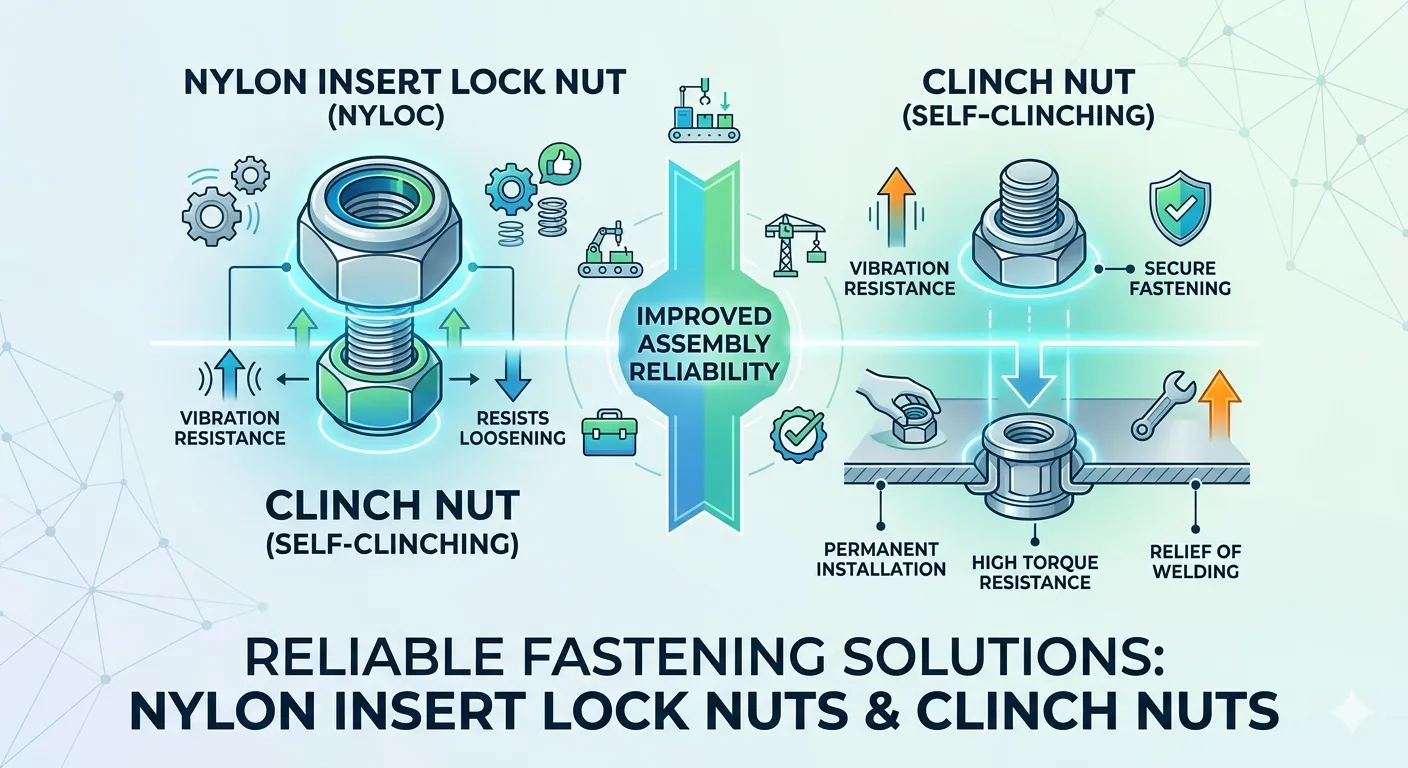
- Prevailing torque nuts
- Safety wire
- Mechanical locking systems
These prevent loosening during operation.
Ensure Proper Torque Specifications
Incorrect tightening is one of the leading causes of fastener failure.
Always follow manufacturer-recommended torque values based on:
- Material
- Lubrication
- Thread size
- Property class
Using calibrated torque tools ensures proper preload and extends service life.
Common Industries Using Socket Head Cap Screws
Socket head cap screws are widely used across numerous heavy-duty industries.
Manufacturing Equipment
Applications include:
- CNC machines
- Injection molding machines
- Hydraulic presses
Oil and Gas
Used in:
- Drilling equipment
- Valves
- Compressors
- Offshore platforms
Mining Equipment
Suitable for:
- Crushers
- Excavators
- Conveyor systems
- Loaders
Construction Machinery
Commonly found in:
- Bulldozers
- Cranes
- Earthmovers
- Concrete equipment
Automotive Industry
Applications include:
- Engine assemblies
- Suspension systems
- Transmission components
Aerospace
Preferred for:
- Aircraft assemblies
- Structural joints
- Landing gear components
Renewable Energy
Widely used in:
- Wind turbines
- Solar mounting systems
- Hydroelectric equipment
Common Selection Mistakes to Avoid
Avoid these frequent errors:
- Choosing fasteners based solely on price
- Ignoring tensile strength requirements
- Selecting incorrect thread engagement
- Overlooking corrosion exposure
- Using incompatible materials
- Applying improper torque
- Mixing different property classes
- Ignoring certification standards
Proper engineering selection significantly reduces maintenance costs.
Maintenance Tips for Long Service Life
To maximize fastener performance:
- Inspect periodically for corrosion.
- Check torque during scheduled maintenance.
- Replace damaged or stretched screws.
- Use compatible lubricants where recommended.
- Avoid over-tightening.
- Store fasteners in dry, contamination-free environments.
- Replace fasteners after severe overload events.
Preventive maintenance improves equipment reliability and safety.
Frequently Asked Questions (FAQs)
1. What is the strongest socket head cap screw material?
Alloy steel Class 12.9 is among the strongest standard socket head cap screw materials, while specialty alloys like Inconel and titanium are chosen for extreme environments requiring high temperature or corrosion resistance.
2. Which grade is best for heavy-duty applications?
Property Class 12.9 is commonly recommended for heavy-duty industrial machinery because it provides high tensile strength and excellent load-bearing performance.
3. Are stainless steel socket head cap screws stronger than alloy steel?
No. Standard stainless steel grades (such as 304 and 316) offer superior corrosion resistance but generally have lower tensile strength than alloy steel Class 12.9 screws.
4. Can socket head cap screws be used outdoors?
Yes. For outdoor environments, choose corrosion-resistant materials like stainless steel or apply protective coatings such as zinc plating, hot-dip galvanizing, or Geometry coating to enhance durability.
5. What standards apply to socket head cap screws?
Common international standards include ISO 4762, DIN 912, ASTM A574, and ASME B18.3, which define dimensions, material requirements, and mechanical properties.
Conclusion
Selecting the right socket head cap screw for heavy-duty applications involves much more than choosing the correct diameter or length. Engineers must evaluate load requirements, material, property class, thread type, environmental exposure, coatings, and compliance with international standards to ensure long-term reliability and safety.
Whether you're designing industrial machinery, mining equipment, construction systems, or aerospace components, using the appropriate socket head cap screw improves joint integrity, minimizes maintenance, and enhances operational efficiency. Partnering with a trusted fastener manufacturer ensures access to certified, high-quality fasteners tailored to your application's specific demands.


















Sign in to leave a comment.