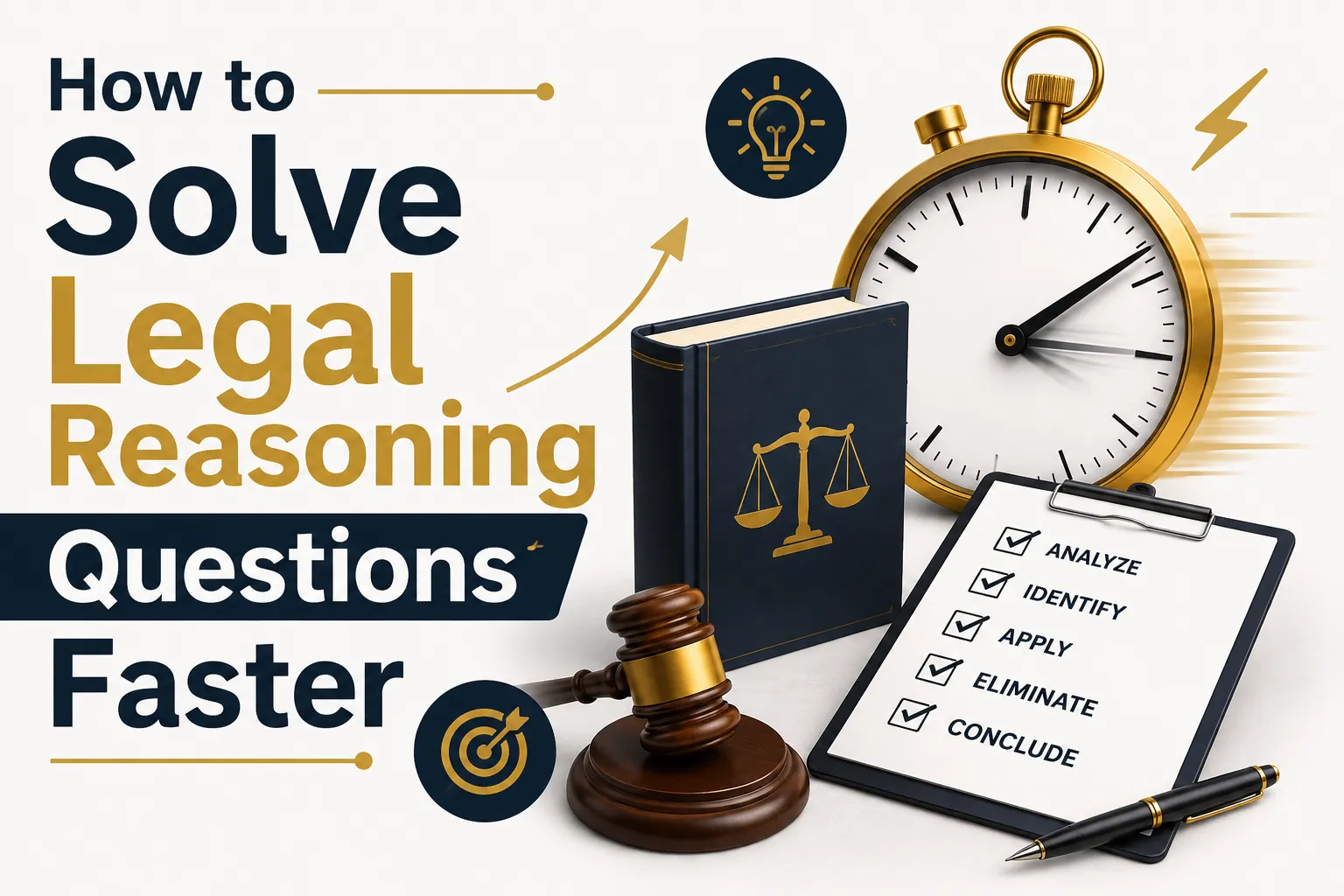

Legal Reasoning is one of the most important sections of the Common Law Admission Test (CLAT). It evaluates a candidate's ability to understand legal principles, analyze situations, and apply logical reasoning to reach the correct conclusion. Since this section carries significant weight, solving questions quickly and accurately can greatly improve your overall score. If you're preparing for CLAT, mastering a few proven strategies can help you save time and boost confidence on exam day.
Understand the Legal Principle First
Every Legal Reasoning passage contains one or more legal principles followed by factual scenarios. Before reading the facts, carefully understand the legal principle provided in the passage. Avoid using your personal knowledge of the law unless the question specifically asks for it. CLAT primarily tests your ability to apply the given principle, not your prior legal knowledge.
Reading the principle first makes it easier to identify relevant facts and eliminates confusion while solving questions.
Read the Facts Carefully
Many candidates lose marks because they skim through the factual scenario. Pay close attention to names, dates, actions, exceptions, and relationships between the parties. Even a small detail can change the correct answer.
Highlight or mentally note keywords that connect directly with the legal principle. This habit helps you eliminate incorrect options quickly.
Practice the Process of Elimination
Instead of searching for the correct answer immediately, begin by eliminating options that clearly contradict the legal principle or ignore important facts from the passage. Narrowing the choices increases your chances of selecting the correct answer, even if you are unsure.
The elimination method also saves valuable time during the examination.
Improve Your Reading Speed
Legal Reasoning passages can be lengthy, making reading speed an important skill. Develop a daily habit of reading newspapers, legal editorials, and opinion articles. This improves comprehension, vocabulary, and analytical thinking while helping you process information faster during the exam.
However, remember that speed should never come at the cost of accuracy.
Attempt Regular Mock Tests
Mock tests simulate the actual CLAT exam environment and help you improve both speed and accuracy. After every mock test, analyze the questions you answered incorrectly and identify whether the mistake occurred due to misunderstanding the principle, overlooking facts, or poor time management.
Consistent mock practice helps you develop an effective strategy for tackling Legal Reasoning questions under pressure.
Learn Time Management
Do not spend too much time on a single difficult question. If a passage seems confusing, mark it for review and move to the next one. Completing easier questions first ensures that you maximize your score within the limited exam duration.
A balanced approach between speed and accuracy is the key to success.
Join Expert Guidance
Many aspirants find that structured coaching significantly improves their Legal Reasoning skills. Enrolling in the best CLAT coaching in Kolkata provides access to experienced mentors, comprehensive study materials, regular mock tests, doubt-clearing sessions, and personalized feedback. Expert guidance can help students identify weak areas and develop faster problem-solving techniques.
Conclusion
Solving Legal Reasoning questions faster requires consistent practice, careful reading, and smart time management. Focus on understanding legal principles, applying the process of elimination, improving reading speed, and analyzing your mock test performance. With disciplined preparation and support from the best CLAT coaching in Kolkata, you can enhance both your speed and accuracy, giving yourself a strong advantage in the CLAT examination.






























Sign in to leave a comment.