
Introduction
"Around 40% of drum accidents in Australian factories occur during transport rather than in storage." Surprising, isn’t it? Even a sturdy drum can spill, dent, or injure someone if handled incorrectly. Meanwhile, teams often blame the drum itself, when the real culprit is poor handling practices. Think of it like trying to carry a full cup of coffee across a bouncy floor—you wouldn’t just toss it in your hand and run. The right equipment ensures drums are moved smoothly and without accidents.
If drums keep tipping in your facility, this guide will explore practical ways to move heavy industrial drums safely while keeping staff and product protected.
What Causes Drums to Tip Over During Movement?
Drums may look sturdy, but mishandling can turn them into hazards. The most common causes include:
- Uneven surfaces – bumps, cracks, or wet floors can destabilize a drum.
- Manual dragging or tilting – trying to move drums without proper equipment.
- Incorrect positioning – placing the drum off-centre on a dolly or lift.
- Overfilled or poorly sealed drums – shifting liquids move the drum’s centre of gravity.
Even small mistakes can lead to spills, lost material, and downtime.
How Can a Drum Trolley Prevent Tipping Accidents?
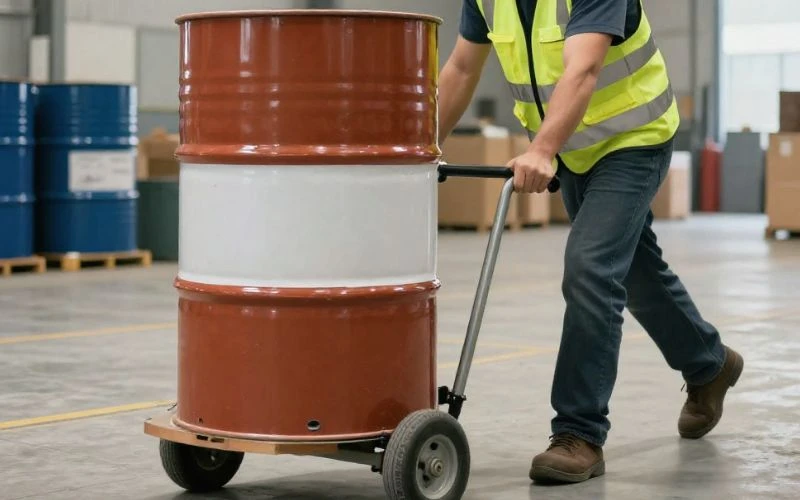
Using a drum trolley (or heavy-duty industrial barrel mover) keeps drums upright and balanced. Benefits include:
- Movement that is smooth and controlled on flat areas
- Clamps or grips to keep the drum in place while it's being moved
- Fewer back problems and less stress on staff
An easy way to think of it: the trolley is your drum’s seatbelt. Without it, even a small bump can send things flying.
When Is a Drum Lifter a Better Choice?
At times, using a drum lifter—sometimes referred to as a barrel hoist or forklift drum attachment—is the better option, particularly when stacking drums or placing them on pallets.
- lifts drums precisely without knocking them over
- Enables adjustment of both height and angle.
- It can be used with trucks, cranes, or hoists, depending on the situation.
What Steps Should Be Followed to Move Drums Safely?
Here’s a step-by-step checklist to prevent tipping accidents:
- Inspect the drum – check for leaks, dents, and secure closures.
- Select the appropriate equipment – a drum trolley for floor movement or a drum lifter for stacking and height adjustments.
- Secure the drum – clamp or lock it firmly.
- Clear the path – remove obstacles and ensure the floor is even and dry.
- Move at a controlled speed – slow turns and smooth movement prevent accidents.
- Tilt only when ready to pour – use the equipment’s tilt mechanism instead of manual force.
- Store safely – flat, stable surfaces away from high-traffic areas.
Following these steps has been shown to reduce drum-related accidents by up to 60% in local Australian facilities.
Are There Extra Tips for Busy Australian Warehouses?
- Pair your trolley or lifter with a drum rotator for controlled pouring.
- Provide staff training with short, practical drills—they remember procedures better than long manuals.
- Schedule regular inspections of moving equipment to catch wear and tear early.
- Work with local suppliers for maintenance—they can reduce downtime.
Conclusion: Quick-Action Takeaway
Stopping drums from tipping isn’t complicated—it’s about right equipment, proper technique, and proactive checks.
Immediate Checklist:
- Inspect drum closures
- Use one of your industrial drum moving tools (trolley or lifter)
- Secure drum with clamps
- Clear and level the path
- Move slowly and tilt only with equipment
- Train staff on proper handling
- Inspect equipment regularly
For Australian factories and warehouses, using the right drum handling tools pays off in fewer spills, faster workflow, and a calmer production line.





















Sign in to leave a comment.