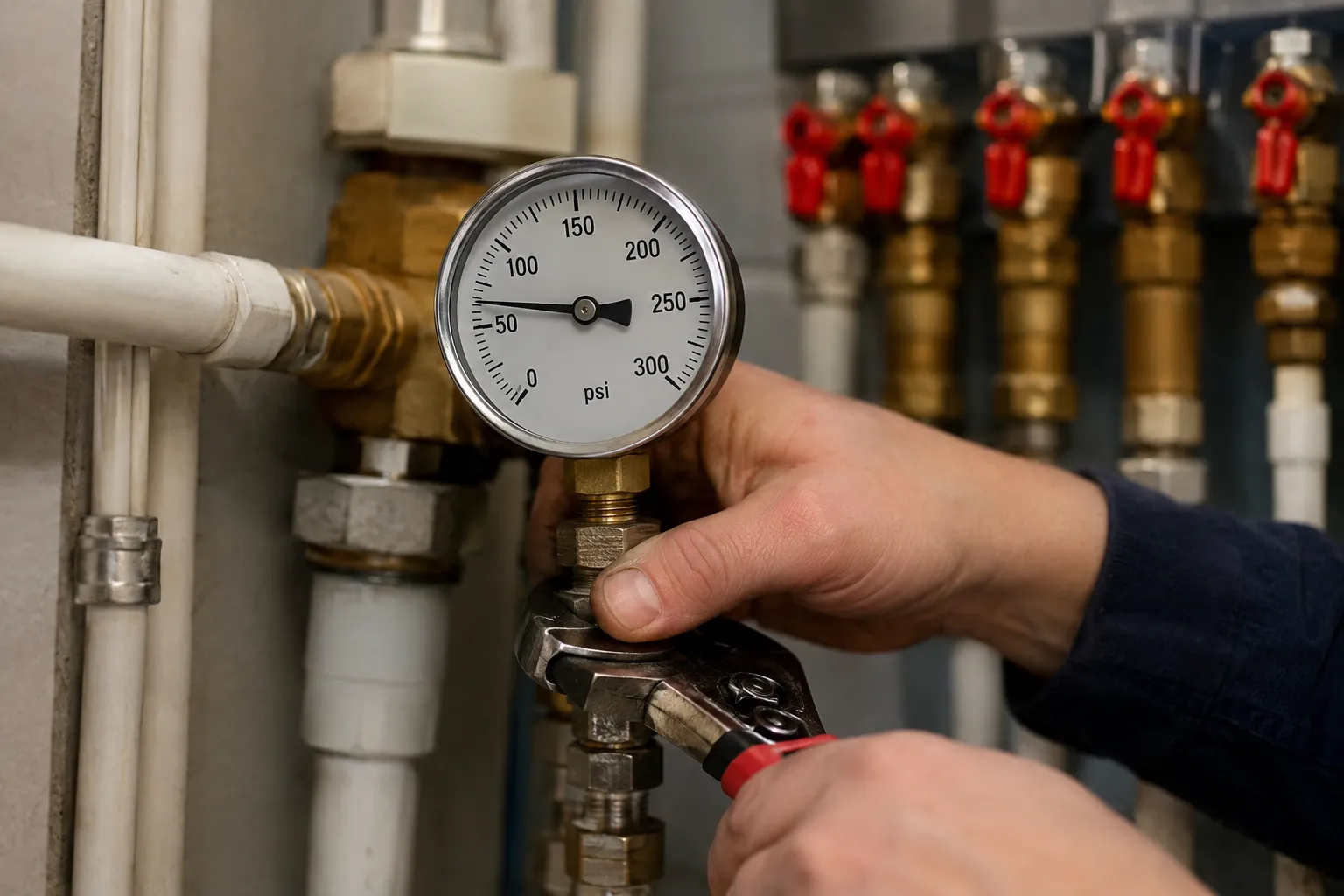

Water pressure sounds like a small thing, but it can quietly mess up an entire plumbing system if it goes wrong. How Water Line Pressure Problems Can Damage Your Entire Plumbing System is not just a technical issue—it’s something that shows up later as leaks, weak flow, or broken appliances when the damage is already done, often when you finally need a professional plumber in Rock Spring.
Most homes don’t fail suddenly. They fail slowly. Pipes get stressed, joints loosen, and appliances start acting weird. That’s usually how pressure problems show up.
In most normal homes, water pressure should stay steady and balanced.
When it swings too high or too low, things start wearing out faster than expected. And honestly, many people ignore the early signs because everything still “kind of works” at first.
What Water Pressure Problems Really Feel Like?
Water pressure problems don’t always look like a “problem” in the beginning.
High pressure feels great. Strong showers. Fast sinks. Everything seems efficient.
Low pressure feels annoying. Weak showers. Slow taps. People just adjust and live with it.
That’s the trap. The system is already under stress, but the comfort level tricks people into ignoring it.
High Water Pressure: Why It Looks Good but Hurts Later
High water pressure is one of those things that feels like a bonus at first. Strong flow feels powerful and clean. But inside the pipes, it’s a different story.
What usually happens:
- Pipes shake slightly every time water runs
- Small joints take repeated stress
- Faucets start dripping earlier than expected
- Water heaters work harder than they should
The biggest issue is that damage builds slowly. No big warning. Just small leaks showing up one by one.
And once one weak spot starts leaking, others usually follow.
Low Water Pressure: Slow Damage That Gets Ignored
Low water pressure is trickier. It doesn’t feel dangerous, just “annoying.”
But low pressure often means something is already wrong:
- Hidden leak somewhere
- Blockage building up inside pipes
- Old or corroded plumbing lines
What usually happens is people ignore it. They get used to weak showers or slow sinks.
But the system doesn’t fix itself. If anything, low pressure often gets worse over time, especially when buildup or leaks spread.
What Parts of the Plumbing Get Hit First?
Not everything fails at once. Some parts take the hit first:
Pipes
These take the most pressure stress. High pressure slowly weakens them. Low pressure allows buildup inside.
Faucets and showers
These are the first things people notice. Dripping, weak spray, uneven flow.
Water heater
This one often gets overlooked. But pressure issues force it to work harder, which shortens its life.
Appliances
Dishwashers and washing machines are sensitive. Even small pressure changes can reduce efficiency or damage parts.
It usually starts small in one area, then spreads.
Signs Most People Miss
There are early warnings, but they don’t always look serious:
- Slight banging sound in pipes
- Water pressure changing randomly
- One faucet weaker than others
- Small leaks that “come and go”
- Appliances taking longer than usual
Most people brush these off. The thinking is usually: “It’s still working, so it’s fine.”
That mindset is where the real damage grows.
What Usually Works to Prevent Damage?
Some simple things actually help a lot:
- Keeping water pressure steady instead of ignoring changes
- Fixing small leaks early instead of waiting
- Checking old pipes before they fail
- Paying attention when water flow suddenly changes
These steps don’t feel big, but they prevent expensive repairs later.
The systems that last longest are usually the ones that get small issues handled quickly, not perfectly maintained ones.
What Often Fails (and Makes Things Worse)
There are also common mistakes that make things worse:
- Ignoring weak pressure for months
- Assuming strong pressure means everything is good
- Only fixing visible leaks while ignoring hidden ones
- Delaying repairs until something “breaks fully”
The biggest failure is waiting for a big problem instead of reacting to small signs.
By the time a pipe bursts or water damage shows up, the issue has usually been building for a long time.
When It’s Time to Call a Plumber
Some situations are past DIY fixes:
- Pressure keeps changing without reason
- Multiple fixtures act up at the same time
- Pipes make loud or unusual noises
- Repeated leaks show up in different spots
- Water flow becomes extremely weak or unstable
At that point, guessing doesn’t help much. The issue is usually deeper in the system.
Final Thoughts
Water pressure problems are sneaky. High pressure feels great until pipes start leaking. Low pressure feels harmless until it points to a bigger hidden issue.
The reality is simple: plumbing systems don’t fail suddenly—they fail in stages.
What usually works is paying attention early and fixing small changes before they spread. What often fails is ignoring those small signs and hoping they don’t matter.
A practical way to look at it: stable water pressure is like keeping a car engine at the right temperature. It doesn’t feel important day to day, but it decides how long everything lasts. In the middle of handling these issues, Mr. Rooter Plumbing of Chattanooga often becomes the go-to option for homeowners who want problems checked before they turn serious.
FAQs
1. What causes water pressure problems in a home?
Most commonly due to the age of piping, leaks, blockages, or problems with the main supplypipe.
2. Is high water pressure more dangerous than low pressure?
High water pressure is physically more damaging to pipes and fittings.
3. Can low water pressure damage plumbing?
It will most likely mean there is a leak somewhere in the plumbing.
4. How do I know if my water pressure is bad?
Symptoms include reduced flow of water, strange sounds from the pipes, leakages, etc.
5. Can pressure problems fix themselves?
No; pressure-related issues only get worse with time.

























Sign in to leave a comment.