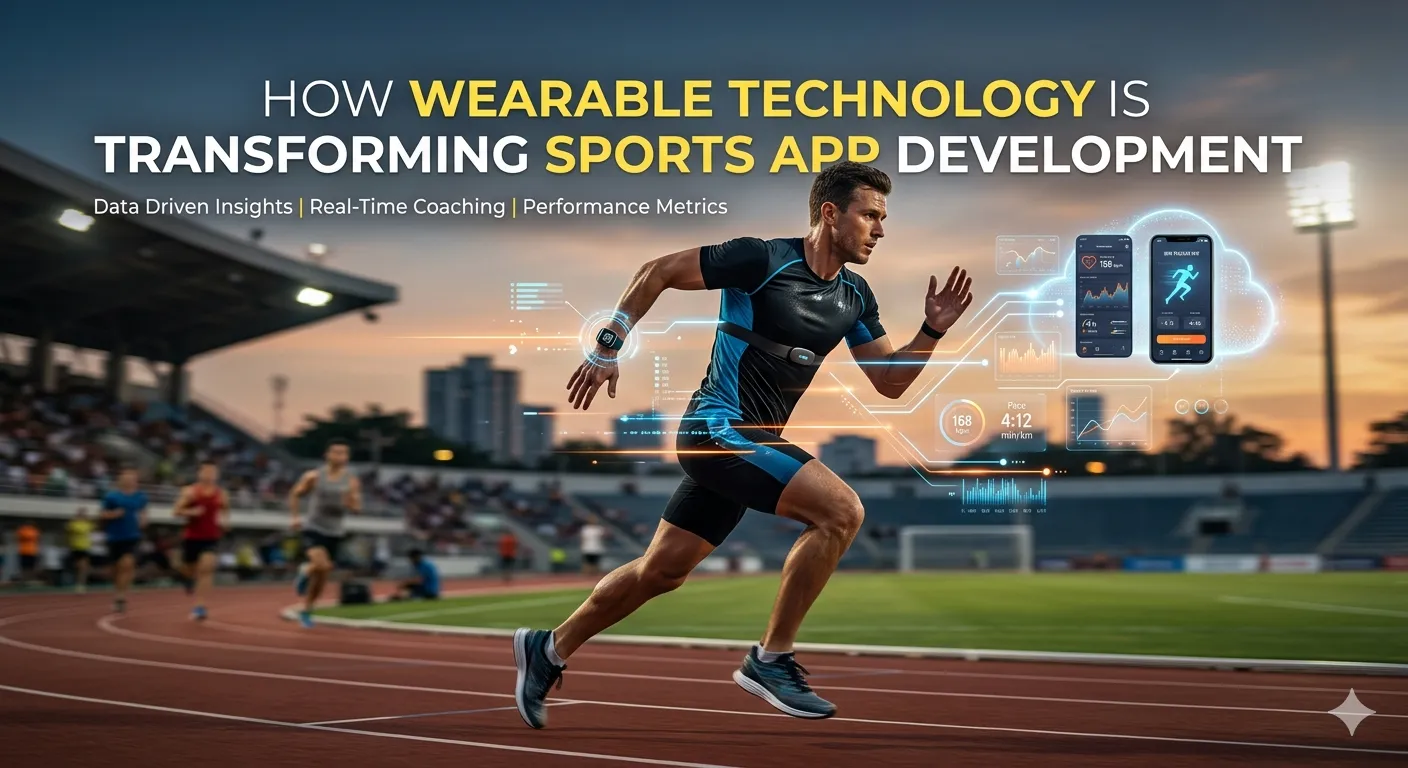

Wearable technology has become one of the most influential innovations in the sports industry. From smartwatches and fitness bands to biometric sensors and GPS-enabled performance trackers, wearable devices are fundamentally changing how athletes train, how coaches analyze performance, and how sports fans interact with fitness ecosystems.
In 2026, sports apps are no longer standalone mobile platforms. They are becoming connected digital ecosystems powered by real-time wearable data. Sports organizations, fitness startups, athletic trainers, and healthcare providers are increasingly integrating wearable technologies into sports applications to deliver personalized insights, improve performance tracking, and create immersive user experiences.
The combination of wearable devices and sports app development is driving a new era of data-driven sports experiences. Athletes can now monitor heart rate variability, recovery levels, hydration, sleep quality, movement patterns, and performance metrics directly from wearable devices synced with sports apps in real time.
This transformation is reshaping the technical architecture of sports applications and introducing new opportunities in analytics, AI, cloud computing, IoT integration, and user engagement.
This guide explores how wearable technology is transforming sports app development, the technologies involved, key challenges, business opportunities, and future trends shaping the industry.
Understanding Wearable Technology in Sports
What Is Wearable Technology?
Wearable technology refers to electronic devices worn on the body that collect, process, and transmit data.
In sports, wearables typically include:
- Smartwatches
- Fitness bands
- Smart clothing
- GPS trackers
- Biometric sensors
- Smart shoes
These devices gather real-time physiological and movement data.
Why Wearables Matter in Sports App Development
Shift Toward Data-Driven Sports Experiences
Modern athletes and fitness users expect personalized and measurable experiences.
Wearables provide continuous access to:
- Health metrics
- Performance analytics
- Recovery insights
- Activity tracking
Growing User Demand
Consumers increasingly rely on wearable devices for:
- Fitness monitoring
- Training optimization
- Wellness tracking
- Sports performance analysis
This demand is accelerating wearable-integrated sports app development.
Types of Wearable Devices Used in Sports
Smartwatches
Devices like Apple Watch and Garmin watches track:
- Heart rate
- GPS location
- Workout performance
- Calories burned
Fitness Bands
Popular for lightweight activity tracking and wellness monitoring.
Smart Clothing
Embedded sensors collect body movement and muscle activity data.
GPS Trackers
Used by athletes and teams for:
- Speed analysis
- Distance tracking
- Position monitoring
Biometric Sensors
Measure advanced health data such as:
- Oxygen levels
- Stress indicators
- Recovery rates
Core Technologies Behind Wearable Sports Apps
Internet of Things (IoT)
Role of IoT in Wearables
Wearables function as IoT devices connected to sports apps.
Benefits
- Real-time synchronization
- Remote monitoring
- Continuous data collection
Bluetooth Low Energy (BLE)
Why BLE Is Important
BLE enables low-power communication between wearables and mobile apps.
Advantages
- Reduced battery consumption
- Fast device pairing
- Stable connectivity
Cloud Computing
Importance of Cloud Infrastructure
Wearable-integrated sports apps generate massive amounts of real-time data.
Cloud systems help:
- Store data
- Process analytics
- Enable global access
Artificial Intelligence and Machine Learning
AI in Wearable Sports Apps
AI transforms raw wearable data into actionable insights.
Applications
- Performance prediction
- Injury prevention
- Personalized coaching
Big Data Analytics
Why Big Data Matters
Wearables generate continuous streams of performance metrics.
Analytics platforms process:
- User behavior
- Training patterns
- Health trends
Real-Time Data Processing Technologies
Need for Real-Time Systems
Sports apps must process wearable data instantly.
Technologies Used
WebSockets
Enable live synchronization between wearables and apps.
Apache Kafka
Processes high-volume real-time event streams.
Key Features Enabled by Wearable Technology
Real-Time Performance Tracking
Athlete Monitoring
Sports apps can track:
- Speed
- Heart rate
- Endurance
- Movement efficiency
in real time.
Personalized Training Programs
AI-Driven Coaching
Wearable data helps apps create customized training plans.
Injury Prevention and Recovery Monitoring
Predictive Analytics
Apps analyze fatigue and movement patterns to identify injury risks.
Sleep and Wellness Tracking
Holistic Athlete Management
Modern sports apps monitor:
- Sleep cycles
- Recovery quality
- Stress levels
Live Feedback and Alerts
Instant Notifications
Apps provide immediate alerts regarding:
- Overtraining
- Hydration
- Recovery needs
Fan Engagement Through Wearables
Interactive Sports Experiences
Fans can use wearables to:
- Participate in fitness challenges
- Access immersive sports experiences
- Track live event interactions
Use Cases of Wearable Technology in Sports Apps
Fitness and Wellness Apps
Example Features
- Activity tracking
- Calorie monitoring
- Goal setting
Athlete Performance Apps
Professional Sports Applications
Used by teams and coaches for:
- Performance optimization
- Tactical analysis
- Player conditioning
Rehabilitation and Recovery Apps
Healthcare Integration
Wearables support injury recovery programs.
Fantasy Sports and Gamification Apps
Interactive Experiences
Wearable-generated activity can influence game rewards and competitions.
Technical Challenges in Wearable Sports App Development
Data Accuracy and Reliability
The Challenge
Sensor inaccuracies can affect analytics quality.
Solution
Implement advanced calibration and validation algorithms.
Battery Optimization
Why It Matters
Continuous data transmission drains wearable batteries quickly.
Solution
Use efficient BLE communication and optimized background processes.
Real-Time Synchronization
The Challenge
Large-scale real-time synchronization requires low-latency infrastructure.
Solution
Use event-driven architecture and scalable cloud systems.
Security and Data Privacy
Sensitive Data Risks
Wearables collect personal health and biometric information.
Security Solutions
- End-to-end encryption
- Secure APIs
- Multi-factor authentication
Device Compatibility Challenges
Fragmented Ecosystem
Sports apps must support multiple wearable brands and operating systems.
Solution
Use standardized APIs and modular integration frameworks.
Technology Stack for Wearable Sports Apps
Frontend Technologies
Flutter
Ideal for cross-platform wearable-connected applications.
React Native
Supports rapid mobile app development.
Backend Technologies
Node.js
Efficient for real-time communication systems.
Python
Useful for AI and analytics-driven applications.
Database Technologies
MongoDB
Handles flexible wearable-generated datasets.
PostgreSQL
Suitable for structured sports analytics data.
Cloud Platforms
AWS
Provides scalable IoT and analytics services.
Google Cloud
Strong in AI and machine learning integration.
AI Applications in Wearable Sports Apps
Predictive Performance Analytics
How It Works
AI predicts future athletic performance trends.
Injury Prediction Models
Preventive Healthcare
Machine learning identifies potential injury risks.
Personalized Recommendations
Dynamic Coaching Systems
Apps adapt workouts based on wearable data.
Future Trends in Wearable Sports Technology
Smart Fabrics and Biometric
Clothing
Emerging Innovation
Clothing embedded with advanced sensors will expand data collection.
AR/VR Integration
Immersive Training Experiences
Wearables combined with AR/VR will transform sports training.
5G Connectivity
Faster Data Synchronization
5G enables ultra-low latency wearable interactions.
Edge Computing
Localized Processing
Reduces latency by processing wearable data closer to the user.
Blockchain for Sports Data Security
Secure Athlete Data Management
Blockchain enhances data ownership and privacy.
Business Opportunities in Wearable Sports Apps
Subscription-Based Services
Premium analytics and coaching programs.
Athlete Performance Platforms
Solutions for professional sports teams and coaches.
Corporate Wellness Programs
Wearable-integrated fitness solutions for enterprises.
Connected Fitness Ecosystems
Combining wearables, apps, and smart devices into unified platforms.
Best Practices for Wearable Sports App Development
Prioritize Data Accuracy
Reliable analytics improve user trust.
Focus on Low Latency
Real-time performance is critical.
Optimize Battery Usage
Efficient communication protocols are essential.
Ensure Security Compliance
Protect sensitive biometric data.
Build Scalable Infrastructure
Prepare for growing wearable ecosystems.
Common Mistakes Businesses Should Avoid
Ignoring Device Compatibility
Limited support reduces market reach.
Weak Data Security
Poor security damages user trust and compliance.
Overcomplicated Interfaces
Complex dashboards reduce usability.
Neglecting Performance
Optimization
Wearable apps require lightweight and efficient systems.
What Businesses Should Focus On
AI-Powered Personalization
Users expect customized experiences.
Seamless Device Integration
Smooth connectivity improves engagement.
Scalable Cloud Infrastructure
Wearable ecosystems generate enormous amounts of data.
User-Centric Experiences
Data should be easy to understand and actionable.
How JPLoft Helps Businesses Build Wearable-Integrated Sports Apps
Wearable technology is rapidly changing the future of sports app development, and businesses require experienced technology partners to build scalable and connected digital ecosystems. JPLoft has established itself as a trusted development company that helps businesses integrate wearable technology into advanced sports applications.
They specialize in developing wearable-enabled sports apps that support:
- Real-time fitness tracking
- Athlete performance monitoring
- AI-driven analytics
- Personalized coaching systems
- IoT-enabled sports ecosystems
JPLoft leverages modern technologies such as:
- Bluetooth Low Energy (BLE)
- Cloud-native infrastructure
- AI and machine learning
- Big data analytics
- Real-time synchronization systems
Their development teams focus on creating scalable applications capable of processing massive amounts of wearable-generated data while maintaining low latency and high reliability.
They also emphasize:
- Secure biometric data management
- Cross-device compatibility
- Performance optimization
- User-friendly dashboard experiences
By following agile development methodologies and modern architecture practices, they help businesses accelerate wearable sports app development efficiently.
By partnering with JPLoft, businesses can:
- Build future-ready wearable sports platforms
- Improve athlete and user engagement
- Deliver personalized sports experiences
- Scale wearable ecosystems efficiently
They work closely with businesses to create customized solutions tailored to evolving sports technology demands.
Conclusion
Wearable technology is transforming sports app development by enabling real-time data collection, personalized experiences, advanced analytics, and connected fitness ecosystems.
From athlete performance tracking and injury prevention to fan engagement and immersive training experiences, wearables are redefining how users interact with sports applications.
However, developing wearable-integrated sports apps requires sophisticated technologies, scalable cloud infrastructure, AI-powered analytics, and strong security frameworks.
Businesses that invest in wearable technology integration today will be better positioned to lead the future of digital sports experiences.
By partnering with experienced development companies like JPLoft, organizations can accelerate innovation, reduce technical complexity, and build high-performance sports applications that fully leverage the power of wearable technology in the evolving sports industry.



























Sign in to leave a comment.