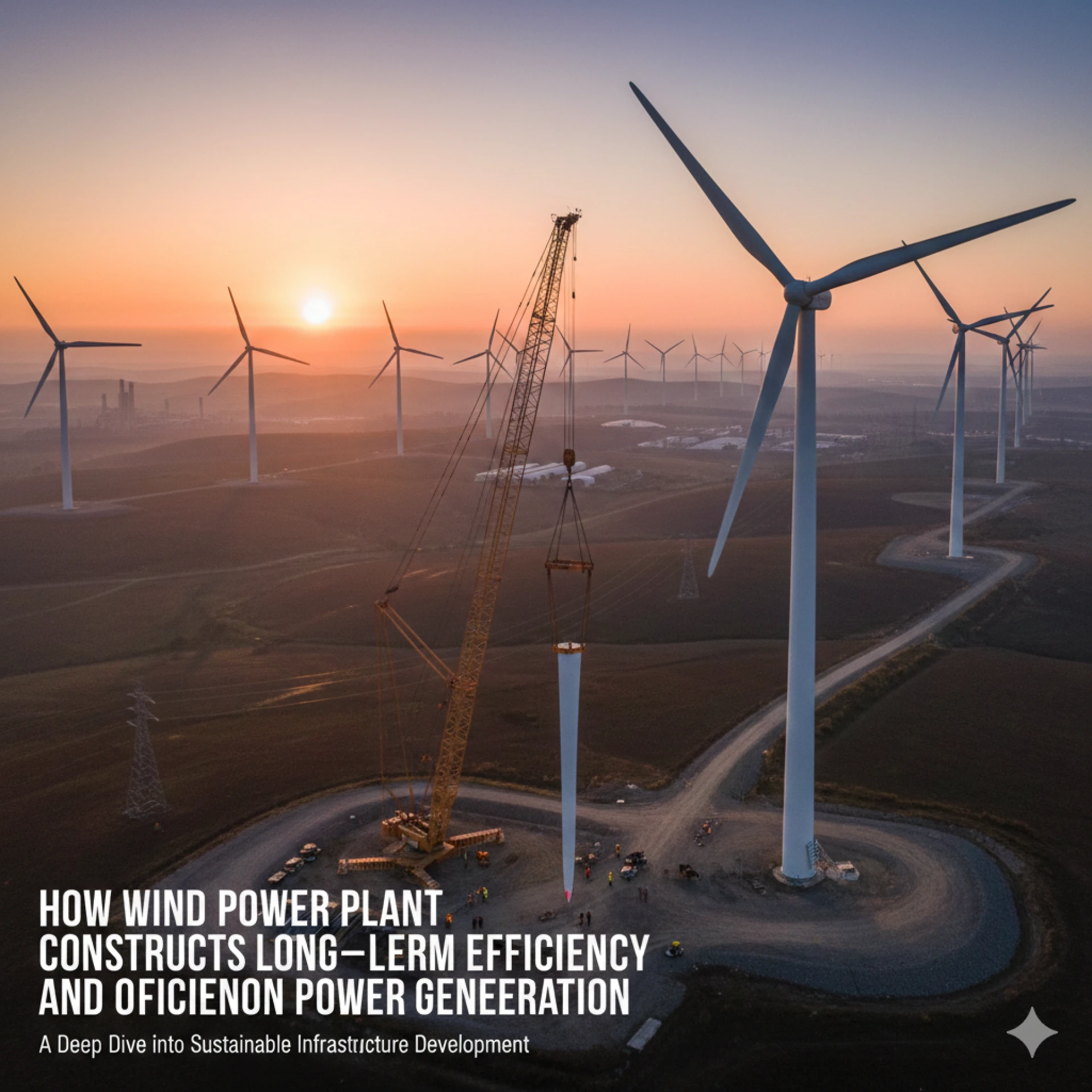

I often notice the quiet rhythm of industry while driving through long industrial corridors. Warehouses, substations, and distant turbine blades mark places where decisions made years ago still shape daily outcomes. Watching those turbines turn always brings me back to a central question in renewable energy: how early choices influence Wind Power Plant Efficiency over decades, not just at the moment the first kilowatt is produced.
The foundation of performance is set early, and Wind Power Plant Construction plays a defining role in how reliably energy is generated over time. Choices about location, layout, and materials are not just technical preferences. They determine how turbines interact with wind patterns, how often equipment needs repair, and how much energy is lost before it ever reaches the grid. Construction is where theory meets reality, and small compromises can quietly reduce long term output.
Technology Choices That Shape Performance
Technology decisions during construction affect efficiency for the entire lifespan of a wind power plant. Turbine size, hub height, and blade design must match the wind profile of the site. Poor alignment between technology and location can lead to turbulence, uneven loading, and accelerated wear. Electrical systems also matter. Substations, cabling routes, and grid connection points influence transmission losses and reliability. When construction integrates proven technology with site specific data, efficiency becomes a structural feature rather than an operational goal.
The Human Factor in Construction and Operations
Behind every turbine is a chain of human decisions. Engineers, construction managers, and technicians translate plans into physical structures. Experience and communication during construction reduce errors that later show up as maintenance issues or performance drops. Skilled crews ensure foundations are correctly poured, towers properly aligned, and control systems accurately calibrated. Over time, these human factors directly affect how smoothly turbines operate and how consistently energy is produced.
Long Term Economic Impact
The economic consequences of construction quality unfold slowly but clearly. Well built wind power plants tend to have lower operating costs, fewer unexpected shutdowns, and more predictable energy output. This stability supports better financial planning and more reliable returns on investment. In contrast, shortcuts during construction often lead to higher maintenance expenses and reduced lifetime energy production. Efficiency, in this sense, is not just a technical metric but a financial outcome shaped by early decisions.
Building for the Future
Driving past those turbines again years later, it becomes clear that construction is not a one time event. It is a long term commitment embedded in concrete, steel, and systems design. When construction aligns technology, human expertise, and economic foresight, wind power plants deliver steady efficiency and dependable power generation. The landscape may look quiet, but it reflects choices that continue to work every day.



























Sign in to leave a comment.