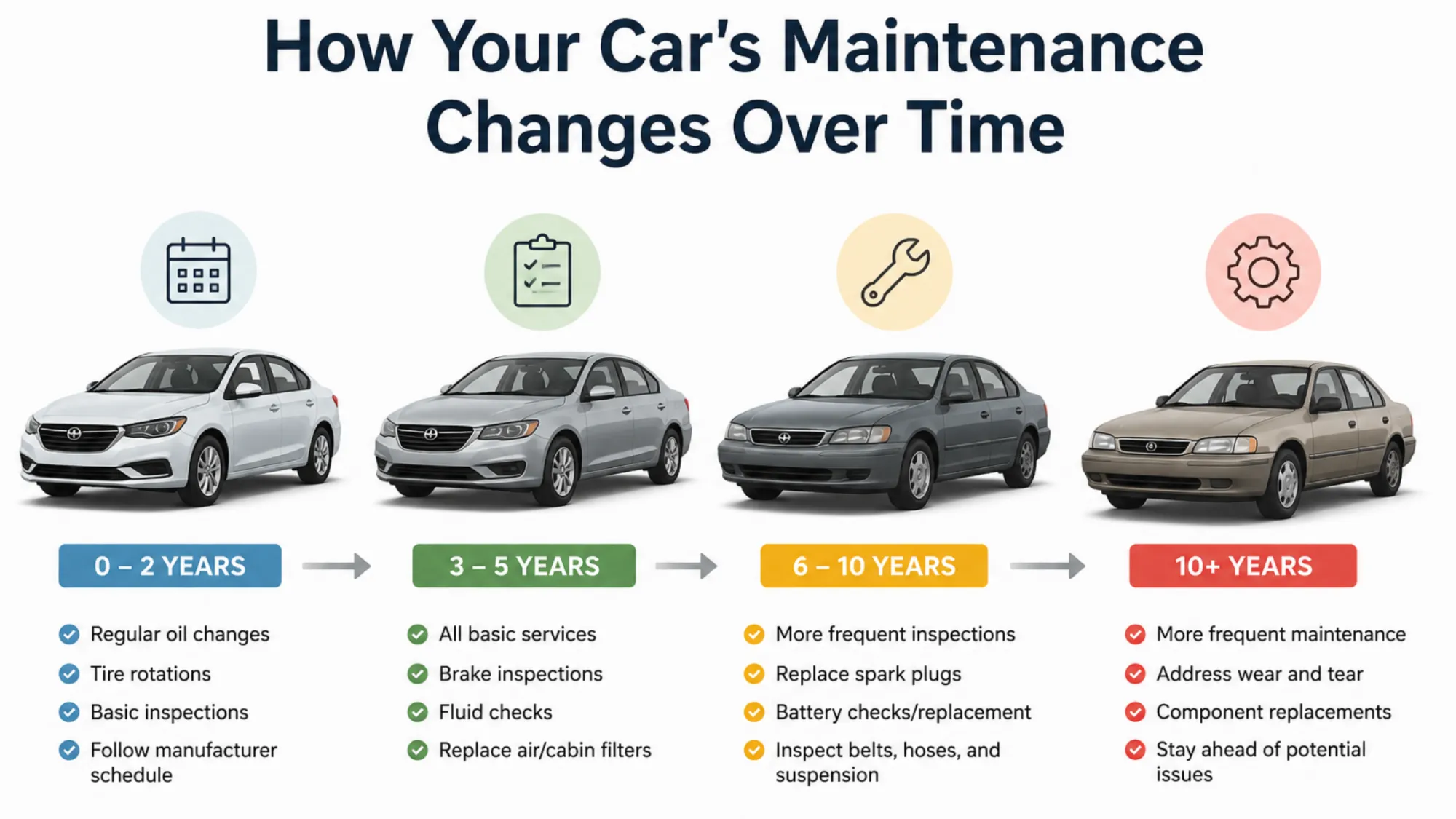

Every car starts its life looking great, running smooth, and needing almost nothing. Then slowly, almost sneakily, things start asking for attention.
A filter here, a fluid there, then bigger stuff like belts and suspension. That's not the car failing you. That's just time doing what it does.
Understanding how car maintenance over time shifts is one of the most underrated things a driver can know. Because when you know what's coming, you can plan for it, instead of getting blindsided by a hefty repair bill on a random Tuesday.
Why Maintenance Isn't One-Size-Fits-All
Here's the thing most people don't realize: your car at 20,000 miles is a completely different machine than your car at 100,000 miles. The demands change. The wear patterns change. And if you keep treating it the same way you did on day one, you're setting yourself up for trouble.
Preventative maintenance is the foundation that keeps everything together across all stages of a car's life. It's not glamorous, nobody brags about timely coolant flushes, but it's what separates a car that lasts 200,000 miles from one that gives up at 80,000.
Most manufacturers work around what's known as a 30-60-90 schedule: key inspections and replacements at 30,000, 60,000, and 90,000 miles. Think of it as your car's version of a health checkup, except missing an appointment actually has consequences.
The Early Miles: 0 to 30,000
When a car is brand new, the maintenance list is short and relatively inexpensive. This is the easiest phase, but also the most important one to get right, because the habits you build early set the tone for everything that follows.
What needs attention in this phase:
- Oil and filter changes - every 5,000 to 7,500 miles depending on whether you use synthetic or conventional oil. Synthetic lasts longer and handles heat better.
- Tire rotation - every 6,000 to 8,000 miles to keep tread wear even and extend tire life.
- Cabin air filter - worth checking around 12,000 to 15,000 miles. A clogged filter makes your HVAC work harder and lets in more dust.
- Brake pad check - start inspecting around 10,000 miles, though replacement usually isn't needed yet.
This phase is mostly about oil, tires, and staying on top of fluid levels. Keep your records clean from day one it matters more than people think when resale time comes around.
The Middle Miles: 30,000 to 60,000
This is where vehicle maintenance starts asking more of you. The car still runs well, but components that were once in perfect shape are starting to show wear. Ignore things here, and they become much bigger problems in the next phase.
Key services at this stage:
- Brake fluid replacement - somewhere between 20,000 and 45,000 miles. Old brake fluid absorbs moisture over time, which can seriously affect braking performance.
- Air filter swap - engine air filters generally need replacing every 15,000 to 30,000 miles. A clogged one can noticeably dull your acceleration.
- Coolant system flush - helps prevent overheating and protects internal engine components.
- Transmission fluid - typically due every 30,000 to 40,000 miles. Don't skip this one. Transmission repairs are among the most expensive jobs on any vehicle.
- Spark plugs - standard copper plugs usually need replacing around 30,000 miles, while platinum or iridium versions can go much longer.
This phase also marks the end of most factory warranties. Before coverage expires, it's smart to get a full inspection so anything borderline gets caught while it's still someone else's problem.
The High-Mileage Stage: 60,000 to 100,000+
Here's where things get real. Tire car service takes on fresh importance because rubber doesn't last forever, tires over six years old can dry out and crack even if they look fine from the outside.
At this stage, it's worth checking the manufacturing date stamped on your tire sidewall, not just eyeballing the tread.
Beyond tires, several critical components hit their expected service limit around this mileage:
- Timing belt - this is one you absolutely cannot ignore. Failure can destroy an engine. Most vehicles need this replaced between 60,000 and 100,000 miles. Check your manual for the exact window.
- Hoses and belts - rubber components deteriorate from the inside out. They won't always look bad before they fail. Replacing them proactively is far cheaper than a roadside breakdown.
- Shock absorbers and struts - if the car feels bouncy, nose-dives when braking, or develops uneven tire wear, the suspension is telling you something. These components typically start showing wear in this range.
- Water pump - often replaced at the same time as the timing belt since they share location and labor. Doing both together saves money.
- Battery - most batteries last between 3 and 5 years. Age, extreme heat, and frequent short trips drain battery life faster.
- Power steering fluid - often overlooked, but heavy or noisy steering is a clear sign it needs attention.
What Changes Beyond the Odometer
Mileage gets all the attention, but time plays its own game. A car parked for years still experiences rubber degradation, battery drain, and fluid breakdown, even without moving. Seasonal shifts matter too. Extreme heat thickens engine fluids; harsh cold strains the battery and tires.
Seasonal Maintenance Worth Adding to Your Routine:
- Before summer: check coolant levels, AC system, and tire pressure (heat inflates pressure)
- Before monsoon/winter: inspect wiper blades, brakes, and tires for wet-condition grip
- Year-round: keep an eye on dashboard warning lights, they're the car talking, and they're worth listening to
The Cost Reality Over Time
A well-maintained newer car might cost somewhere between $175 - $350 a year in routine upkeep. Once a vehicle crosses high mileage territory, that number can climb significantly, especially when major components need attention all around the same time.
The smarter approach is to spread costs intentionally rather than react to failures. Every oil change skipped, every rotation delayed, every fluid ignored adds up, not in isolation, but compounding over thousands of kilometres.
Smart Car Maintenance Over Time Is What Keeps Cars Running for Years
There's something genuinely satisfying about a well-maintained car that runs cleanly at high mileage. It doesn't happen by accident. It happens because the owner stayed consistent - not heroic, just consistent.
A few final habits worth locking in:
- Always keep your service records. Every entry adds to your car's documented story.
- Follow your owner's manual first, not just generic advice.
- When in doubt, get a professional inspection rather than guessing.
Staying ahead of the curve with proper auto repair service before problems escalate is almost always less expensive than fixing what's already broken. The cars that last - the ones that hit 200,000 kilometres and keep going - aren't lucky. They're looked after.

























Sign in to leave a comment.