
Introduction
Picture this: a mechanic slides out from under a car, wipes their hands on a rag, and says, "Your brake pads are shot. Again." The car owner is confused. It's only been a year. Same car, same roads, but somehow the brakes are done already.
The car didn't fail. The driving did.
Most people only think about their vehicle when something goes wrong, when they're already searching for auto repair services and mentally adding up the bill. But a lot of that damage starts long before any warning light appears. It builds quietly, one bad habit at a time, through the braking and suspension systems most drivers never think twice about.
The brand of brake pads on a car matters far less than the foot pressing them.
Why the Gap Between 30,000 and 70,000 Miles Is All About the Driver
Brake pads are supposed to last between 30,000 and 70,000 miles. That's a 40,000-mile difference, which, for most people, is two or three years of driving. So why does one driver squeeze every mile out of their pads while another is back at the shop in half the time?
It's not bad luck. It's not even a bad car. It's a habit.
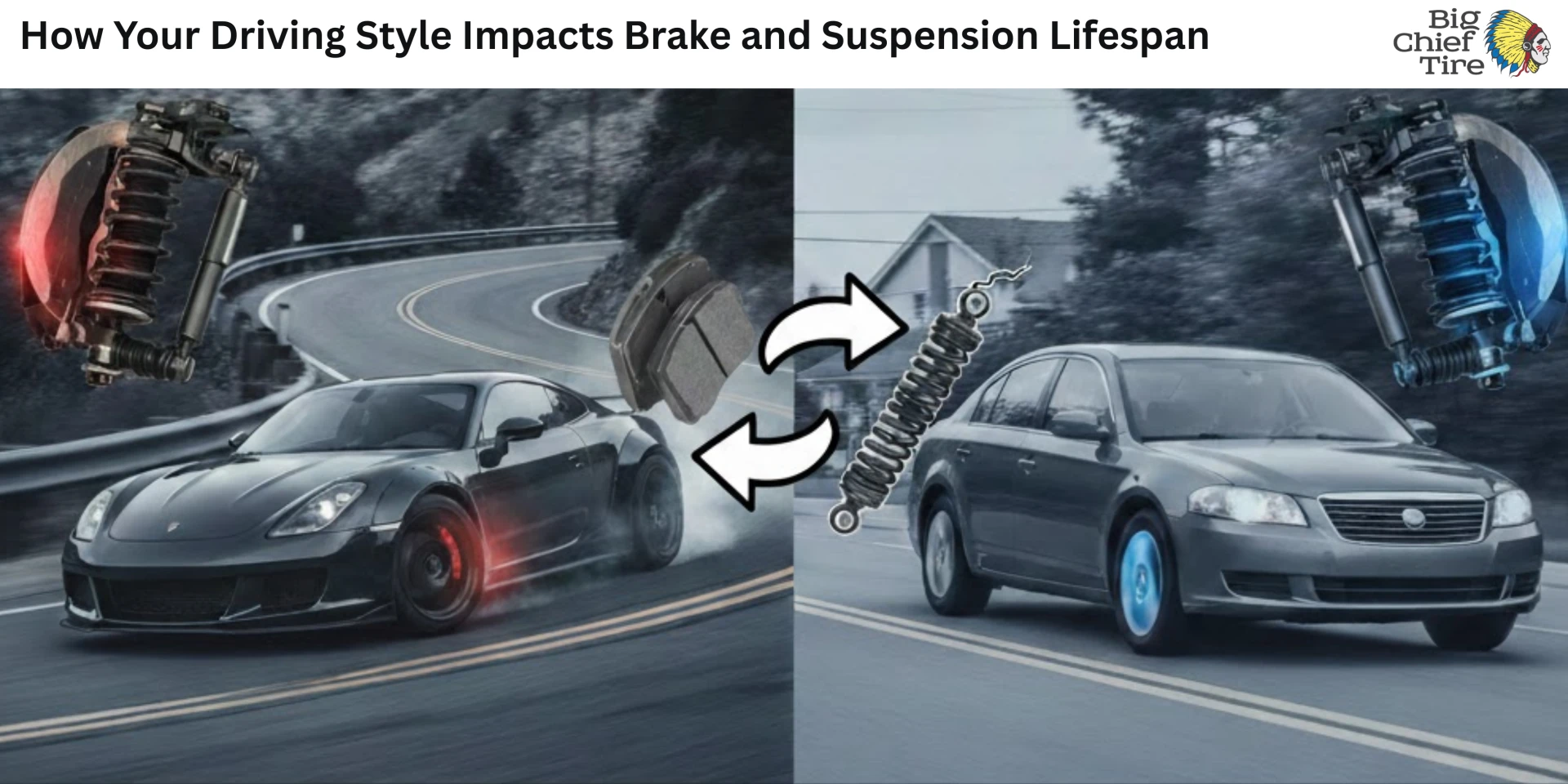
A city commuter who rides the brakes through every yellow light could be replacing pads twice as often as the driver who reads the road ahead and coasts to a stop. Same commute. Completely different wear rate.
Suspension components: shocks, struts, bushings, and control arms follow the same logic. Built to last 50,000 to 100,000 miles under reasonable conditions, they start failing much sooner when driving habits are rough. And when they go, the costs pile up fast. Most of it is preventable. Most drivers just don't realize what their habits are quietly costing them.
The Braking Habits That Do the Most Damage
Hard Braking: More Heat Than Anyone Expects
When someone really stomps the brake pedal, the pads clamp hard against the rotors and generate enormous friction. That friction becomes heat, and under aggressive driving, brake systems can reach temperatures above 300°C (572°F).
At that point, pads degrade faster, rotors can warp, and stopping performance quietly declines. The physics are straightforward: more force, more heat, more wear. Every hard stop is taking time off the clock.
Tailgating: The Habit That Multiplies Every Stop
Following too closely forces constant reactive braking. Instead of reading traffic ahead and easing off the gas early, tailgaters are always catching up, always braking harder than necessary.
Over thousands of miles, those extra stops compound into serious wear. Leave more space, and there's suddenly room to slow down gradually and let the pads cool. Simple change, real difference.
Two-Foot Driving: Damage That's Hard to See
Some drivers rest their left foot lightly on the brake pedal out of sheer habit; not pressing hard enough to feel it, but enough to create constant low-level contact between pad and rotor.
It's called ghost braking, and it's doing quiet, steady damage every minute it happens. The driver doesn't feel it. The brake system absolutely does.
Riding Brakes on a Downhill
Holding steady brake pressure all the way down a long descent keeps pads in continuous contact with the rotors. That sustained friction can overheat the entire system and, in serious cases, cause brake fade; a temporary loss of braking ability that nobody wants to discover on a steep road.
The better move is downshifting and using the engine to help control speed, keeping the brakes in reserve for when they're actually needed.
Know What's Stopping Your Car
Not all braking systems are built the same. Disc brakes are standard on most modern cars; they dissipate heat quickly and deliver consistent stopping power.
Drum brakes are still found on the rear axle of many older and smaller vehicles, are cheaper but trap heat more easily and fade faster under aggressive use.
When weighing drum brakes vs. disc brakes for a particular vehicle, disc brakes on all four wheels offer the best balance of performance and longevity for most drivers.
Vehicles still running rear drum brakes need especially smooth habits; those drums have far less tolerance for the heat that hard, repeated braking generates.
What Poor Driving Does to Suspension
Brakes get most of the attention, but suspension systems take an equally serious beating from poor driving habits; sometimes, a worse one.
Potholes and Speed Bumps at Full Speed
Every driver knows they should slow down before a pothole. Most don't bother. When a wheel drops hard into one at speed, the impact travels straight through the suspension.
Shocks and struts absorb what they can, but repeated hard hits wear them down. Over time, this leads to blown shock absorbers, cracked bushings, bent control arms, and wheels that can't hold alignment.
And here's where it connects back to brakes; worn suspension compromises how well tires grip the road, which directly reduces braking effectiveness. One problem feeds the other.
Aggressive Cornering and Hard Acceleration
Taking corners fast shifts the vehicle's weight laterally with real force. Bushings, ball joints, and tie rods bear that load, and they wear faster the harder they're pushed. Hard acceleration from a stop adds more stress; weight shifts back sharply, loading the suspension while the drivetrain strains underneath.
Then, because it's usually the same driver, a hard brake follows a block later. Both systems take the hit every single time.
Overloading the Vehicle
Suspension systems are built for a specific weight limit. When a vehicle is regularly overloaded with passengers or cargo, every component operates under constant excess strain. Springs compress beyond their ideal range, shocks struggle to control movement, and bushings wear out faster.
Unlike a pothole hit, overloading is continuous stress. Over time, it causes sagging suspension, poor alignment, uneven tire wear, and reduced stability. And just like aggressive driving, the extra weight forces the brakes to work harder too; meaning both systems wear down faster, even if nothing dramatic ever happens.
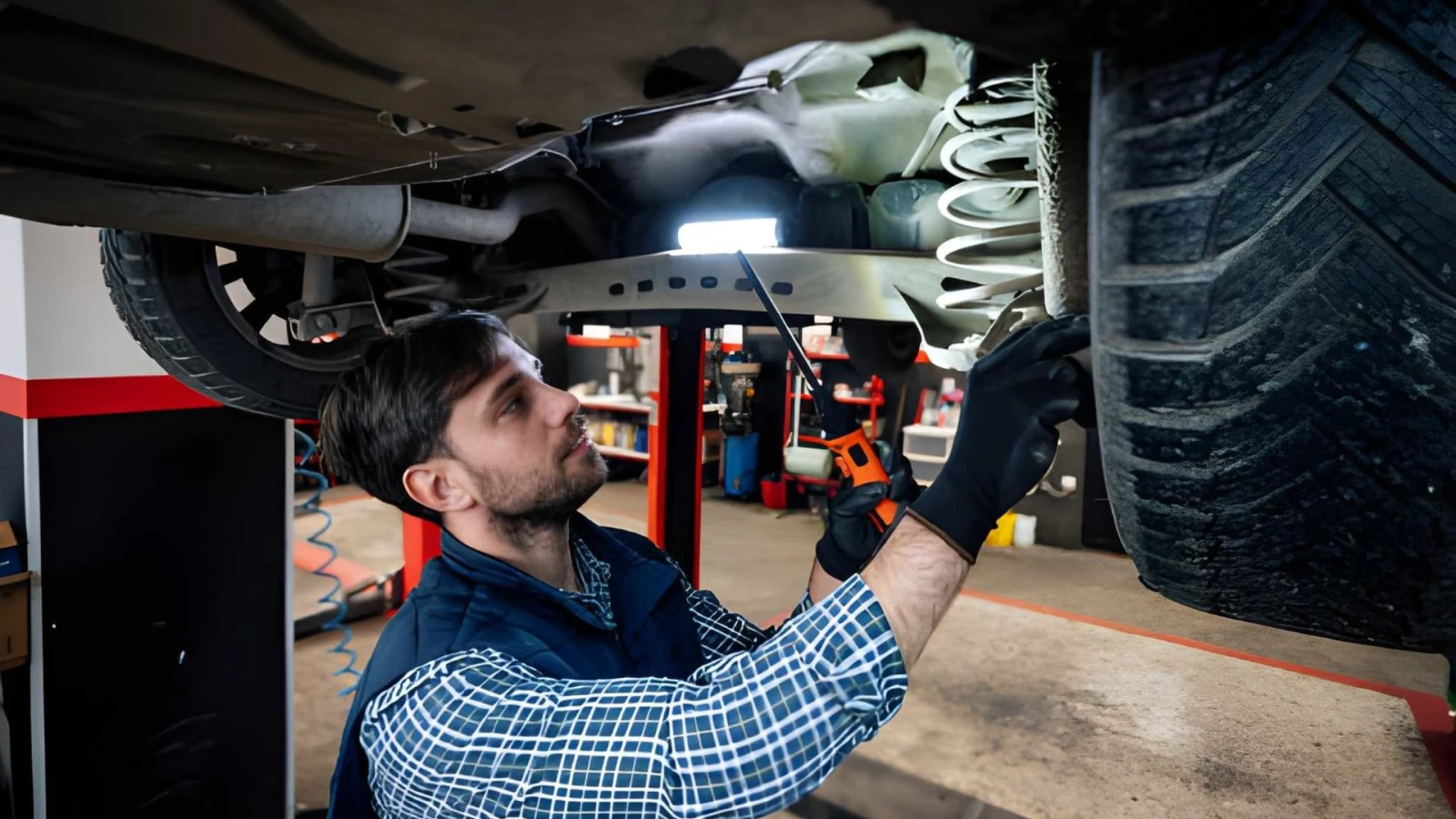
Investing in regular suspension services, checking for worn components, loose joints, and alignment issues, is one of the smartest things a driver can do, especially if the daily commute involves rough roads or stop-and-go city traffic.
Habits That Actually Help
None of this requires spending money; just more awareness behind the wheel:
Look further ahead: Reading traffic 10–15 seconds out creates room to slow down gradually instead of braking hard at the last second.
Coast before braking: Letting speed bleed off before touching the pedal reduces heat and extends pad life.
Downshift on hills: Engine braking keeps the system cool on long descents.
Slow down before rough patches: Lower speed means far less force through the suspension.
Keep more distance: A two-to-three second gap from the car ahead turns reactive stops into relaxed ones.
Travel lighter: Extra weight means more braking force every single time. Clearing out the trunk actually matters.
Keep Your Brakes and Suspension Safe with Trusted Auto Repair Services
The way someone drives is, without realizing it, a maintenance decision made thousands of times every trip. It's why one driver barely notices wear for years while another is scheduling a brake replacement service ahead of schedule; not because their car is worse, but because their habits are.
Brakes and suspension are built to handle a lot. They're not built to be ignored and driven hard forever. Taking care of them starts at the wheel, not the garage; though a good mechanic and a regular inspection schedule will always be part of keeping things running safely.
Have brakes and suspension inspected by a qualified mechanic regularly. For vehicle-specific advice, always consult a professional.























Sign in to leave a comment.