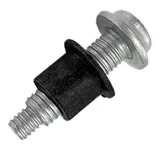

"Learn how Huck bolts, lockbolts and installation tools create strong, vibration-resistant joints, and understand what to consider when choosing a fastening system".
A fastening joint may look simple. In a heavy-duty machine, however, a small joint can carry a lot of stress. Vibration, repeated loading, movement and changes in temperature can slowly affect ordinary fastening methods. This is why some industrial applications need a fastening system designed for a more demanding job.
A Huck Bolt is a two-piece fastening solution made up of a pin and collar. During installation, the collar is swaged into the grooves of the pin. This creates a strong clamp and a permanent joint. Unlike a conventional nut and bolt, the system does not depend on torque alone to keep the joint secure.
Why Are Lockbolts Used?
One major reason is consistency. The installation process can produce a repeatable clamp load across a large number of joints. That matters on production lines, where the same fastening result is needed again and again.
Vibration is another factor. Lockbolts are designed to resist loosening under vibration. They can also reduce routine checking and re-torquing.
Nowadays Huck Lockbolts come in different designs for different joint needs. Some models offer wide grip ranges or high fatigue performance. The choice depends on material, joint thickness, load and access.
Application Areas
Lockbolt systems can be found in transport and industrial equipment. Common examples include trucks, trailers, rail vehicles, mining equipment and structural assemblies. They can also be considered where a permanent, vibration-resistant joint is important.
What Makes Installation Different?
The tool is part of the fastening system. A Huck Bolt Installation Tool pulls the pin and applies the required force while the collar is formed around the pin. Once the installation cycle is complete, the joint is ready for service.
Different jobs call for different power sources. Pneudraulic tools use compressed air and are suited to fast production work. Hydraulic tools can handle larger fasteners and high-force applications. Battery-powered tools offer greater mobility when compressed air or hydraulic equipment is not practical.
The nose assembly also matters. It must match the fastener family and size being installed. Using the correct combination helps the tool perform the installation in the intended way.
Application Areas
Tooling is used across factory assembly lines, vehicle manufacturing, maintenance work and field installation. Battery systems can be useful for mobile work, while pneumatic and hydraulic systems are often selected for higher-volume or heavier-duty applications.
Choosing the Right System
A Huck Bolt is not always the largest or strongest option. Start with the joint itself. Consider the load, vibration level, material, grip range and hole size. Installation access should also be checked. A fastener may have excellent performance on paper, but the wrong tool or nose assembly can make installation difficult.
Material thickness and joint design matter too. The same fastener may not suit every application. Engineers should check specifications before selecting a size, grade or tool for installation.
The complete cost of the joint also matters. Installation speed, inspection, maintenance and replacement time affect cost. In some applications, a fastening system that costs more per piece may still offer better value over its working life.
For buyers searching for a Huck Bolt Distributor in India, technical support and product availability are also useful factors to consider. A supplier that understands both the fastener and the tooling can help match the system to the application rather than treating the fastener as a standalone component.
Good fastening is about more than holding two parts together. The joint needs to remain reliable under the conditions it will face. Understanding the fastener, installation method and working environment makes it easier to choose a solution that performs as expected.



























Sign in to leave a comment.