

Legacy data protection strategies often struggle to keep pace with the distributed nature of modern IT environments. As organizations aggressively adopt hybrid and multi-cloud architectures, the limitations of retrofitted backup solutions become glaringly obvious. Enter HYCU (Hybrid Cloud Uptime), a solution engineered specifically to address the complexities of these disparate environments without the architectural debt of traditional backup software.
HYCU distinguishes itself not merely as a backup tool, but as a purpose-built data protection platform designed for Nutanix, Google Cloud, Azure, and AWS. By aligning strictly with the native APIs and mechanics of the underlying platform, HYCU eliminates the friction associated with generic backup agents. This post analyzes the technical architecture of HYCU and its strategic value for enterprise IT infrastructure.
Core Capabilities: Agentless Architecture and Granular Recovery
The technical foundation of HYCU rests on its agentless design. Traditional backup solutions often require the installation and management of agents on every virtual machine (VM) or application server. This approach introduces latency, management overhead, and potential security vulnerabilities.
HYCU bypasses this by leveraging the native snapshot and data transfer capabilities of the platform it protects. Whether operating within a Nutanix cluster or a public cloud environment, HYCU interacts directly with the hypervisor or cloud API.
Application-Awareness and Consistency
Data integrity is paramount during recovery. HYCU provides inherent application-awareness, automatically detecting running databases and applications such as Microsoft SQL, Exchange, Oracle, and SAP HANA. This ensures that backups are application-consistent rather than just crash-consistent. When a backup is initiated, HYCU quiesces the application to ensure that the data captured is in a stable state, facilitating reliable recovery without database corruption.
Automated Recovery Workflows
From a recovery standpoint, the platform supports granular restoration. Administrators can recover individual files, VMs, or entire application groups. The platform focuses on minimizing Recovery Time Objectives (RTO) by streamlining the restoration path, allowing data to be mounted and accessed directly from the backup target rather than requiring a full hydration of data before access.
Optimizing Modern IT Infrastructure
Integrating HYCU into an IT stack impacts operational efficiency by reducing the "stun" effect often associated with high-volume backup windows. Because HYCU utilizes storage-level snapshots and intelligent data transfer, the impact on production performance is negligible. This allows organizations to perform backups more frequently, thereby tightening Recovery Point Objectives (RPO).
Furthermore, the platform simplifies the management plane. In complex multi-cloud setups, visibility is often fragmented. HYCU creates a unified dashboard that visualizes data protection status across on-premises and cloud resources. This centralization is critical for compliance auditing and ensuring that service level agreements (SLAs) are met across the entire estate.
Real-World Operational Efficiency and Cost Management
The deployment of purpose-built backup appliance translates directly to measurable business outcomes.
Reducing Total Cost of Ownership (TCO)
HYCU operates as a lightweight solution requiring minimal compute resources to run. Unlike legacy heavyweights that demand dedicated backup servers and extensive hardware provisioning, HYCU is deployed as a virtual appliance or a service. This shift reduces the hardware footprint and associated maintenance costs. Additionally, its ability to tier backup data automatically to cost-effective object storage (such as AWS S3 or Azure Blob) ensures that long-term retention does not consume expensive high-performance storage.
Streamlining Disaster Recovery (DR)
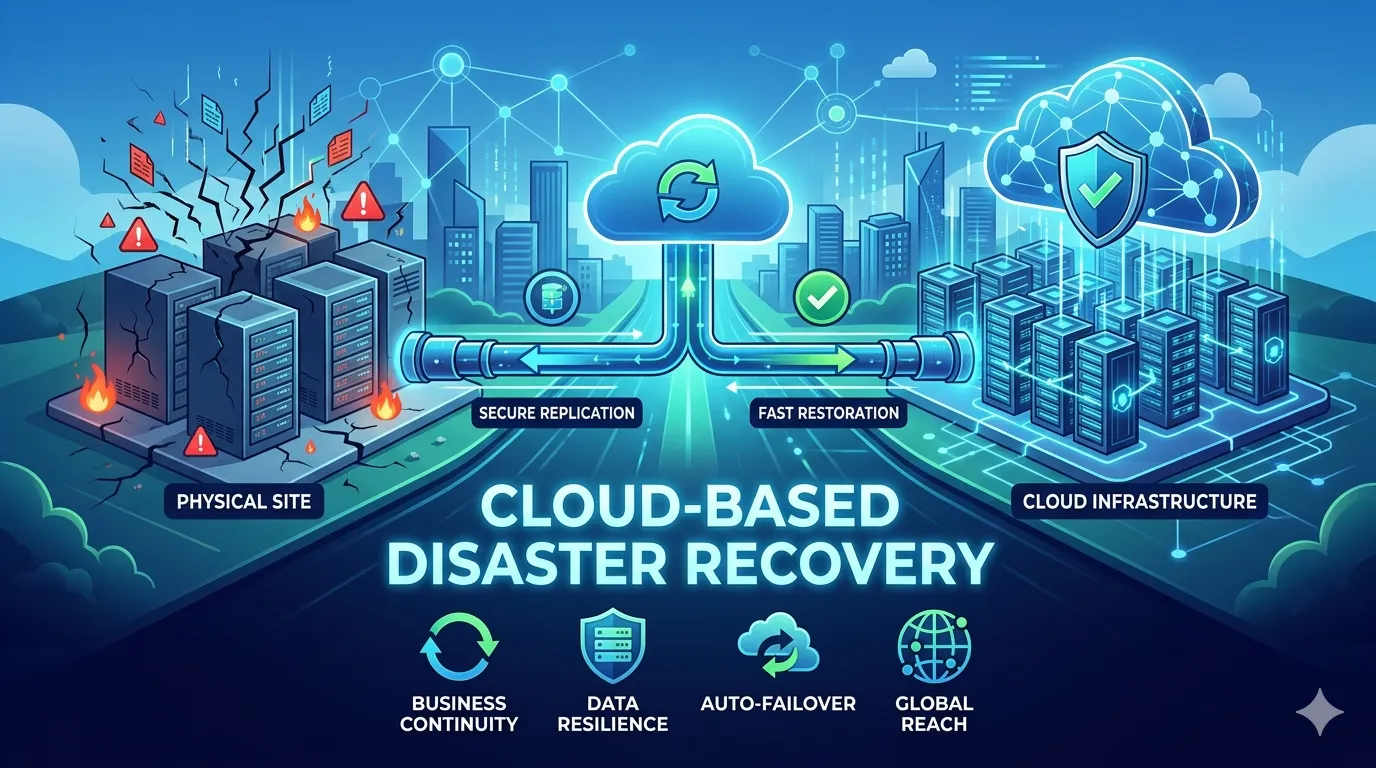
In disaster recovery scenarios, complexity is the enemy of execution. HYCU facilitates seamless cross-cloud recovery. For an organization running on-premises infrastructure, HYCU can replicate data to a public cloud target and, in the event of a site failure, spin up those workloads as cloud-native instances. This capability eliminates the need for a duplicate physical data center for DR, significantly reducing overhead.
Why Choose HYCU? Differentiators in a Crowded Market
The data protection market is saturated, but HYCU holds a distinct position due to its "native" philosophy.
- Platform Alignment: Unlike competitors that offer a "jack-of-all-trades" approach, HYCU looks and feels like an extension of the platform it supports. For Nutanix users, the interface mirrors Prism; for Google Cloud users, it integrates with IAM and billing. This reduces the learning curve and configuration errors.
- Ransomware Protection: HYCU integrates immutable storage capabilities. By leveraging WORM (Write Once, Read Many) protocols on object storage targets, it ensures that backup data cannot be encrypted or deleted by malicious actors, providing a last line of defense against ransomware.
- Dynamic Scalability: As a software-defined solution, HYCU scales linearly with the environment. As new nodes or cloud instances are added, the data protection logic automatically extends to cover these assets without manual reconfiguration.
Secure Your Data with Intelligent Architecture
Data protection is no longer a static background process; it is an active component of infrastructure resilience. HYCU Backup offers a sophisticated, rigorous approach to data management that respects the unique requirements of hybrid cloud environments.
For IT leaders and architects, the move to HYCU backup represents a shift away from managing backup infrastructure and toward managing data availability. By removing the complexity of agents and leveraging native platform capabilities, organizations secure their critical assets with greater precision and lower operational friction.





























Sign in to leave a comment.