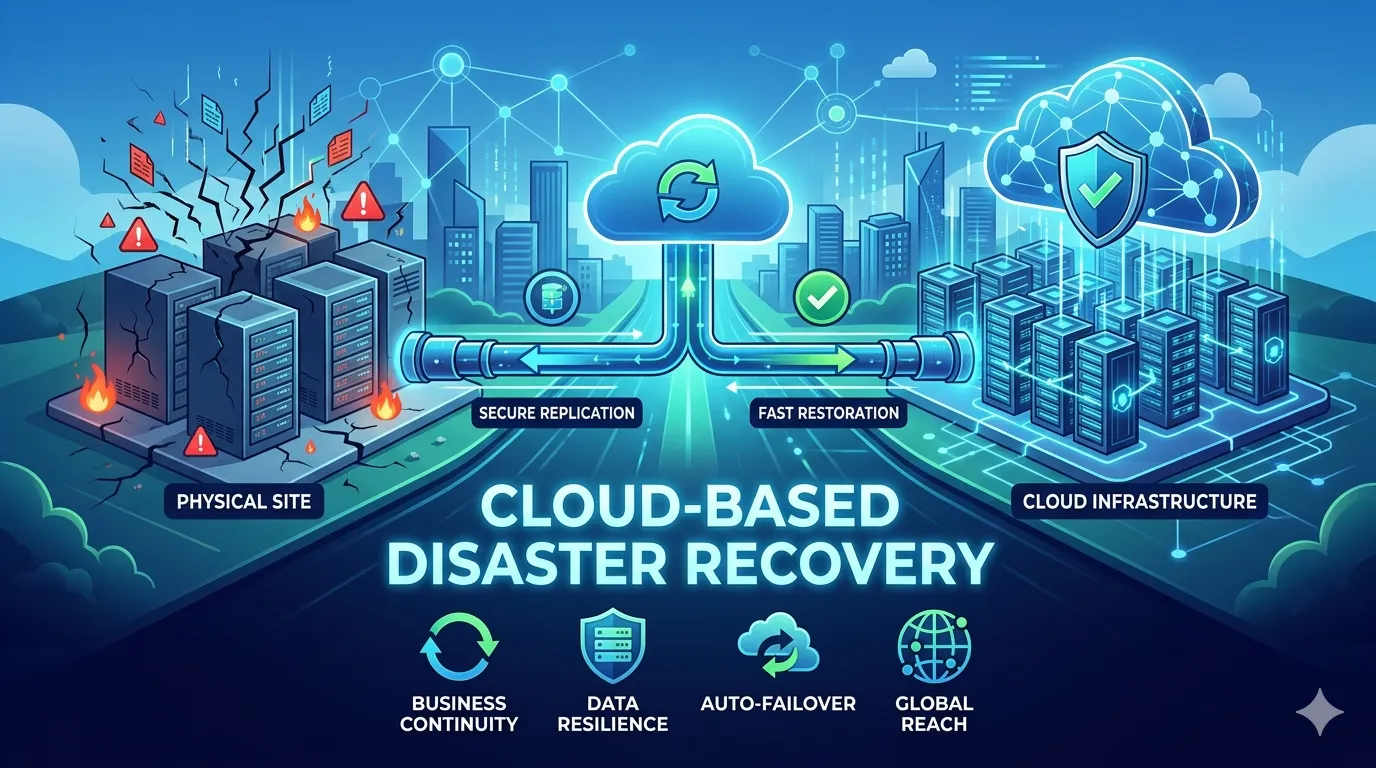

Uptime dictates the success of modern enterprise architecture. When primary systems fail, organizations must restore operations immediately to prevent catastrophic data loss and revenue disruption. System vulnerabilities remain a constant threat, stemming from sophisticated ransomware attacks, unexpected hardware failures, or environmental hazards.
Cloud-based disaster recovery offers a robust framework to mitigate these risks. This approach involves replicating critical data, applications, and system states to an off-site cloud environment. By leveraging distributed cloud infrastructure, engineering teams can ensure seamless business continuity even during severe localized outages.
Engineers and IT architects who understand the mechanics of cloud-based disaster recovery can build highly resilient systems. This comprehensive guide outlines the underlying architecture, primary benefits, and strategic deployment of modern cloud recovery solutions.
Key Benefits for Enterprise Architecture
Shifting disaster recovery protocols to the cloud provides significant operational advantages over maintaining traditional on-premises secondary data centers.
Optimized Resource Allocation
Building and maintaining a physical secondary site requires massive capital expenditure. Organizations must purchase redundant hardware, lease facility space, and pay for continuous cooling and power. Cloud based disaster recovery shifts this financial model from CapEx to OpEx. IT departments only pay for the compute and storage resources they actively consume, making it a highly cost-effective alternative.
Advanced Scalability and Flexibility
Data volume grows exponentially. Traditional infrastructure requires manual hardware provisioning to accommodate this expansion. Cloud recovery environments scale elastically, allowing systems to automatically adjust storage capacity and compute power based on real-time organizational needs.
Enhanced Data Security and Compliance
Top-tier cloud service providers implement cutting-edge security protocols. These include end-to-end encryption for data at rest and data in transit, strict identity access management (IAM), and immutable storage architectures. These comprehensive security measures help organizations maintain strict compliance with industry regulations like HIPAA, GDPR, and SOC 2.
Accelerated Recovery Times
Downtime translates directly to financial loss. Cloud environments support instant failover capabilities. When a primary server cluster goes offline, automated orchestration tools can immediately reroute traffic to the replicated cloud environment. This rapid transition minimizes service disruption and maintains a seamless user experience.
The Mechanics of Cloud-Based Disaster Recovery
Understanding the technical operations behind cloud recovery helps architects design more resilient systems. The process relies heavily on continuous data synchronization and environment abstraction.
Continuous Replication and Backup
Traditional backups run on scheduled intervals, which leaves organizations vulnerable to data loss between backup windows. Modern cloud recovery utilizes asynchronous block-level replication. This technology continuously captures and transmits state changes from the primary local server to the remote cloud storage repository. Continuous Data Protection (CDP) ensures the cloud environment maintains a nearly identical, up-to-the-second copy of the production data.
The Role of Virtualization
Virtualization sits at the core of cloud recovery architecture. Hypervisors abstract the operating systems and applications from the underlying physical hardware. Because virtual machines (VMs) are hardware-agnostic, administrators can rapidly spin up exact replicas of their primary servers in the cloud. The cloud provider's physical hardware specifications become irrelevant, eliminating compatibility issues during a failover event.
Choosing the Right Solution
Deploying a recovery strategy requires careful evaluation of organizational requirements and technical constraints.
Defining RTO, RPO, and Budget
Architects must establish two critical metrics before selecting a solution. The Recovery Time Objective (RTO) defines the maximum acceptable duration of system downtime. The Recovery Point Objective (RPO) determines the maximum acceptable amount of data loss, measured in time. Tighter RTO and RPO metrics require more advanced, continuous replication technologies, which directly impacts the overall budget. Balancing these metrics against financial constraints dictates the final architecture.
Evaluating DRaaS Models
Many organizations adopt Disaster Recovery as a Service (DRaaS) to streamline implementation. DRaaS providers offer varying levels of management. Self-service models provide the infrastructure while internal IT teams handle configuration and failover orchestration. Fully managed DRaaS solutions offload the entire deployment, monitoring, and failover execution to the service provider, ensuring expert intervention during a crisis.
Securing Your Operational Future
Cloud-based disaster recovery provides an innovative, scalable, and highly secure framework for modern business continuity. By utilizing hardware-agnostic virtualization and continuous block-level replication, IT teams can effectively eliminate the catastrophic risks associated with unexpected system failures.
Take the time to assess your current infrastructure resilience. Review your existing RTO and RPO metrics, audit your failover orchestration, and explore cutting-edge DRaaS options to keep your architecture ahead of the curve with backup solutions.


























Sign in to leave a comment.