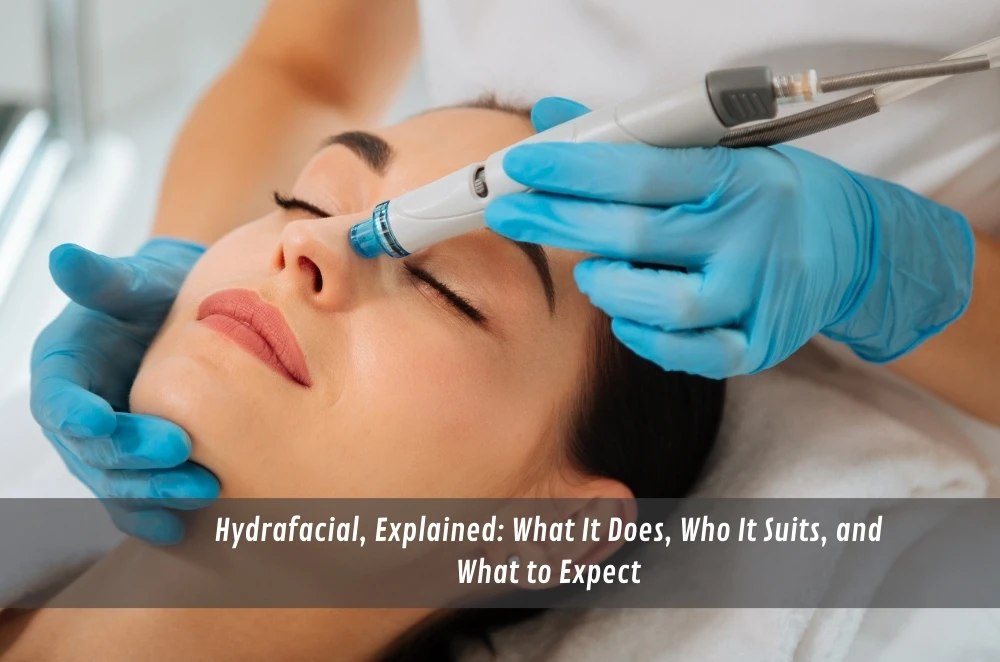

If you’ve ever looked in the mirror and felt like your skin is doing too much at once—a bit of congestion around the nose, dryness on the cheeks, makeup clinging to texture, and a general “tired” tone—you’re not alone. In places like Townsville, skin also has to cope with high UV, heat, sweat, air-conditioning, and the kind of humidity that can turn a careful routine into a guessing game.
HydraFacial has become a popular answer to that “reset” feeling because it aims to do several core facial steps in one session: cleanse, exfoliate, lift out debris from pores, and finish with hydration. The appeal is less about drama and more about practicality: a treatment that can feel comfortable, look immediately fresher, and fit into a normal week without planning around downtime. (As always with skin, “results vary” still applies—your baseline skin condition, sensitivity, and home care make a difference.)
Below is a plain-language guide to what HydraFacial is, what happens during the appointment, and the questions worth asking so you get the version that matches your skin.
What a HydraFacial actually is (beyond the hype)
At its core, a HydraFacial is a device-based facial that combines exfoliation and extraction with targeted hydration. Rather than relying on manual extractions (which can be uncomfortable and sometimes leave redness), the treatment uses a controlled suction-style step to lift out congestion, then follows with serum infusion to support hydration and a smoother surface. Many clinics describe it as non-invasive and typically suited to a wide range of skin types, including people who don’t tolerate harsh peels or aggressive treatments.
That doesn’t mean it’s “for everyone, always.” It means the intensity can often be adjusted—how much exfoliation, how much suction, which solutions are used—so the same basic framework can be tailored to different skin goals.
The typical step-by-step process
Different providers may tweak the order or the products, but the overall rhythm usually looks like this:
1) Skin check and customisation
A clinician should look at your skin up close (not just ask what you want) and factor in things like sensitivity, active breakouts, barrier dryness, recent sun exposure, and what you’ve been using at home—especially actives.
2) Cleanse
This is the “prep” stage—removing surface oil, sunscreen residue, makeup remnants, and daily build-up so the rest of the steps work more evenly.
3) Exfoliate
Think of this as controlled resurfacing: loosening dull surface cells so skin feels smoother and reflects light better (which is why the glow can look immediate).
4) Extract
This is where HydraFacial tends to feel different from a traditional facial. The extraction step uses a vortex-style suction approach to lift impurities from congested areas in a more controlled way than manual squeezing.
5) Hydrate and infuse
Hydrating solutions (and sometimes targeted boosters, depending on the clinic) are applied/infused to support moisture and that “plumper” surface look.
6) Finish and protect
A good finish stage is about barrier support: calming, moisturising, and (ideally) sun protection guidance—especially important in North Queensland.
If you’re comparing options, it helps to look for a provider that talks about adjustment and suitability rather than making it sound like one fixed, identical facial for everyone.
What HydraFacial tends to be used for
People book HydraFacials for a range of reasons, but the most common “everyday” motivations are simple:
- Congestion and clogged-looking pores (especially in the T-zone)
- Dullness and uneven tone that makes skin look tired
- Dryness and dehydration (where skin feels tight but still looks shiny in places)
- Rough texture that makes products sit strangely or makeup catch
- “Event skin” when you want your complexion to look smoother without recovery time
Clinics often position it as a “no downtime” option; mild pinkness can happen, but it generally settles quickly for many people.
Who may need extra caution
Even gentle treatments have a “read the room” list—things that change how your skin responds.
A clinician will guide you, but it’s sensible to mention if you have:
- Active sunburn or significant recent sun exposure (treated skin can be more reactive)
- A compromised barrier (stinging with water, persistent flaking, or recent overuse of actives)
- Active infection or inflamed lesions in the treatment area
- Recent strong topical actives (like prescription retinoids), recent peels, or device treatments—timing matters
Many post-care guides advise pausing tretinoin/Retin-A for a period before treatment, and your provider may adjust the approach based on what you’ve been using.
If you’re unsure, treat it like any other clinical-style service: disclose everything relevant and let the clinician decide what’s appropriate, or whether to reschedule.
What to expect afterwards (especially in Townsville)
HydraFacial in Townsville is often pitched as “back to life straight away,” but aftercare still matters—particularly with sun and heat.
Post-care guidance from clinics commonly includes:
- Avoid excessive sun exposure for around 72 hours after treatment
- Delay washing your face until the next morning (some clinics recommend this to let finishing products settle)
- Be cautious with actives and hair removal: avoid picking/scratching and avoid waxing/threading/tweezing for several days in the area
- SPF expectations: some providers recommend an SPF 30+ approach as part of the days following treatment
For Townsville specifically, the “avoid sun” advice is often harder than it sounds. Even short errands can mean strong UV exposure. Planning your appointment for later in the day, wearing a hat, and being disciplined with sunscreen can make the glow last longer and reduce the chance of irritation.
How often makes sense?
A common cadence discussed for HydraFacial is every four to six weeks for maintenance, with adjustments depending on how your skin behaves across seasons and stress levels.
If you’re using HydraFacial as a “baseline reset” while you introduce a new routine, your clinician may recommend a short run of more regular sessions—then spacing out. The point is consistency without over-treating.
Choosing a provider: what matters more than the brand of device
HydraFacial is widely available, but outcomes and comfort are heavily influenced by how it’s delivered. Consider these practical markers:
A real consultation, not a script
Look for someone who asks about your routine, sensitivity triggers, and recent treatments—then adjusts suction/exfoliation and product choices accordingly.
Hygiene and standards
Any clinic offering device-based aesthetic services should be able to explain cleaning protocols and safety processes in plain language. In Australia, guidance around safe provision of cosmetic treatments using devices (particularly light-based modalities) emphasises thorough client assessment and risk awareness.
Clear aftercare
Aftercare isn’t an afterthought; it’s part of the treatment. You should leave knowing what to avoid, what to use, and what “normal” looks like over the next day or two.
A realistic tone
Trust the provider who talks about variability, suitability, and skin health more than instant perfection.
A local note: why “gentle-but-effective” is appealing in North Queensland
Heat and humidity can increase oiliness and congestion for some people, while air-conditioning and sun exposure can quietly dehydrate the skin barrier. That contradiction is exactly why multi-step facials that combine clearing + hydration tend to stay popular here: they address the “shiny but dry” feeling without requiring a week of recovery.
If you’re looking for a clinic-based overview of what the service includes, you can read the HydraFacial treatment details.
Key Takeaways
- HydraFacial combines cleansing, exfoliation, extraction, and hydration in one session, with intensity that can be adjusted.
- People often choose it for congestion, dullness, dryness, and rough texture—especially when they want minimal downtime.
- Aftercare matters: sun avoidance and gentle treatment of the skin for the next few days can help protect results.
- A typical maintenance rhythm discussed is every four to six weeks, depending on goals and season.
- The provider’s assessment, hygiene, and aftercare guidance often matter as much as the device itself.































Sign in to leave a comment.