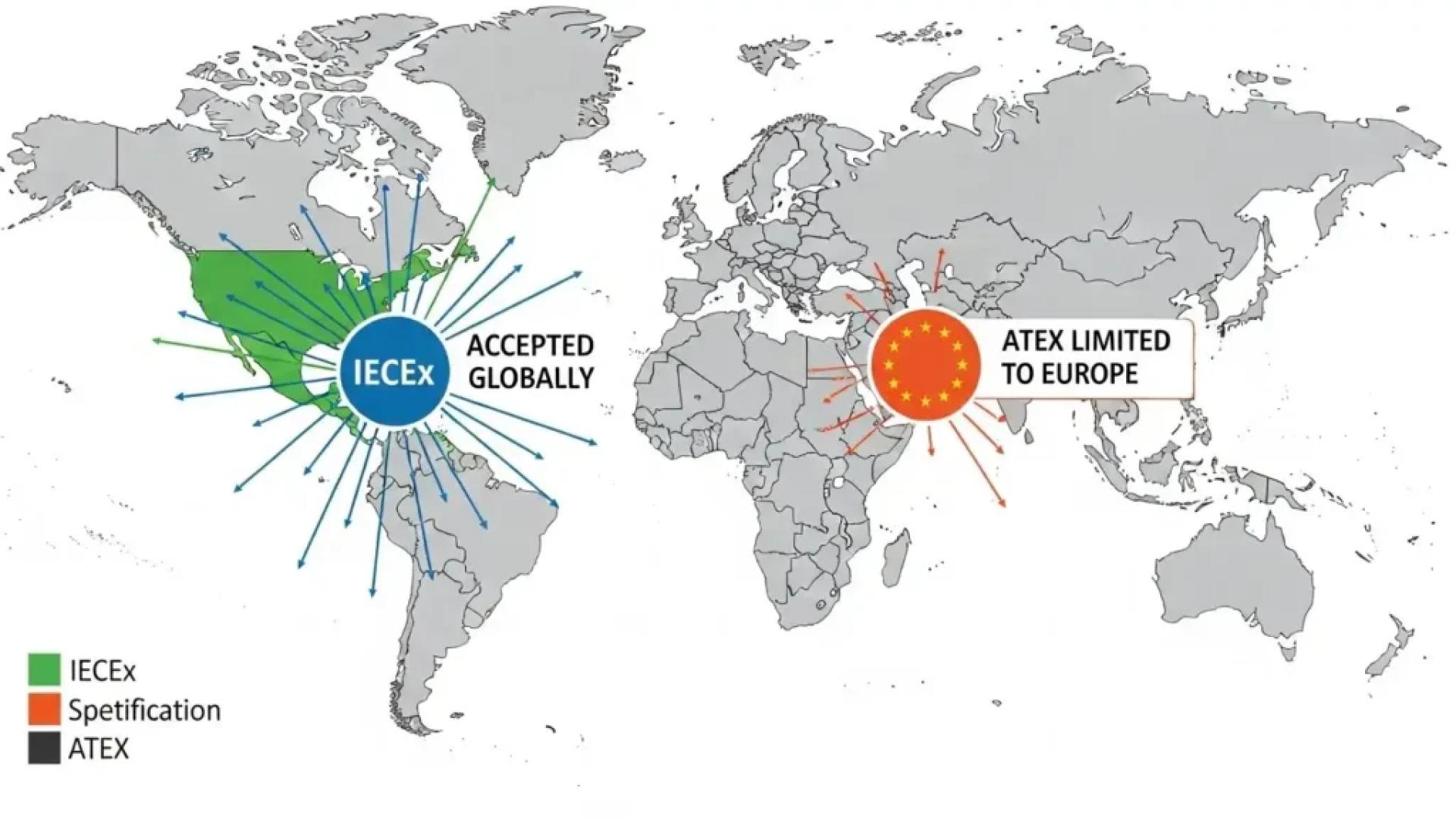

Definition: What is the Main Difference Between IECEx and ATEX?
The choice between IECEx vs. ATEX depends primarily on the geographical location of your project and the specific regulatory requirements of the end-user. ATEX is a mandatory legal requirement within the European Union, consisting of two directives: one for the manufacturer and one for the user. IECEx, however, is a voluntary international scheme designed to facilitate global trade. In the GCC, while both are respected, IECEx Certification is often preferred by major oil and gas operators because it provides a unified, transparent database for verifying equipment safety and personnel competence worldwide.
Key Takeaways: ATEX vs. IECEx
- Jurisdiction: ATEX is for Europe; IECEx is international.
- Verification: IECEx has a digital, publicly searchable database; ATEX does not.
- Personnel: IECEx offers a Personnel Competence Scheme, whereas ATEX focuses mainly on equipment and workplace safety.
Market Preference: In the UAE and KSA, IECEx vs CompEx is a more common comparison for workers, but for equipment, IECEx is king.
Why Does the Region Matter in the IECEx vs. ATEX Debate?
If you are operating within the UAE, the decision of IECEx vs ATEX: Which one do you need? is usually dictated by the project's insurance or the client's internal standards. Many multinational companies in the GCC prefer IECEx because it simplifies the supply chain—allowing equipment purchased in the USA, Asia, or Europe to be installed without redundant testing. For local contractors, obtaining IECEx Certification UAE ensures they can work on high-profile ADNOC projects that mandate global compliance.
How to Choose Between the Two for Personnel?
For workers, the distinction is even more important. ATEX does not certify individuals, but the IECEx CoPC (Certificate of Personnel Competence) does. Professionals looking to advance their careers in the Gulf often seek IECEx Certification Training to prove their global worth. Understanding the CompEx vs IECEx differences is also vital for technicians who need to know which practical assessment aligns with their specific job role in Saudi or Qatari plants.
Did you know? While ATEX allows for "self-certification" for certain lower-risk zones, IECEx requires 100% third-party verification for all equipment, making it a "stricter" standard in the eyes of many safety engineers.
Comparison: Compliance at a Glance
- ATEX: Mandatory in the EU; includes Directive 2014/34/EU and 1999/92/EC.
- IECEx: Voluntary globally; based on IEC 60079 series standards.
GCC Strategy: Most regional companies accept IECEx as a baseline, but you must check if the IECEx Certification in Saudi Arabia includes specific SASO requirements for the Kingdom.
Frequently Asked Questions (FAQ)
1. Can ATEX equipment be used in an IECEx project?
Only if the equipment is dual-certified. Most modern manufacturers certify for both simultaneously to cover all markets.
2. Which is better for my career in the UAE?
IECEx is generally better for career mobility as it is recognized in more countries than ATEX.
3. Does ATEX cover personnel certification?
No, ATEX focuses on equipment and the workplace. For personnel, you should look into IECEx vs CompEx Certification UAE.
4. Where can I get IECEx training?
You can find specialized courses at our IECEx Certification Centre Abu Dhabi.
5. Is there a difference in protection concepts?
Both use similar concepts, but the labeling might vary. See our guide on IECEx Certification Zones and Protection Concepts.
Glossary of Technical Terms
- Directive: A legal act of the European Union.
- Harmonized Standard: A standard developed by recognized European Standards Organizations.
- Self-Certification: Manufacturers declaring their own compliance (not allowed in IECEx).
- Notified Body: An organization designated by an EU country to assess compliance.
- ExCB: IECEx Certification Body.
- ExTL: IECEx Testing Laboratory.
- Marking: The string of codes on an Ex product (e.g., Ex db IIC T4).
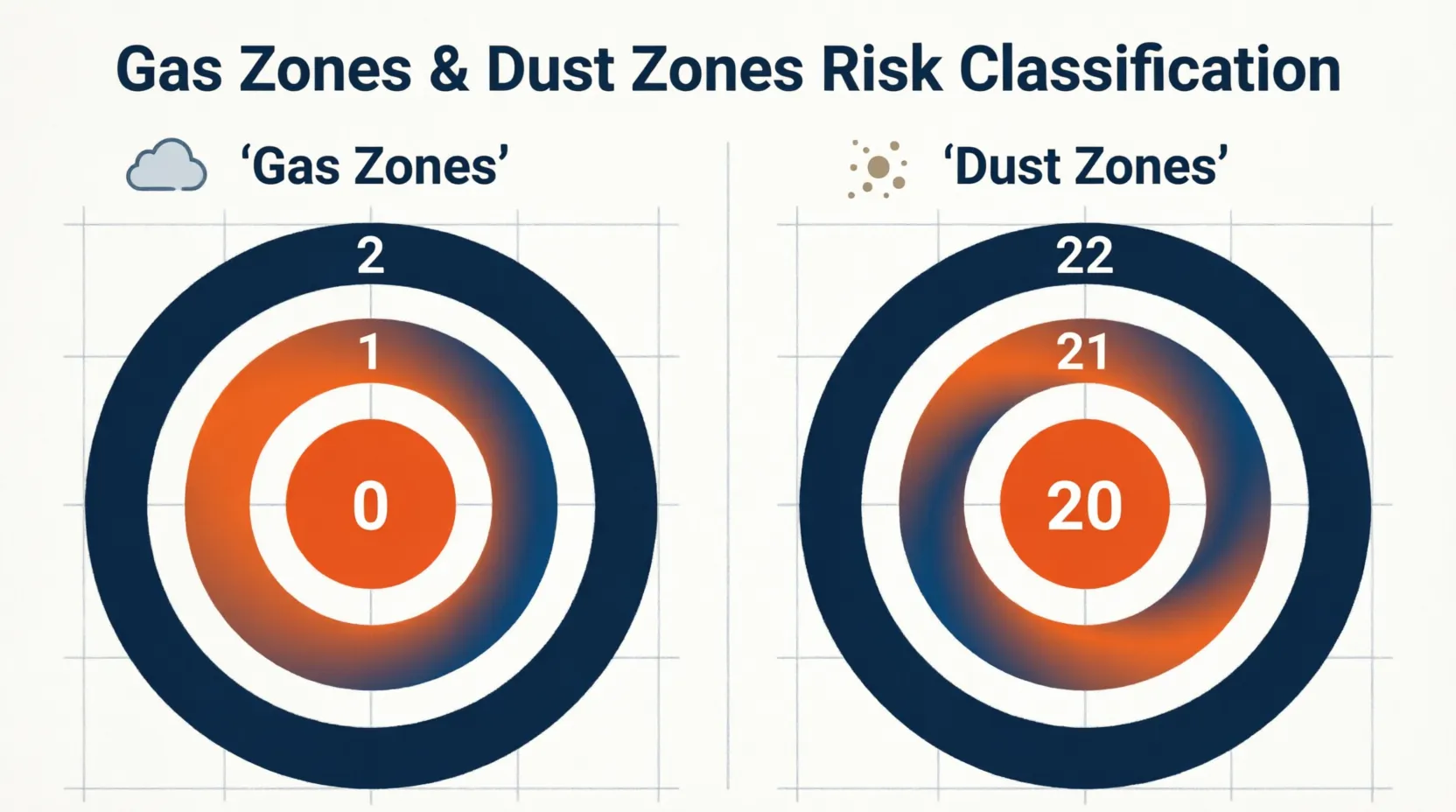
- Zone 0: Continuous explosive atmosphere.
- Zone 1: Likely explosive atmosphere during normal operation.
- Zone 2: Unlikely explosive atmosphere.
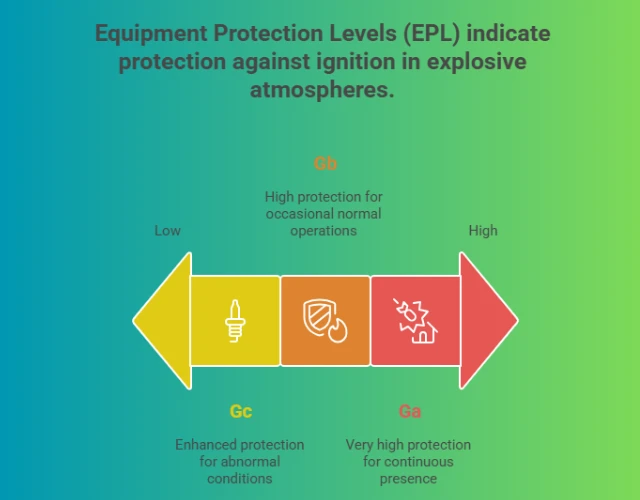
- EPL: Equipment Protection Level.
Declaration of Conformity: A document stating the product meets the directives.
Conclusion & Summary
Choosing between IECEx and ATEX isn't about which is "better," but which is required for your target market. For global operations in the GCC, IECEx offers a level of transparency and personnel validation that ATEX cannot match.
Call to Action: Confused about your compliance requirements?
Contact ExTrainings today for a consultation on IECEx vs ATEX and find the right path for your business.

























Sign in to leave a comment.