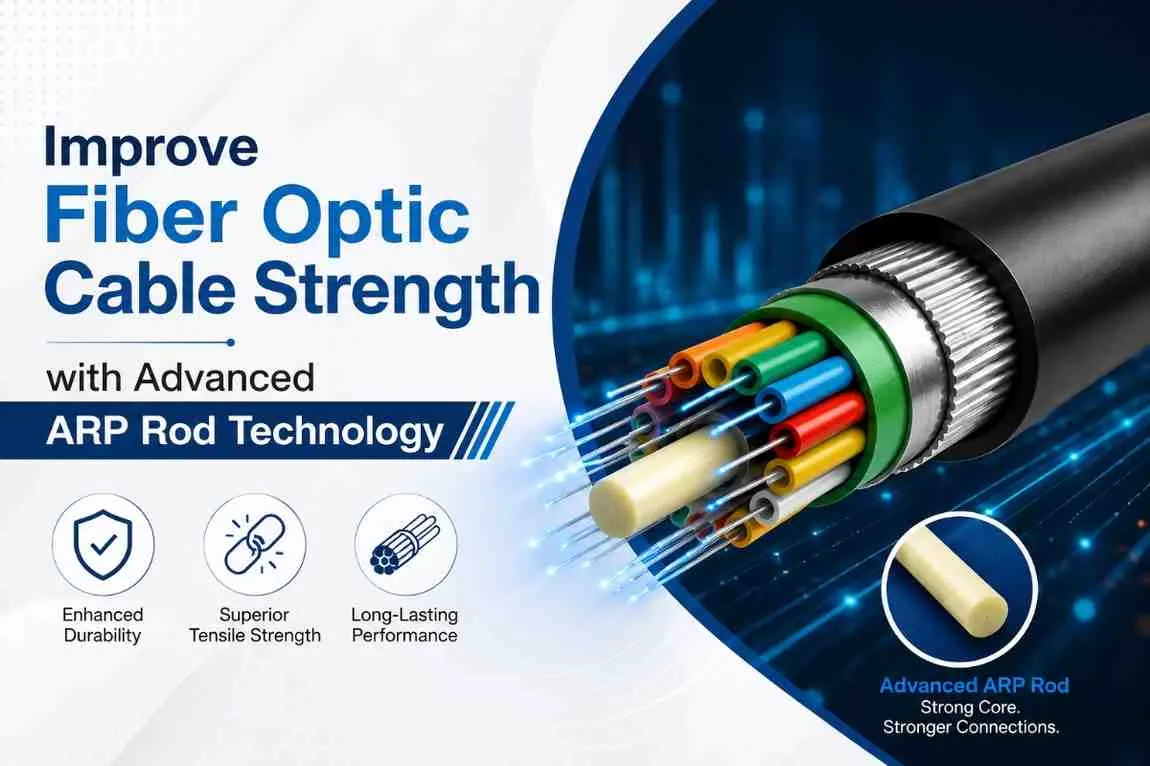

Modern fiber optic networks demand cables that are not only fast but also mechanically resilient. As telecom infrastructure expands into harsher environments—underground ducts, aerial spans, and industrial zones—cable manufacturers are turning to advanced reinforcement solutions to boost durability. One of the most effective innovations in this space is Aramid Reinforced Plastic (ARP) rod technology, engineered to deliver superior tensile strength without adding unnecessary bulk or weight.
In this blog, we'll break down how advanced ARP rod technology works, why it's becoming the industry standard, and how it directly improves fiber optic cable performance.
What Is ARP Rod Technology?
ARP (Aramid Reinforced Plastic) rods are high-performance reinforcement elements made using aramid fibers embedded in a polymer matrix. Known for their exceptional strength-to-weight ratio, aramid-based rods are increasingly replacing traditional glass or steel reinforcement in fiber optic cable design.
Key characteristics include:
- High tensile strength with minimal weight
- Excellent flexibility for easier cable handling
- Strong resistance to abrasion and environmental stress
- Non-conductive and non-magnetic properties
Why Advanced Reinforcement Matters for Fiber Cables
Fiber optic cables are exposed to multiple stress factors throughout their lifecycle:
- Pulling tension during installation
- Vibration and movement in aerial deployments
- Crushing forces underground
- Temperature swings causing expansion and contraction
- Long-term fatigue from repeated mechanical stress
Without robust reinforcement, these factors can lead to micro-bending, signal loss, or outright fiber breakage—resulting in expensive repairs and network downtime.
How Advanced ARP Rods Strengthen Fiber Optic Cables
1. Exceptional Tensile Performance
Aramid-based reinforcement rods offer significantly higher tensile strength compared to conventional materials, allowing cables to endure heavy pulling loads during installation.
2. Lightweight Cable Design
Because aramid fibers are much lighter than steel or glass alternatives, cables reinforced this way are easier to transport, handle, and install—especially over long spans.
3. Non-Conductive Protection
Unlike metallic reinforcement, aramid-based rods are electrically non-conductive, making them ideal for cables installed near power lines or in electrically sensitive environments.
4. Enhanced Flexibility
Advanced ARP rod technology allows cables to bend more easily without compromising structural integrity, simplifying installation in tight or complex routing paths.
5. Long-Term Durability
Resistance to fatigue, moisture, and environmental wear means cables retain their mechanical properties over a longer operational life.
Where This Technology Is Used
Advanced ARP rod-reinforced cables are commonly deployed in:
- Aerial fiber optic cables
- All-dielectric self-supporting (ADSS) cables
- Underground and duct cables
- Telecom backbone networks
- Power utility and substation communication lines
Their non-metallic, high-strength profile makes them particularly valuable in applications where electromagnetic interference or electrical conductivity is a concern.
Benefits of Choosing Advanced ARP Rod Solutions
- Reduced cable weight without sacrificing strength
- Lower installation and handling costs
- Improved resistance to environmental degradation
- Longer service life and fewer maintenance interventions
- Better performance in electrically sensitive zones
What to Look for When Sourcing ARP Rods
Before selecting a supplier for aramid-reinforced cable components, evaluate:
- Tensile strength specifications
- Consistency in fiber density and rod diameter
- Compatibility with your cable design and jacketing process
- Certifications and adherence to international standards
- Manufacturer track record and quality control processes
Working with an experienced supplier of super strong aramid reinforcement rods ensures consistent quality across large production batches, which is critical for telecom-grade reliability.
Conclusion
Advanced ARP rod technology represents a significant step forward in fiber optic cable engineering. By combining high tensile strength with lightweight, non-conductive properties, aramid-reinforced rods help manufacturers build cables that are stronger, more flexible, and better suited to demanding real-world conditions.
As networks continue to scale and diversify across aerial, underground, and industrial environments, adopting proven reinforcement technologies like this one is essential for building fiber infrastructure that lasts.
Frequently Asked Questions (FAQs)
Q1. What is ARP rod technology used for in fiber optic cables?
ARP (Aramid Reinforced Plastic) rods are used as internal reinforcement elements that improve the tensile strength, flexibility, and durability of fiber optic cables.
Q2. How is aramid reinforcement different from traditional FRP or steel reinforcement?
Aramid-based rods offer a superior strength-to-weight ratio and are non-conductive, making them lighter and safer for use near electrical infrastructure compared to steel, while often outperforming standard FRP in flexibility.
Q3. Are ARP rods suitable for aerial fiber cable installations?
Yes, their lightweight and non-conductive properties make aramid-reinforced rods particularly well-suited for aerial and ADSS (All-Dielectric Self-Supporting) cable designs.
Q4. Do ARP rods impact the flexibility of fiber optic cables?
No, advanced aramid-based reinforcement is designed to enhance strength while maintaining—or even improving—cable flexibility for easier installation.
Q5. Why is non-conductivity important in cable reinforcement?
Non-conductive materials prevent electrical interference and reduce safety risks when cables are installed near power lines or electrically sensitive equipment.
Q6. How do I choose a reliable supplier for ARP rods?
Look for manufacturers with strong quality control, consistent tensile strength ratings, and compliance with recognized industry standards for telecom-grade materials.
Q7. Does ARP rod technology extend the lifespan of fiber optic cables?
Yes, by reducing fatigue, resisting environmental stress, and maintaining structural integrity over time, advanced ARP rods contribute to longer cable service life.


























Sign in to leave a comment.