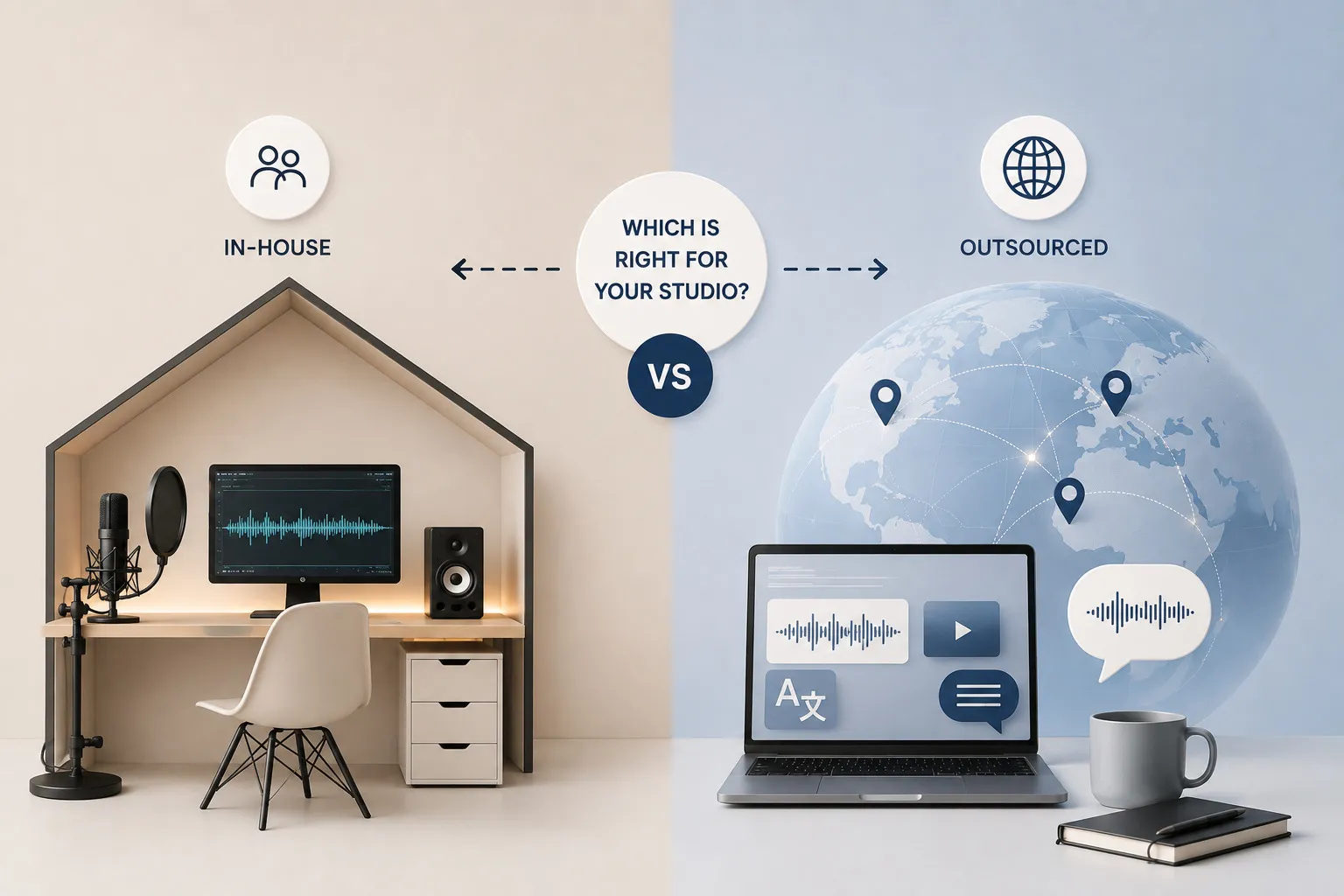

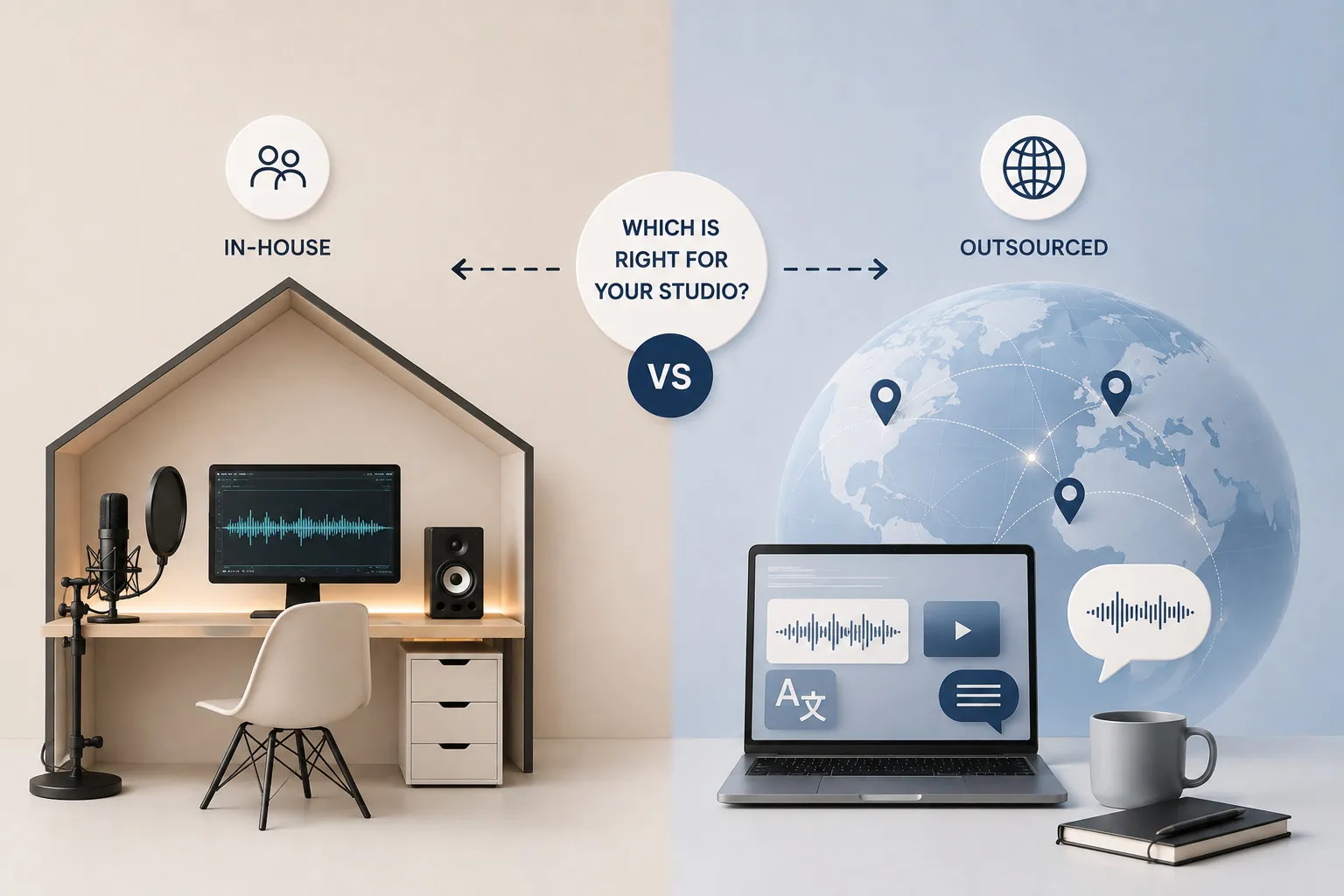
More studios now need help reaching global audiences. OTT platforms, YouTube creators, gaming studios, animation teams, and independent filmmakers all want viewers in many languages. That's why content localization services matter so much today. But one big question stays the same: Should you build an in-house team or hire an outside partner?
The right answer depends on your budget, project size, timelines, and quality needs. Let's break down both options so you can pick what fits your studio best.
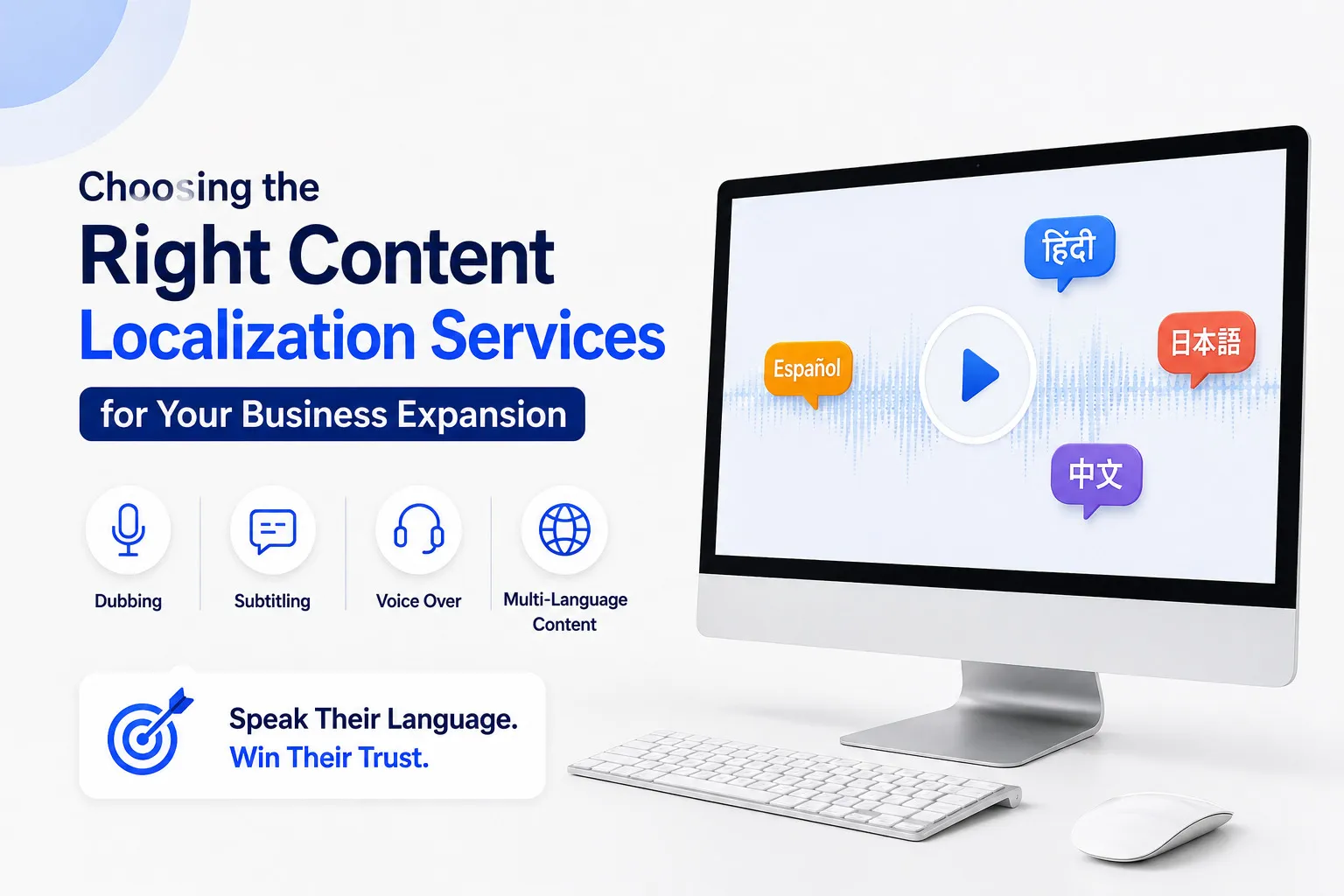
What Do Content Localization Services Include?
Localization is more than translation. It's about adapting content so it feels natural to people in another country while keeping the original meaning and emotion intact.
A full localization project may include:
- Content translation
- Script adaptation
- Professional dubbing
- Voice-over services
- Audio localization
- Video localization
- Subtitles
- Quality checks
- Multimedia localization for different platforms
Whether you're working on a film, an animated series, an OTT show, or educational content, each step needs skill and care.
In-House Localization: More Control, More Commitment
Some studios build their own localization team, especially if they localize content often.
Benefits of an In-House Team
Full creative control. Your team works directly with writers, editors, and directors. This makes changes and feedback easier to manage.
Consistent voice. If you make ongoing series or branded content, an in-house team can keep the same tone and style every time.
Fast internal updates. Your team can handle script changes or last-minute edits quickly, without waiting on an outside partner's schedule.
Downsides of an In-House Team
Running your own team isn't always easy. Common challenges include:
- High hiring and training costs
- Ongoing salaries and overhead
- Fewer languages available
- Costly recording gear and software
- Trouble scaling up during busy seasons
For smaller studios, or ones with uneven workloads, these costs can add up fast.
Outsourced Content Localization Services: Flexibility and Expertise
Many studios now choose to work with a specialized localization company instead of building their own team. These outside providers bring together translators, voice directors, sound engineers, and native voice artists, all working through a clear production process.
Benefits of Outsourcing
Access to skilled talent. Localization companies work with translators and voice actors across many languages. This helps capture local slang, humor, and culture better than a word-for-word translation ever could.
Easy scaling. This is one of the biggest wins. Need five episodes localized? Or five hundred? An outside team can scale up fast without hiring new staff.
This flexibility helps with:
- OTT localization projects
- Seasonal content drops
- YouTube channel growth
- Multi-language film releases
Quicker turnaround. Experienced providers often run several steps at once: translation, adaptation, dubbing, and quality checks. This speeds up delivery compared to smaller in-house teams.
Lower setup costs. You skip big expenses like the following:
- Recording studios
- Audio equipment
- Editing software
- Hiring voice talent
- Managing production in-house
You only pay for what you use.
In-House vs. Outsourced: A Quick Comparison
Cost: In-house teams need higher fixed costs for staff and gear. Outsourced dubbing services use project-based pricing, so budgeting is easier to predict.
Quality: In-house teams offer close oversight. But good outsourcing partners follow strict quality steps too: language review, sound checks, and client approval. In the end, quality comes down to skill and process, not just location.
Language reach: An in-house team may only cover a few languages. A strong dubbing studio usually supports many more, making it easier to enter new markets.
Scaling: Growing an in-house team takes time, hiring, training, and new gear. Outsourced localization can flex up or down with less hassle.
Which Option Fits Your Studio?
Go in-house if you:
- Make lots of localized content all year
- Need daily teamwork between production and localization
- Have the budget for full-time specialists
Choose outsourcing if you:
- Need several languages fast
- Work on one-off projects
- Want specialized language experts
- Want professional dubbing without buying equipment
- Are expanding into new markets
Many studios use both. They keep creative direction in-house and outsource language localization, voice-over work, and technical production to experts.
Final Thoughts
Audiences expect content in their own language. Localization isn't just a final step anymore; it's part of your growth strategy. Your choice between an in-house team and an outside partner depends on your goals, budget, and how much content you produce.
If you want full control, an in-house model may work well. If you want flexibility, wider language coverage, and lower costs, outsourcing to a trusted content localization company is often the smarter move.
Looking for reliable content localization services, professional dubbing, script adaptation, and multilingual content production? Studios like Sukudo Studios offer end-to-end support to help you deliver authentic, high-quality content to audiences around the world.
























Sign in to leave a comment.