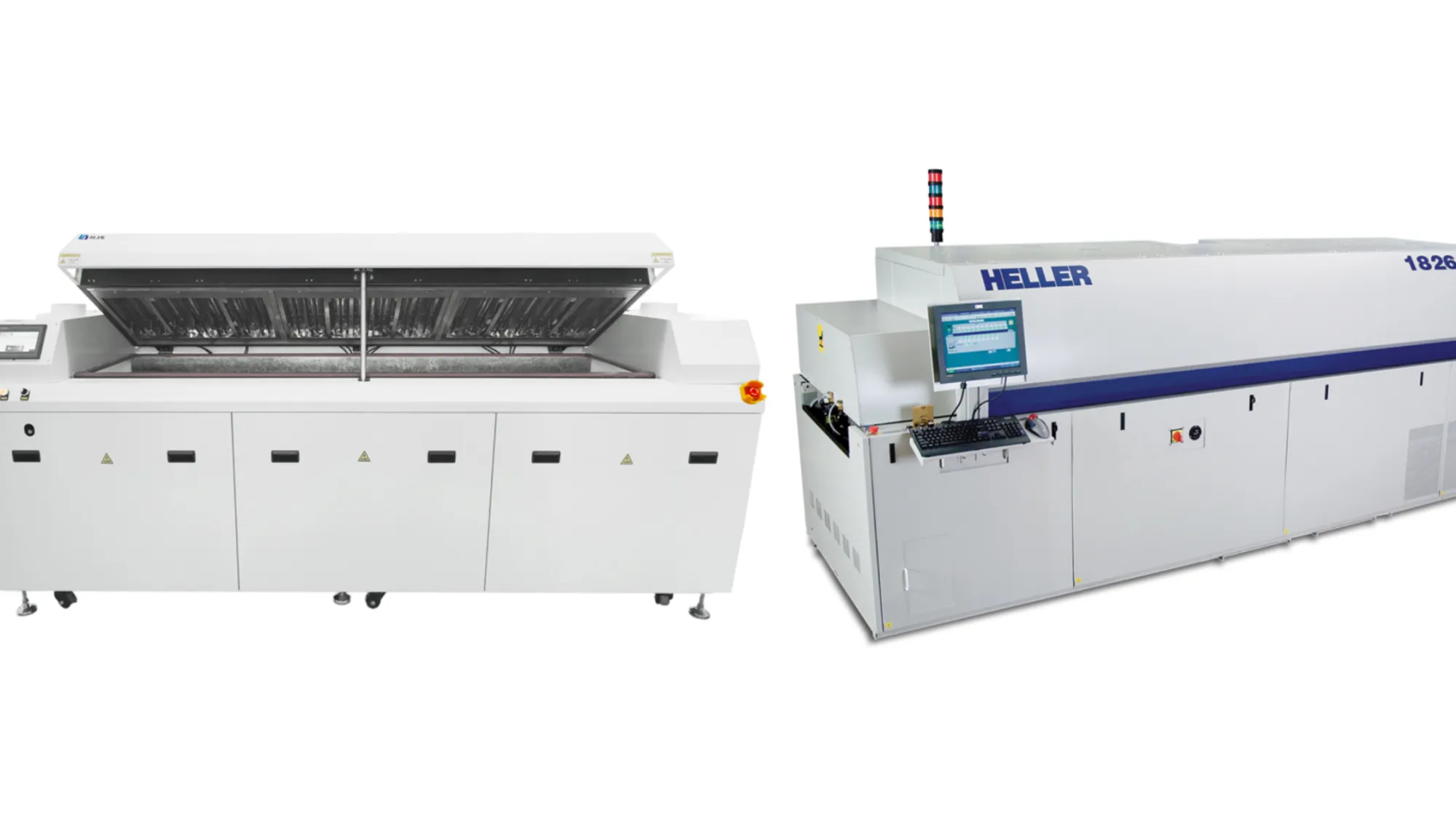

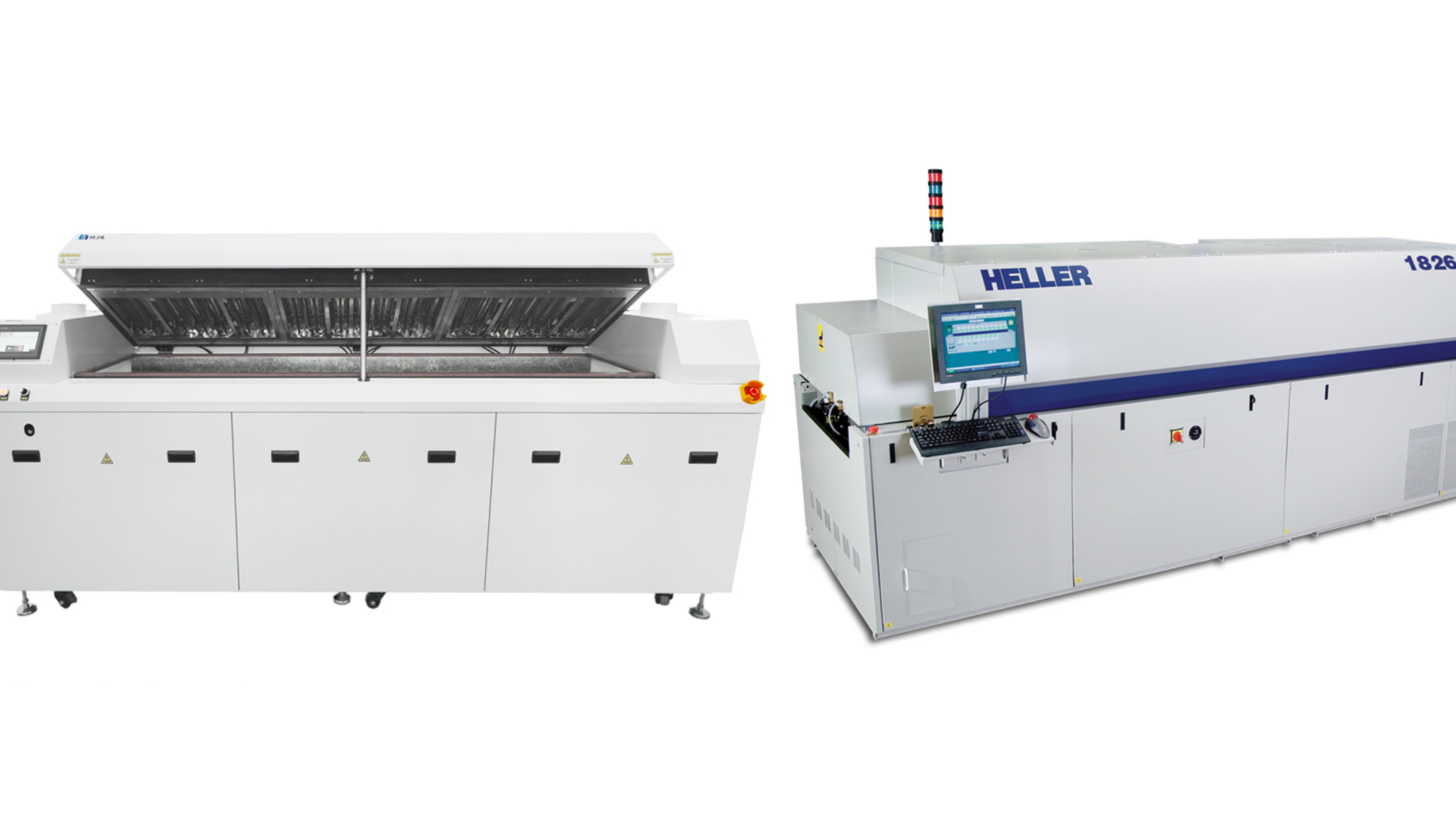
Industrial curing oven vs reflow oven is a comparison every electronics manufacturer should understand before choosing thermal processing equipment. They both may seem to do the same thing. They both use controlled heat to support manufacturing processes. But here's the catch: they're designed for very different jobs.
While both rely on controlled heating, they serve very different purposes, from curing coatings, adhesives, and resins to creating reliable solder joints on PCBs. In this guide, we'll break down the key differences, applications, and considerations when selecting the right oven for your production process.
Industrial Curing Oven vs Reflow Oven: What’s the Difference?
What Is an Industrial Curing Oven?
An industrial curing oven is designed to heat materials for a specific period so that coatings, adhesives, resins, paints, or other compounds can cure chemically or physically.
The goal isn't usually to melt and re-solidify solder. Instead, the controlled heating process helps a material achieve its required properties, such as hardness, strength, durability, or chemical resistance.
Depending on the application, curing ovens can be used in industries such as:
- Electronics manufacturing
- Automotive production
- Powder coating
- Composite manufacturing
- Adhesive bonding
- Paint and coating applications
- Industrial component production
For example, imagine a manufacturer applying a protective coating to an electronic component. The coating may look perfectly fine after application, but it might not have achieved its required strength. A curing oven provides controlled heat to ensure consistent curing.
What Is a Reflow Oven?
A reflow oven is primarily associated with PCB assembly and surface mount technology (SMT). Its main purpose is to heat the solder paste applied to a printed circuit board, allowing electronic components to be securely soldered.
The process typically follows a carefully controlled thermal profile.
A typical reflow process includes:
- Preheating: The PCB gradually warms up.
- Soaking: The board is maintained within a controlled temperature range to stabilise thermal conditions.
- Reflow: The solder paste melts, forming reliable solder joints.
- Cooling: The board is cooled under controlled conditions.
Unlike a general-purpose industrial oven, a reflow oven must carefully manage temperature changes across the PCB. That's critical because electronic components can be sensitive to excessive heat or sudden thermal changes.
Industrial Curing Oven vs Reflow Oven: Key Differences
At first glance, the two may seem similar. Both rely on heat, temperature control, and carefully managed processing times. The real difference lies in what they're designed to accomplish.
| Feature | Industrial Curing Oven | Reflow Oven |
| Primary purpose | Curing coatings, adhesives, resins, and other materials | Soldering electronic components onto PCBs |
| Typical application | Industrial and manufacturing processes | PCB assembly and SMT production |
| Main objective | Complete curing or hardening | Melt and solidify solder paste |
| Thermal profile | Based on material curing requirements | Designed around soldering requirements |
| Product handling | Varies by application | Designed for PCB and electronic assembly |
| Process focus | Material properties and curing consistency | Solder joint quality and component protection |
In simple terms, a curing oven helps a material finish its curing process, while a reflow oven helps create reliable solder connections.
Why You Shouldn't Treat Them as Interchangeable
This is where manufacturers need to be careful. Suppose a factory already owns an industrial curing oven. Could it use that oven for PCB reflow soldering? In some cases, the idea might sound economical.
But standard industrial curing ovens aren't necessarily designed to provide the precise thermal control, conveyor handling, atmosphere management, and temperature profiling required for PCB reflow.
Similarly, a reflow oven isn't automatically suitable for curing industrial coatings or adhesives. The equipment needs to match the process.
Using an unsuitable oven can potentially lead to:
- Inconsistent product quality
- Poor solder joints
- Component damage
- Incomplete curing
- Excessive energy consumption
- Increased production waste
That's why the first question shouldn't be, "Which oven is cheaper?" Instead, ask, "What process do we need the oven to perform?"
When Should You Choose an Industrial Curing Oven?
A curing oven may be the right choice when your production process involves materials that need controlled heating to achieve their final properties.
You might consider one for:
- Adhesive curing
- Protective coating curing
- Resin processing
- Paint and powder coating
- Composite material applications
- Other heat-assisted industrial processes
The ideal oven will depend on factors such as material type, required curing temperature, processing time, production volume, and product dimensions.
For instance, an adhesive may require a specific temperature for a defined period. Heating it too quickly or failing to reach the required temperature could affect the final bond strength.
When Should You Choose a Reflow Oven?
A reflow oven is generally the appropriate choice when you're working with surface-mount PCB assembly and need to solder components using solder paste.
It's particularly relevant for manufacturers producing:
- Consumer electronics
- Industrial electronics
- Automotive electronics
- Communication equipment
- Control boards
- Electronic modules
A good reflow process requires more than simply reaching a high temperature. The entire thermal profile matters.
Temperature needs to be controlled across different zones to ensure the solder paste behaves correctly while protecting sensitive components.
Final Thoughts
When comparing industrial curing oven vs reflow oven, the biggest takeaway is simple: they're designed for different jobs. A curing oven focuses on achieving the required properties of materials such as coatings, adhesives, and resins. In contrast, a reflow oven is built around the precise thermal requirements of PCB soldering.
Choosing the right equipment starts with understanding your process, not simply comparing machine prices or specifications. If you're planning to upgrade your production line, HJE Tech India Pvt. Ltd. can help you explore reflow oven solutions, PCB assembly equipment, SMT solutions, PCB handling systems, and other electronics manufacturing equipment suited to your requirements.
Contact HJE Tech India Pvt. Ltd. today to discuss your production needs and find a thermal processing solution that supports reliable quality, efficient operations, and long-term manufacturing growth.
Disclaimer: This content is for informational purposes only and is written by a professional content writer. Contact us to learn more about curing ovens and reflow ovens.

























Sign in to leave a comment.