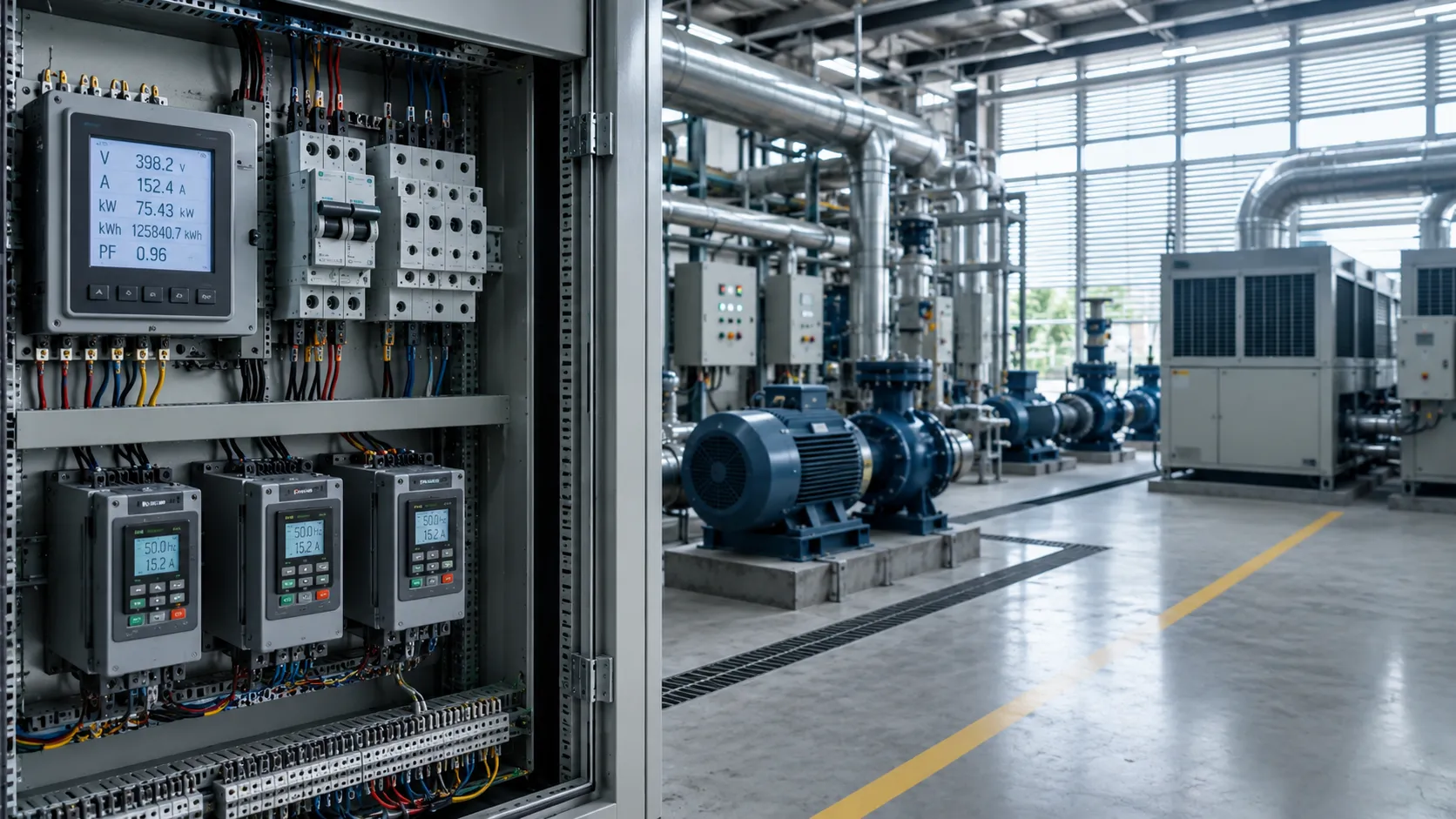

Energy is one of the major operating costs for many industrial facilities. Motors, pumps, fans, compressors, HVAC systems, production machines, lighting, and other equipment can consume large amounts of electricity every day.
When equipment runs longer than required or operates inefficiently, energy consumption increases. This can raise electricity bills and also increase equipment wear.
Industrial energy efficiency means using energy in a better way while maintaining the required production, comfort, safety, and equipment performance.
There are several practical ways industries can reduce energy consumption. Some require equipment upgrades, while others involve better operation, maintenance, and monitoring.
This article explains 10 practical ways to improve energy efficiency in industries and reduce unnecessary energy consumption.
What Is Industrial Energy Efficiency?
Industrial energy efficiency is the practice of reducing the amount of energy required to operate industrial equipment and processes without reducing the required output.
For example, if a pump can provide the required flow using less electricity through proper speed control, the system is using energy more efficiently.
Energy efficiency can involve:
- Motor speed control
- Equipment maintenance
- Energy monitoring
- Power factor improvement
- HVAC optimization
- Compressed air management
- Better operating schedules
- Equipment upgrades
- Process improvements
- Regular energy audits
The first step is usually to understand where energy is being consumed.
1. Conduct an Industrial Energy Audit
An energy audit provides information about how electricity and other forms of energy are being used in a facility.
During an audit, important equipment and systems are inspected and measured. The process can include motors, pumps, fans, compressors, HVAC systems, electrical panels, and production equipment.
An audit can help identify:
- High energy-consuming equipment
- Equipment operating inefficiently
- Unnecessary running hours
- Electrical losses
- Poor power factor
- Oversized equipment
- Potential energy-saving improvements
The results can be used to prioritize improvements based on expected energy savings and investment.
Adhunik provides energy audit services that can help identify energy-saving opportunities in industrial and commercial facilities.
2. Use VFDs for Suitable Motor Applications
Motors are used extensively in industrial facilities. Pumps, fans, compressors, and other equipment may operate for many hours each day.
A Variable Frequency Drive, or VFD, can control the speed of a suitable AC motor.
Instead of operating a motor continuously at full speed, the VFD can adjust the speed according to the required process condition.
VFDs are commonly used for:
- Pumps
- Fans
- HVAC systems
- Compressors
- Conveyors
- Industrial machines
Speed control can be particularly useful in applications where the required flow or pressure changes during operation.
3. Maintain Motors and Electrical Equipment
Poor maintenance can increase energy consumption.
A motor with mechanical problems, damaged bearings, poor connections, or other issues may not operate efficiently.
Regular maintenance can include:
- Checking motor connections
- Inspecting bearings
- Checking cooling
- Cleaning equipment
- Checking alignment
- Monitoring motor current
- Inspecting cables
- Checking electrical connections
Electrical panels should also be inspected for loose connections, overheating, dust, and damaged components.
Regular maintenance can help prevent both energy waste and unexpected equipment failures.
4. Monitor Energy Consumption
You cannot manage energy use effectively without knowing how much energy equipment is consuming.
Energy meters and monitoring systems can provide information about electricity consumption.
Monitoring can be done at different levels, such as:
- Entire facility
- Production area
- Individual machines
- Motor systems
- HVAC systems
- Pumps
- Compressors
Important parameters can include energy consumption, voltage, current, power, power factor, and peak demand.
Regular monitoring can help identify unusual increases in energy use.
5. Improve HVAC Efficiency
HVAC systems can consume significant amounts of electricity in factories, hospitals, commercial buildings, and other facilities.
Energy consumption can increase when:
- Fans operate at full speed unnecessarily
- Pumps operate at fixed speed
- Filters are blocked
- Temperature settings are incorrect
- Equipment is poorly maintained
- HVAC equipment operates when it is not required
Using suitable automation, sensors, and VFDs can help match HVAC operation to actual demand.
For example, ventilation systems can use CO sensors to control fans based on the measured air condition.
See the PLC based ventilation fan system for an example of automated ventilation control.
6. Reduce Compressed Air Losses
Compressed air systems can be a major source of energy waste.
Air leaks from pipes, fittings, hoses, valves, and connections can cause compressors to run longer than necessary.
A simple compressed air management program can include:
- Regular leak inspection
- Repairing damaged pipes
- Checking pressure settings
- Maintaining compressors
- Avoiding unnecessary compressed air use
- Monitoring compressor operating hours
An ultrasonic leak detector can help identify leaks that are difficult to hear during normal plant operation.
Reducing leaks can lower compressor running time and energy consumption.
7. Improve Power Factor
Power factor is an important electrical parameter in industrial facilities.
A low power factor can increase current in the electrical system and may result in additional charges depending on the electricity tariff and utility rules.
Power factor can be improved through suitable equipment and correction methods.
Before installing correction equipment, the electrical system should be assessed properly.
Monitoring power factor through an energy meter can also help identify changes in system performance.
8. Avoid Unnecessary Equipment Operation
Machines that run when they are not required consume energy without contributing to production.
Examples include:
- Empty conveyors running for long periods
- Fans operating during inactive periods
- Pumps running without demand
- Compressors operating during shutdown
- Lighting remaining ON in unused areas
Equipment schedules and automatic controls can help reduce unnecessary operation.
Timers, PLCs, sensors, occupancy controls, and other control methods can be used depending on the application.
The goal is simple: equipment should operate when needed and at the required level.
9. Upgrade Old or Inefficient Equipment
Older equipment may consume more energy than newer alternatives.
Before replacing equipment, however, the company should calculate the expected savings and investment.
Equipment upgrades may include:
- Older motors
- Pumps
- Fans
- Compressors
- HVAC equipment
- Lighting
- VFDs
- Control systems
A retrofit can sometimes be more practical than replacing an entire system.
For example, a legacy drive can be replaced with a newer drive while keeping suitable parts of the existing system.
You can read more about VFD retrofit solutions.
10. Use Automation and Sensors
Automation can help equipment operate according to actual requirements.
Sensors can measure:
- Temperature
- Pressure
- Flow
- Level
- Humidity
- CO levels
- Current
- Energy consumption
The information can then be used by PLCs, VFDs, BMS systems, or other controllers.
For example, a pressure sensor can send information to a control system, which can adjust a pump according to the required pressure.
Industrial IoT systems can also be used to collect and monitor equipment information.
How to Start Improving Energy Efficiency
Improving energy efficiency does not always require a large project.
A practical approach is:
Step 1: Collect Energy Data
Review electricity bills and equipment energy consumption.
Step 2: Identify Major Energy Users
Find out which systems consume the most electricity.
Step 3: Check Operating Conditions
Look for equipment running unnecessarily or operating at higher capacity than required.
Step 4: Conduct Measurements
Use suitable instruments to measure electrical and operating parameters.
Step 5: Identify Improvements
Prepare a list of possible improvements.
Step 6: Calculate Savings
Estimate energy savings, investment, and payback.
Step 7: Implement High-Priority Improvements
Start with improvements that provide practical savings and suitable payback.
Step 8: Monitor Results
Continue measuring energy consumption after implementation to check the actual results.
Benefits of Industrial Energy Efficiency
Improving industrial energy efficiency can provide several benefits.
Lower Electricity Costs
Reducing unnecessary energy use can lower electricity expenses.
Better Equipment Performance
Properly maintained and correctly controlled equipment can operate more effectively.
Reduced Equipment Wear
Smooth motor operation and suitable process control can reduce unnecessary mechanical stress.
Lower Downtime Risk
Maintenance and monitoring can help identify problems before they result in major failures.
Better Energy Management
Regular energy data gives management a clearer understanding of plant energy use.
Support for Sustainability Goals
Lower energy consumption can also reduce the amount of energy-related emissions associated with industrial operations.
Frequently Asked Questions
How can industries reduce energy consumption?
Industries can reduce energy consumption through energy audits, VFDs, equipment maintenance, energy monitoring, HVAC optimization, compressed air management, power factor improvement, automation, and equipment upgrades.
What equipment uses the most energy in industries?
The major energy users vary by facility, but motors, pumps, fans, compressors, HVAC systems, and production equipment are often significant consumers.
Can VFDs reduce industrial energy consumption?
A VFD can reduce energy use in suitable variable-speed applications by allowing motor speed to match the required load. Actual savings depend on the application and operating conditions.
Why is energy monitoring important?
Energy monitoring shows where electricity is being consumed and can help identify unusual consumption, inefficient equipment, and areas for improvement.
How often should an industrial energy audit be conducted?
The suitable frequency depends on the facility, energy use, equipment changes, and management goals. An audit is particularly useful after major process changes, equipment upgrades, or significant changes in energy consumption.
Conclusion
Industrial energy efficiency is not based on one piece of equipment or one method. It involves looking at how the entire facility uses energy.
Energy audits, VFDs, equipment maintenance, energy monitoring, HVAC optimization, compressed air management, power factor correction, automation, and equipment upgrades can all contribute to lower energy consumption.
The best approach is to first measure current energy use, identify the largest areas of consumption, and then select improvements based on actual operating conditions.
Regular monitoring is also important because energy efficiency should be measured after improvements are made.
Adhunik offers energy audits, automation, VFD services, retrofit solutions, and control systems that can support companies working to reduce energy consumption.






























Sign in to leave a comment.