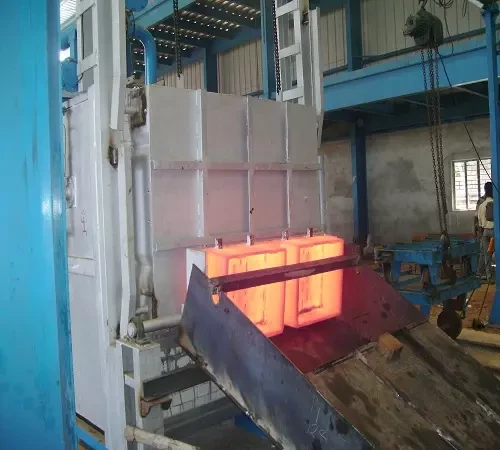
Forging is one of the oldest and most reliable metal forming processes, valued for producing components with superior strength, durability, and structural integrity. At the heart of every successful forging operation lies a robust and efficient Industrial Forging Furnace. Designed to heat metal billets, ingots, and components to precise forging temperatures, industrial forging furnaces play a crucial role in ensuring consistent quality, reduced defects, and high production efficiency.
What is an Industrial Forging Furnace?
An Industrial Forging Furnace is a high-temperature heating system used to heat metals—primarily steel and non-ferrous alloys—to temperatures suitable for forging, typically ranging from 900°C to 1,300°C. At these temperatures, metals become malleable and can be shaped under compressive forces without cracking.
Forging furnaces are engineered to deliver uniform heating, precise temperature control, and high thermal efficiency, ensuring that the entire workpiece reaches the correct forging temperature.
Importance of Industrial Forging Furnaces
The quality of a forged component is directly influenced by how uniformly and accurately the metal is heated. Improper heating can result in uneven deformation, cracks, excessive scale formation, and reduced mechanical properties.
Industrial forging furnaces are essential because they:
- Ensure uniform heating of billets and components
- Improve metal flow and forgeability
- Reduce forging forces and tool wear
- Minimize material wastage and rejection
- Enhance consistency and repeatability
Working Principle of an Industrial Forging Furnace
The operation of an industrial forging furnace follows a controlled heating cycle:
- Charging:
Metal billets or components are loaded into the furnace manually or using automated handling systems. - Heating:
The furnace temperature is raised gradually to the target forging temperature using gas burners, oil burners, or electric heating elements. - Soaking:
The metal is held at the required temperature to ensure uniform heat penetration throughout its cross-section. - Discharging:
Heated billets are removed and transferred quickly to forging presses or hammers for shaping.
Advanced temperature control systems maintain accuracy and consistency throughout the process.
Types of Industrial Forging Furnaces
Industrial forging furnaces are available in several configurations to meet different production requirements:
Chamber Type Forging Furnaces
Batch furnaces ideal for flexible production and varied billet sizes.
Continuous Forging Furnaces
Designed for high-volume forging operations with uninterrupted material flow.
Pusher Type Furnaces
Used for heavy billets, offering reliable and robust operation.
Rotary Hearth Furnaces
Provide uniform heating and efficient space utilization.
Induction Forging Furnaces
Offer rapid, energy-efficient, and localized heating.
Design and Construction Features
Modern industrial forging furnaces are engineered for durability and performance:
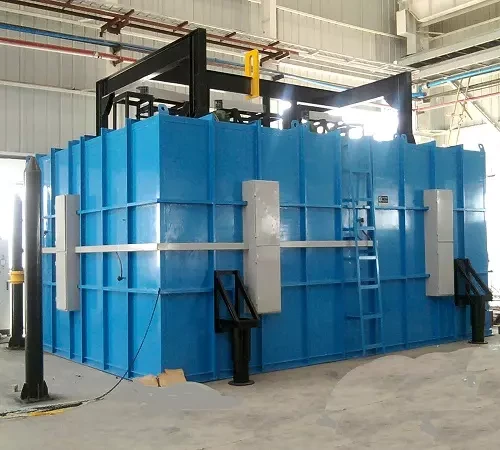
- Heavy-duty steel shell construction
- High-quality refractory lining and insulation
- Uniform heat distribution and optimized burner placement
- Gas-fired, oil-fired, or electric heating options
- PLC or PID-based temperature control systems
- Low heat loss and high fuel efficiency
Applications of Industrial Forging Furnaces
Industrial forging furnaces are widely used across many sectors:
- Automotive Industry: Crankshafts, connecting rods, gears
- Aerospace: Structural and engine components
- Heavy Engineering: Shafts, couplings, and flanges
- Oil & Gas: Valves, fittings, and pressure components
- Defense & Railways: High-strength forged parts
Advantages of Industrial Forging Furnaces
- Uniform and consistent heating
- Improved forging quality and productivity
- Reduced energy consumption per forged component
- Lower scale formation and material loss
- Long service life and reliable performance
Automation and Customization
Industrial forging furnaces can be customized based on billet size, throughput, temperature range, and plant layout. Automation options include automated charging and discharging systems, real-time temperature monitoring, and data logging. These features improve safety, reduce manual handling, and support modern automated forging lines.
Energy Efficiency and Safety
Energy efficiency is a major focus in forging furnace design. Advanced burners, high-quality insulation, and intelligent control systems reduce fuel consumption and emissions. Safety features such as flame failure protection, over-temperature alarms, emergency shutdown systems, and proper ventilation ensure safe operation in demanding industrial environments.
Conclusion
An Industrial Forging Furnace is a cornerstone of efficient and high-quality forging operations. By providing uniform heating, precise temperature control, and robust performance, these furnaces enable the production of strong, reliable, and defect-free forged components. Whether used in batch or continuous forging applications, industrial forging furnaces play a vital role in enhancing productivity, reducing costs, and ensuring long-term manufacturing success.














Sign in to leave a comment.