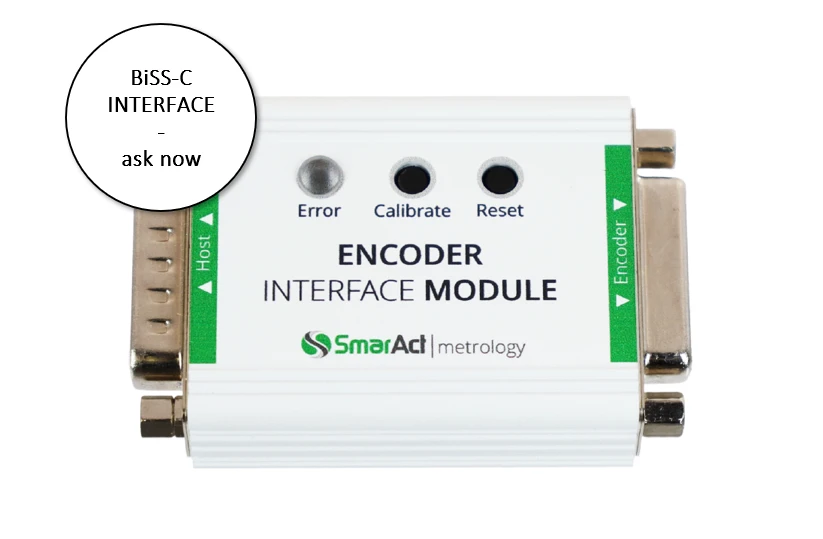

The Interface - Encoders are essential components in today’s digital and automation systems, responsible for translating physical or digital signals into precise coded outputs. From industrial motors and robotics to audio/video systems and communication interfaces, encoders play a vital role in ensuring accurate data transmission and control.
According to Wikipedia’s article on encoders, an encoder is a device or circuit that converts information from one format or code to another—usually to standardize, compress, or secure the data. In electronics, interface encoders are implemented as integrated circuits (ICs) that enable smooth communication between sensors, actuators, and processors by converting analog, position, or digital inputs into structured binary outputs.
This article explores the functionality, key models, advantages, and applications of interface encoder ICs in modern technology.
What Are Interface Encoder ICs?
Interface encoder ICs are integrated circuits designed to convert input signals (analog, digital, or positional) into encoded digital formats for efficient data transmission and control. They are commonly used in systems that require precise feedback—such as servo motors, robotics, automation controllers, and digital communication setups.
Encoders serve as the link between mechanical motion and digital control logic, transforming physical motion into measurable electrical signals that can be processed by microcontrollers or computers.
Types of Interface Encoders
- Rotary Encoders – Measure rotational position and speed in degrees or pulses.
- Linear Encoders – Detect linear motion or displacement for precision systems.
- Digital Encoders – Convert binary or decimal data into coded outputs.
- Analog Encoders – Transform analog inputs (like voltage) into digital format.
- Gray Code Encoders – Output minimal bit changes between steps, reducing error.
- Optical Encoders – Use light sensors for non-contact, high-resolution motion detection.
- Magnetic Encoders – Use magnetic fields for durable and interference-resistant feedback.
- Interface Converters – Handle signal encoding for digital buses like SPI, I²C, or UART.
Model Highlights
LS7366R
A quadrature counter/decoder IC with SPI interface, used for precise motion control and feedback measurement in robotics and automation systems.
HCTL-2020
Combines a decoder and digital filter, allowing accurate signal processing for servo motor applications and CNC machinery.
AMT102-V
A programmable incremental encoder offering high flexibility and noise immunity, ideal for stepper motor systems.
AD2S1210
A resolver-to-digital converter capable of 10- to 16-bit resolution, widely used in aerospace and industrial feedback applications.
LS7084N
Compact IC that converts quadrature encoder outputs into direction signals for easy interface with logic circuits.
MT6825
A magnetic encoder IC that provides accurate rotational measurement even in harsh environments, suitable for automotive use.
AS5048A
High-resolution magnetic position sensor providing up to 14-bit precision with low latency, ideal for robotic arms and automation equipment.
TLE5012B
Infineon’s automotive-grade encoder IC offers 16-bit resolution with exceptional temperature stability and fast SPI response.
Key Advantages of Interface Encoder ICs
- High Precision – Enables accurate measurement of position, speed, and direction.
- Compact Integration – Combines encoding, filtering, and digital output in a single IC.
- Noise Immunity – Magnetic and optical encoders minimize interference in harsh conditions.
- Digital Interface – SPI, I²C, or UART interfaces simplify system integration.
- Reliability – Stable output even in mechanical vibration or temperature variation.
- Programmability – Adjustable resolution and output formats for flexible control systems.
Design and Application Insights
- Industrial Automation – Interface encoders are critical in servo drives, stepper motors, and feedback loops.
- Automotive Systems – Used in throttle control, steering sensors, and electric powertrains.
- Consumer Electronics – Provide input precision in control knobs, volume dials, and tracking devices.
- Robotics and Aerospace – Offer high accuracy and digital stability in motion control systems.
FAQs
Q1: What is an Interface Encoder IC?
A: It’s an integrated circuit that converts input motion or signal data into digital codes for communication with processors or controllers.
Q2: How does an encoder differ from a decoder?
A: An encoder converts data into coded form, while a decoder translates coded data back into readable signals.
Q3: What are the main types of encoders?
A: Rotary, linear, magnetic, optical, and digital encoders are the most common types.
Q4: Why are SPI and I²C interfaces popular for encoders?
A: They allow fast, synchronized communication between the encoder and microcontroller with minimal wiring.
Q5: Which encoder IC is best for motor control applications?
A: Models like the LS7366R and AS5048A offer high precision and real-time response ideal for motion systems.
Q6: Can encoders work in harsh environments?
A: Yes, magnetic encoders such as MT6825 and TLE5012B are designed for dust, vibration, and temperature resistance.
Q7: What determines the resolution of an encoder?
A: The resolution depends on the number of pulses or bits the encoder can produce per revolution or movement step.





























Sign in to leave a comment.