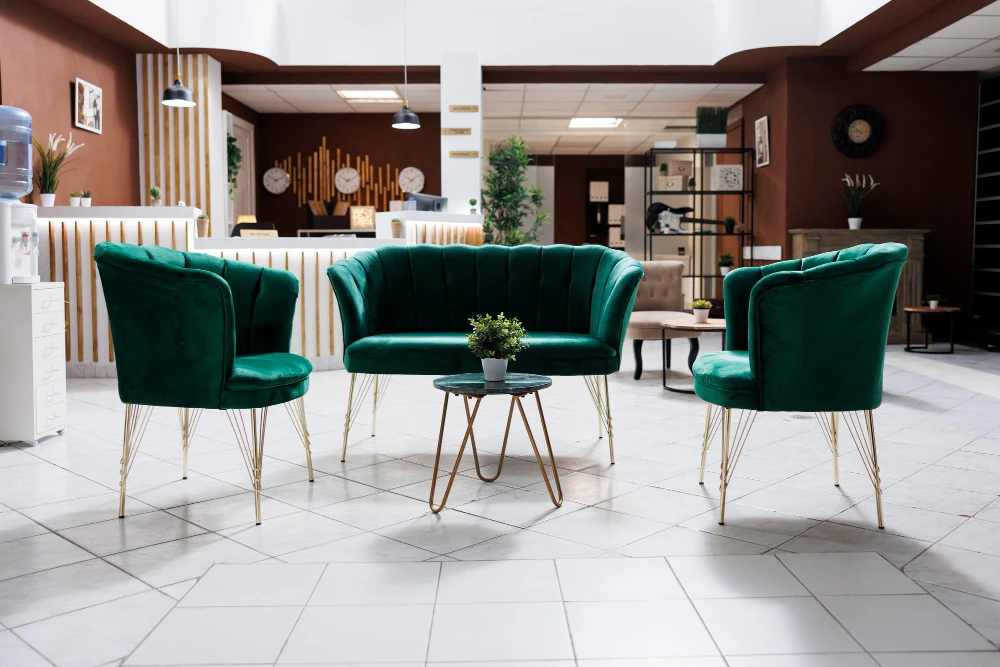

Qatar’s built environment is evolving quickly. With a growing construction pipeline and rising demand for smarter, healthier, and culturally sensitive interiors, contracting & trading companies in Qatar must adapt their fit-out strategies to stay competitive. Below are the key interior fit-out trends for 2025–2026 and practical steps contracting firms — and any interior company in Qatar they partner with — should take to deliver projects that meet client expectations and regulatory realities.
1. Demand tied to a growing construction market
Qatar’s construction sector remains a major growth engine, with strong public and private investment driving commercial, residential and hospitality projects. This creates steady demand for fit-out work, but also raises the bar for quality, timelines and compliance — meaning contracting firms need robust supply-chain and project management systems.
2. Quiet luxury, local identity, and the modern Majlis
Clients increasingly want interiors that balance understated luxury with local cultural identity. Expect to see “quiet luxury” finishes — high-quality materials used with restraint — combined with reinterpretations of the traditional Majlis: arched forms, textured textiles and muted earth tones reimagined for contemporary villas, hotels, and executive offices. Contracting teams should be ready to execute bespoke joinery and durable finishes that reference regional motifs without feeling kitsch.
Practical tip: develop carpentry partners who can produce finely detailed panels and screens that echo Islamic geometry but meet modern fire and maintenance standards.
3. Climate-aware materials and resilience
Qatar’s hot, humid climate makes material selection critical. Natural stone, engineered composites, UV-rated fabrics and moisture-resistant finishes are preferred for both durability and comfort. Contracting & trading companies in Qatar must also consider thermal performance in ceilings, façades and glazing to help reduce cooling loads — a selling point for sustainability-minded clients. Provide clients lifecycle cost comparisons (initial cost vs. maintenance + replacement) so they choose materials that look premium and last.
4. Biophilic design and wellness-focused fit-outs
Wellness is mainstream: integrating greenery, daylight optimization, acoustic treatments and breathable materials improves occupant wellbeing and can increase productivity in workplaces. For fit-outs, this means planning for indoor planting systems, green walls with proper irrigation access, and daylighting strategies that complement HVAC control. Work closely with your chosen interior company in Qatar to coordinate structural, MEP and irrigation requirements early in the program to avoid costly revisions.
5. Smart, adaptable spaces (tech + modularity)
Smart building components — lighting controls, sensor-based HVAC, occupancy analytics — are no longer add-ons but expected features in modern offices and hospitality fit-outs. Contracting firms should build partnerships with certified ELV and automation vendors and develop clear scopes for integration testing during handover. Modular fit-outs and reconfigurable furniture are also trending as businesses want adaptable spaces that extend a project’s useful life and lower long-term costs.
6. Lighting with mood and craftsmanship (goodbye one-size fixtures)
Lighting in 2025–26 is moving away from purely utilitarian solutions to layered, sculptural approaches that combine task lighting with mood, accent and architectural illumination. Large, well-scaled fixtures, textured diffusers, and integrated cove/slot lighting create richness and depth. Contracting firms must budget for lighting design coordination — ensuring intended fixtures are supported structurally and integrated with controls early in procurement.
7. Sustainability & compliance: from specification to certification
Sustainability is more than an option; it’s increasingly part of client briefs. Use of low-VOC materials, responsible sourcing, energy-efficient lighting and smart meters are common expectations. For contracting & trading companies in Qatar, this translates to keeping documentation for material sourcing, compliance with local codes and, where applicable, support toward green certification (LEED/GSAS). Demonstrating a documented supply chain and environmental credentials can be a decisive advantage in bids.
8. Supply-chain agility and local sourcing
Global supply disruptions still influence lead times. Firms that diversify suppliers, maintain local inventories of critical finishes, and build relationships with reliable trading partners can reduce schedule risk. For many projects, partnering with a reputable interior company in Qatar that has established local vendor networks shortens procurement cycles and improves on-site coordination.
9. High-quality prefabrication to speed delivery
Prefabrication (offsite manufacture of panels, joinery and services pods) reduces onsite labor, improves quality control and accelerates schedules — vital in Qatar, where fast turnarounds are common. Contracting firms should invest in design-for-manufacture workflows and align BIM coordination with prefabrication partners to ensure accurate fit and faster installation.
10. What contracting firms should do now (action checklist)
- Align early with an experienced interior company in Qatar for design-for-procurement coordination.
- Update specifications to favor climate-resilient materials, low-maintenance finishes, and certified sustainable products.
- Establish preferred ELV and automation vendors; include integration milestones in the program.
- Adopt modular and prefabrication methods to shorten schedules and improve quality.
- Train site teams on new lighting and control systems to ensure proper commissioning.
Conclusion
For 2025–2026, successful interior fit-outs in Qatar balance cultural identity, climate intelligence, smart technology and high-quality craftsmanship. Contracting & trading companies in Qatar that adopt resilient procurement strategies, deepen technical partnerships with experienced interior company in Qatar partners, and embrace prefabrication and smart systems will deliver the most competitive, future-proof projects. If your firm wants to lead on fit-outs, start by embedding these trends into your pre-qualification documents and project workflows today.

























Sign in to leave a comment.