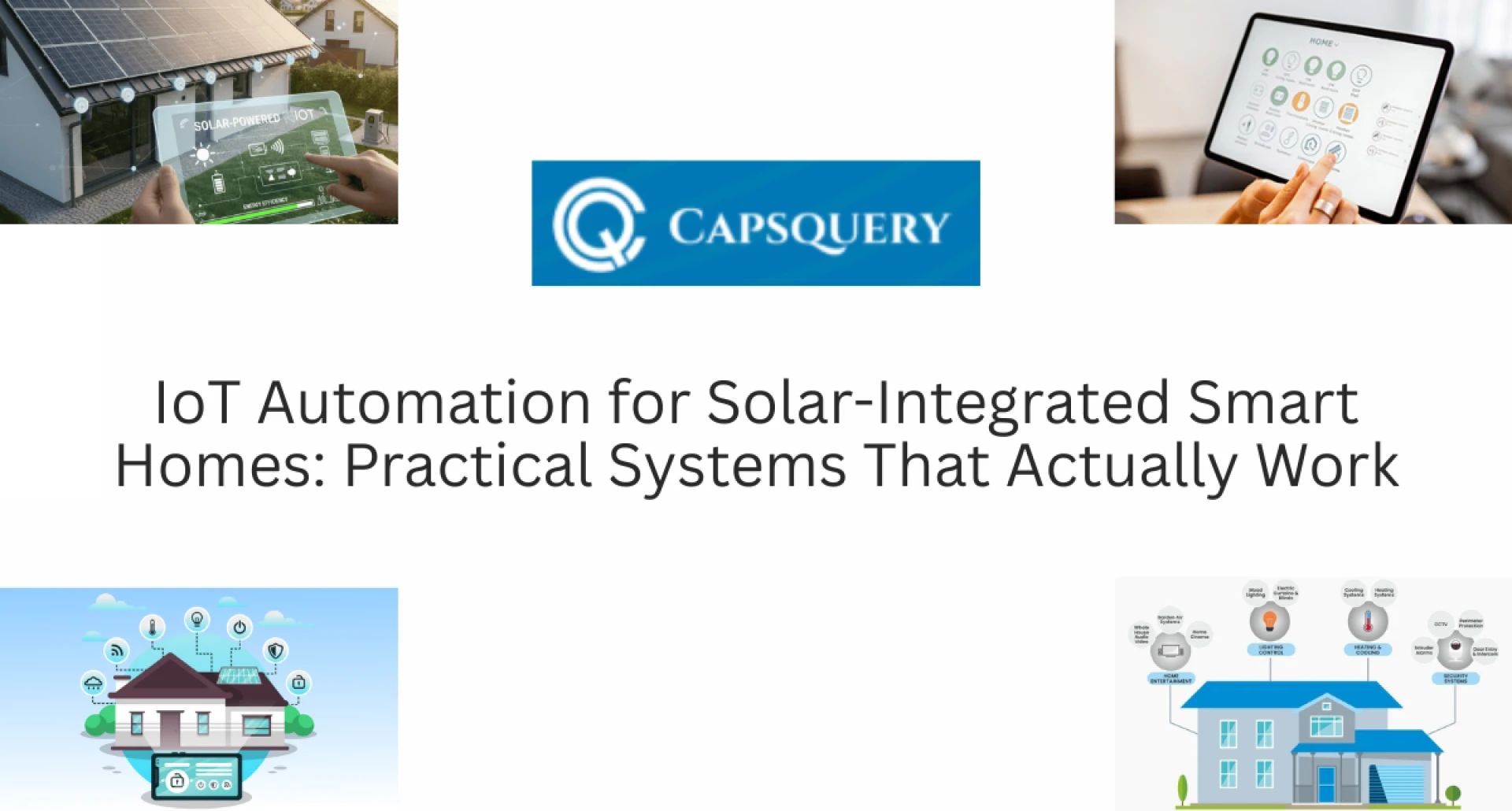

A few years ago, solar setups were mostly about installing panels and hoping the electricity bill would drop and now, things have changed. IoT Automation for Solar-Integrated Smart Homes is simply a smarter way to manage the power your home already produces. It connects your rooftop solar panels, battery storage, and everyday devices so they work together instead of operating separately.
Instead of guessing when energy is being used or wasted, you can actually see it happening and control it in real time. It’s less about flashy technology and more about making sure the power you generate is used wisely inside your own home. Instead of guessing how much power your home consumes, you see it, control it, and optimize it in real time.
I’ve worked with property owners who installed solar panels expecting immediate savings. Some achieved that. Others didn’t—because solar panels alone don’t solve inefficiency. The missing layer is automation. Without connected monitoring, load balancing, and intelligent scheduling, even a high-capacity solar setup can waste energy.
This article breaks down how smart home solar automation, IoT energy management systems, and solar IoT monitoring solutions function together. It also explains what works in real homes—not just in brochures.
What Is IoT Automation for Solar-Integrated Smart Homes?
At its core, this system connects:
- Solar panels
- Solar inverters
- Battery storage systems
- Smart meters
- IoT-enabled appliances
- A centralized home energy management system
The goal is simple: maximize self-consumption of solar energy while minimizing grid dependency.
A standard solar home exports excess power to the grid. An automated solar home decides when to store, when to use, and when to export power based on usage patterns and electricity pricing.
How the System Actually Works
1. Real-Time Energy Monitoring
An IoT solar monitoring system collects real-time data from your inverter and smart meter. You can track:
- Solar generation output
- Household power consumption
- Battery charge level
- Grid import/export
Without this visibility, energy optimization will be just a guesswork.
2. Automated Load Management
When your solar panels generate peak output, the system can automatically:
- Turn on water heaters
- Schedule EV charging
- Run washing machines
- Cool the home efficiently
This is called solar load shifting. Instead of drawing expensive grid power at night, the system runs heavy appliances during peak solar production.
3. Battery Optimization
With a solar battery management system, IoT automation decides:
- When to store excess solar energy
- When to discharge during peak tariff hours
- When to reserve power for outages
In regions with unstable power supply, this has becomes more than a savings feature by acting as a reliability infrastructure.
4. AI-Based Consumption Learning
Over the time, system studies theusage patterns by understanding :
- Morning HVAC cycles
- Weekend load spikes
- Seasonal energy shifts of the devices
While marketing brochures highlight “intelligent automation,” what matters is its measurable efficiency. The data allows precise scheduling instead of making broad assumptions.
Key Benefits of Smart Solar Home Automation
Reduced Electricity Bills
By increasing solar self-consumption from 35–40% to 70–80%, homes drastically cut grid dependency.
Better ROI on Solar Investment
Solar panels without any smart automation can underperform financially. A home solar automation system make sure that there is a maximum utilization of power.
Real-Time Energy Transparency
No more waiting for monthly bills to understand usage.
Backup Power Reliability
A properly configured IoT-enabled solar battery system ensures prioritized power supply during outages.
Use Case: Residential Deployment in Eastern India
In Kolkata, the installation of smart solar home systems usually faces challenges because heavy daytime air conditioning usage due to high humidity conditions.
Here’s what typically works:
- Solar panels sized for peak cooling demand
- Automated HVAC scheduling during solar generation
- Smart water heater timers
- Battery backup for evening lighting and essential loads
Without smart automation, Acs have often seen to draws power from the main grid even when solar output is available.
Commercial Application in Technology-Driven Regions
In Cupertino solar IoT automation systems, energy optimization often connects with:
- EV charging stations
- Smart office lighting
- Dynamic HVAC zoning
- Cloud-based energy dashboards
Tech-enabled households usually expect detailed analytics and not just lower bills. Data visualization and integration with home assistants become part of the ecosystem.
Large Home Energy Management in Texas
Homes in Dallas solar smart home automation services frequently face:
- High summer cooling loads
- Time-of-use billing structures
- Grid stress during peak hours
Automation systems here focus on:
- Pre-cooling strategies
- Peak shaving
- Automated battery discharge during high tariff windows
The energy savings are measurable, especially during extended heatwaves.
Industrial-Scale Residential Applications
In Houston IoT solar monitoring solutions, storm resilience plays a major role. Backup systems prioritize:
- Refrigeration
- Medical equipment
- Communication devies
Battery reserve logic becomes critical. Automation prevents full battery discharge before nightfall.
Technical Components of an IoT Energy Management System
Here’s what a complete system includes:
1. Smart Solar Inverter
Supports real-time communication and cloud integration.
2. Advanced Smart Meter
Measures import/export and communicates usage data.
3. Central IoT Gateway
Acts as the control brain connecting all devices.
4. Solar Battery Storage
Lithium-ion systems with programmable discharge logic.
5. Mobile & Web Dashboard
Provides visibility and control.
Challenges You Should Know Before Installing
1. Compatibility Issues
Not all inverters support open IoT integration.
2. Data Overload
Homeowners sometimes receive more data than they can interpret.
3. Poor System Design
Oversized batteries or undersized solar arrays reduce ROI.
4. Weak Automation Rules
If automation rules are generic instead of usage-based, savings remain marginal.
Integration with EV Charging
Solar-powered EV charging automation allows vehicles to charge only when:
- Solar output exceeds home load
- Battery reaches minimum reserve threshold
- Electricity tariffs are low
This avoids hidden grid costs.
Cost Considerations
A typical solar IoT automation system cost depends on:
- System size
- Battery capacity
- Brand of inverter
- Level of automation required
However, the ROI calculation must consider:
- Reduced electricity bills
- Protection against tariff hikes
- Power outage resilience
- Increased property value
Is IoT Automation Necessary for Every Solar Home?
No it doesnt.
Small apartments with low daytime loads may not need full automation. But:
- Homes with high AC usage
- Properties with EVs
- Locations with time-of-use tariffs
- Areas with frequent outages
…benefit significantly from integrated solar IoT systems.
Future Outlook
The next stage of smart solar home technology includes:
- Peer-to-peer energy trading
- Grid-interactive smart homes
- Community solar data networks
- AI-driven tariff prediction
Energy systems are becoming decentralized. Automation ensures participation in that ecosystem.
Frequently Asked Questions
What is IoT automation in a solar home?
IoT automation in a solar home connects solar panels, batteries, smart meters, and appliances into a unified system that automatically manages energy generation, storage, and usage.
How does IoT improve solar efficiency?
It increases solar self-consumption by automatically running appliances during peak solar production and intelligently managing battery storage.
Is solar automation expensive?
Initial costs vary, but long-term savings from reduced grid usage and optimized battery cycles often justify the investment.
Can IoT automation work without battery storage?
Yes, but battery integration significantly improves energy optimization and backup reliability.
Does IoT solar automation help during power outages?
Yes. A properly configured system prioritizes essential appliances and maintains battery reserves for backup use.
How long does installation take?
A standard residential solar home automation installation typically takes 2–5 days depending on complexity.
Is the system secure from cyber threats?
Reputable IoT solar energy management platforms use encrypted communication and secure gateways to prevent unauthorized access.
Can I control everything from my phone?
Yes. Most systems provide mobile dashboards for real-time monitoring and manual overrides.
Final Thoughts
Solar panels generate power. Automation ensures that power is used wisely.
Without monitoring and intelligent scheduling, solar becomes a passive system. With IoT integration, it becomes responsive. Bills shrink, outage resilience improves, and homeowners gain clarity over their consumption patterns.
If you’re planning IoT Automation for Solar-Integrated Smart Homes, focus less on flashy features and more on system design, compatibility, and practical load mapping. The technology works. The key lies in how intelligently it is implemented.























Sign in to leave a comment.