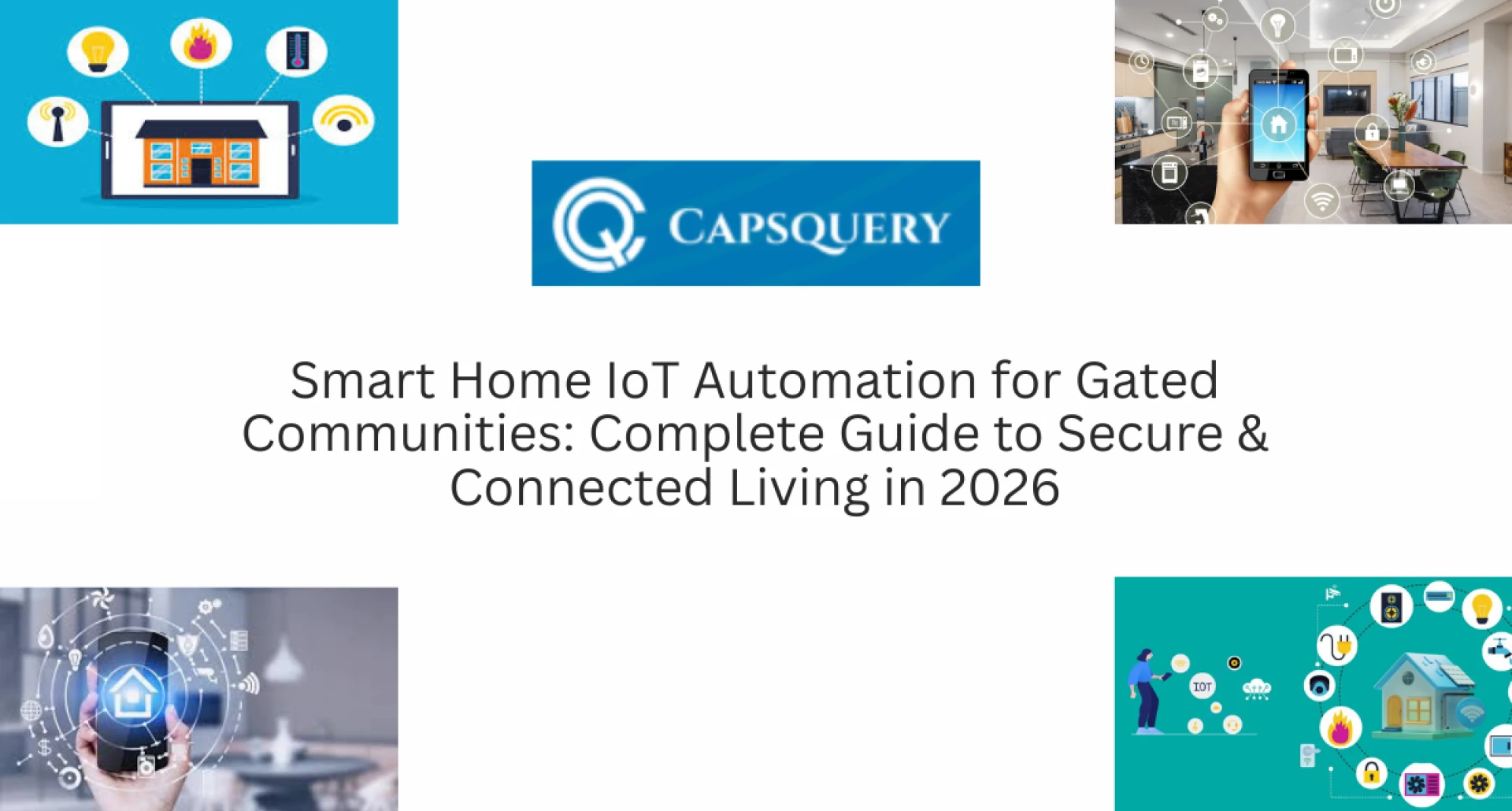

The evolution of residential living has entered a new era. Modern buyers no longer look at just location, square footage, or amenities — they expect intelligent living environments. This is where Home IoT automation for gated communities becomes a defining factor.
From smart cameras and automated lights to energy-saving systems and AI-based entry control, IoT technology is turning residential complexes into safer, smarter, and more convenient places to live.
In this in-depth guide, we’ll explore how smart home automation systemThe evolution of residential living has entered a new era. Modern buyers no longer look at just location, square footage, or amenities — they expect intelligent living environments. This is where Home IoT automation for gated communities becomes a defining factor.
From smart cameras and automated lights to energy-saving systems and AI-based entry control, IoT technology is turning residential complexes into safer, smarter, and more convenient places to live.
In this in-depth guide, we’ll explore how smart home automation systems for gated societies are reshaping urban housing, the technology stack behind them, benefits for developers and residents, implementation strategy, and future trends for 2026.
What is Home IoT Automation in Gated Communities?
Residential IoT automation solutions simply mean a group of smart devices installed in homes and shared spaces within a gated community. These devices stay connected through the internet and work together using sensors and central control systems to handle everyday tasks automatically and improve overall security.
Unlike the standalone smart homes, community-wide IoT integration for the housing societies connects individual homes with a shared infrastructure such as:
- Entry & exit gates
- Clubhouses
- Parking systems
- Elevators
- Perimeter security
- Power backup systems
This unified architecture creates a seamless ecosystem where residents experience convenience while administrators gain operational control.
Why Gated Communities Need Smart IoT Infrastructure in 2026
Urban real estate competition is fierce. Projects in emerging hubs such as IoT enabled gated communities in Cupertino are leveraging technology as a differentiator. Buyers want automation-ready homes rather than retrofitted systems.
Key market drivers include:
- Rising security concerns
- Demand for remote property monitoring
- Energy cost optimization
- Growing adoption of AI-enabled devices
- Preference for touchless access systems
Developers implementing smart residential security automation are witnessing higher buyer engagement and faster project absorption rates.
Core Components of a Smart Gated Community IoT Ecosystem
1. Smart Access & Visitor Management
Now a days a morden IoT based access control system for gated societies integrates:
- RFID vehicle tags
- Face recognition entry
- QR-based visitor approvals
- Video intercom systems
- Mobile app gate unlocking
Residents can approve guests remotely while management tracks all entries digitally.
2. Intelligent Surveillance & Monitoring
Security remains the primary driver for adoption. AI-powered CCTV systems in residential complexes helps to monitor the area more intelligently and efficiently by following ways :
- Motion detection alerts
- Night vision coverage
- Cloud storage
- Suspicious activity flagging
- Central command dashboards
These systems reduce dependency on manual guards while improving real-time threat response.
3. Smart Energy & Utility Management
Saving energy has become very important, especially in large residential communities. Smart energy management systems have been helping housing communities by :
- Smart water metering
- Automated street lighting
- Load balancing systems
- Solar panel performance tracking
- Real-time electricity consumption insights
This significantly reduces maintenance costs and improves sustainability ratings.
4. Smart Parking & Traffic Flow
Parking chaos is a very common pain point now a days. Automated parking management for gated communities includes:
- License plate recognition
- Visitor parking allocation
- Occupancy tracking
- App-based slot booking
- Traffic congestion alerts
Such systems enhance resident satisfaction and reduce disputes.
5. Home-Level Automation Integration
Each apartment can include connected smart home devices for residential societies, such as:
- Smart thermostats
- Automated blinds
- Leak detection sensors
- Voice-controlled appliances
- Remote HVAC management
These devices integrate with community dashboards to create a fully unified ecosystem.
Benefits of IoT Automation for Developers
1. Premium Project Positioning
Developers are offering luxury smart gated community automation solutions that can command better pricing and also stand out in this competitive markets.
2. Reduced Operational Costs
Automated lighting, smart water monitoring, and predictive maintenance systems reduce manual supervision and recurring expenses.
3. Increased Property Value
Smart infrastructure has significantly increases the resale potential and long-term ROI of the properties.
Benefits for Residents
- 24/7 remote monitoring
- Enhanced personal safety
- Energy savings
- Seamless visitor approvals
- Contactless living experience
For example, projects deploying advanced home automation in Dallas residential communities are seeing stronger demand from tech-savvy buyers.
A strong and secure IoT setup for housing societies should use encrypted data, multi-step login security, and proper network protection to keep hackers and cyber threats away.
IoT Architecture Behind Smart Gated Communities

Implementation Strategy for Builders
Step 1: Infrastructure Planning
Deploy fiber backbone and IoT gateways during construction.
Step 2: Select Scalable Platforms
Choose modular integrated smart community management platforms that allow future upgrades.
Step 3: Ensure Data Protection Compliance
Follow global data privacy standards and local compliance frameworks.
Step 4: Resident Onboarding
Provide app training sessions and onboarding documentation.
Regional Adoption Trends in the United States
The rise of smart housing technology solutions in Texas gated communities reflects increasing investment in suburban smart living.
Meanwhile, high-end developments implementing connected residential IoT systems in Houston suburbs are focusing heavily on perimeter surveillance and integrated emergency response systems.
Geographically distributed adoption demonstrates that IoT is no longer a luxury feature — it’s becoming a standard expectation.
Challenges in Home IoT Automation
Despite rapid adoption, several obstacles exist:
- High initial setup cost
- Integration complexity
- Data security concerns
- Device compatibility issues
- Internet dependency
However, evolving technologies and falling hardware prices are addressing these challenges steadily.
Future of Smart Gated Communities in 2026 & Beyond
The next wave of innovation will focus on:
- AI-driven predictive maintenance
- Digital twin modeling for societies
- Blockchain-enabled visitor logs
- Smart waste management systems
- EV charging automation integration
Communities investing in future-ready IoT automation for residential projects will dominate buyer preference.
Conclusion
The shift toward intelligent residential ecosystems is inevitable. Implementing smart home IoT infrastructure for gated communities is no longer about luxury — it’s about future-proofing real estate assets.
Developers who strategically deploy secure, scalable, and resident-friendly systems will achieve competitive advantage, operational efficiency, and stronger long-term valuation.
The future of community living is connected, intelligent, and automated.
Frequently Asked Questions :
1. What is the cost of implementing IoT automation in gated communities?
The cost varies depending on project size, device count, and system complexity. Basic setups may start from moderate infrastructure investment, while fully integrated premium ecosystems require higher capital expenditure.
2. Is smart home automation secure for residential societies?
Yes, when implemented with encrypted communication, firewall segmentation, and regular security audits, IoT systems can be highly secure.
3. Can existing gated communities upgrade to IoT systems?
Absolutely. Retrofitting is possible through wireless sensors, cloud-based management dashboards, and modular hardware solutions.
4. How does IoT improve security in housing communities?
It enables real-time surveillance, instant alerts, remote visitor approvals, and centralized monitoring — significantly reducing security gaps.
5. Does IoT automation increase property value?
Yes, smart-enabled properties often command higher resale value and attract tech-savvy buyers.
6. What internet connectivity is required for smart communities?
Stable broadband, fiber backbone, or 5G-enabled infrastructure ensures uninterrupted performance.
7. Are smart parking systems reliable in large societies?
Yes, when integrated with license plate recognition and occupancy sensors, they provide accurate real-time parking data.





























Sign in to leave a comment.