

AI can now write code, fix bugs, build landing pages, deploy smart contracts, and even architect full-stack apps.
So naturally, a new narrative exploded across tech Twitter:
“You don’t need to learn coding anymore. Just vibe code.”
Open your AI tool.
Type a prompt.
Ship a product.
Repeat.
But here’s the real question:
👉 Are vibe coding prompts actually all you need?
Let’s break it down.
What Is “Vibe Coding”?
Vibe coding is simple:
You don’t deeply plan architecture.
You don’t manually write most of the code.
You don’t stress over syntax.
You describe what you want.
The AI builds it.
You tweak it with more prompts.
It feels like creative direction instead of engineering.
And honestly? It’s powerful.
You can:
- Spin up MVPs in hours
- Prototype SaaS tools fast
- Build Web3 dashboards without memorizing Solidity patterns
- Launch AI automations without writing backend logic from scratch
The speed is insane.
But speed isn’t everything.

Where Vibe Coding Works Extremely Well
1️⃣ Rapid Prototyping
If you’re testing an idea, AI is unbeatable.
Landing page?
Telegram bot?
Simple NFT mint UI?
Internal dashboard?
Prompts can get you 70–80% there instantly.
For Web3 founders validating token utilities or AI builders testing agents, this is a superpower.
2️⃣ Non-Technical Founders
If you’re a strategist, marketer, or operator vibe coding removes friction.
You no longer need to wait:
- For a developer to prototype
- For an agency quote
- For technical validation
You can experiment independently.
That changes leverage.
3️⃣ Boilerplate & Repetitive Code
Authentication systems.
CRUD dashboards.
API integrations.
Frontend scaffolding.
AI handles repetitive tasks extremely well.
This is where vibe coding shines.
Where Vibe Coding Falls Apart
Now let’s talk reality.
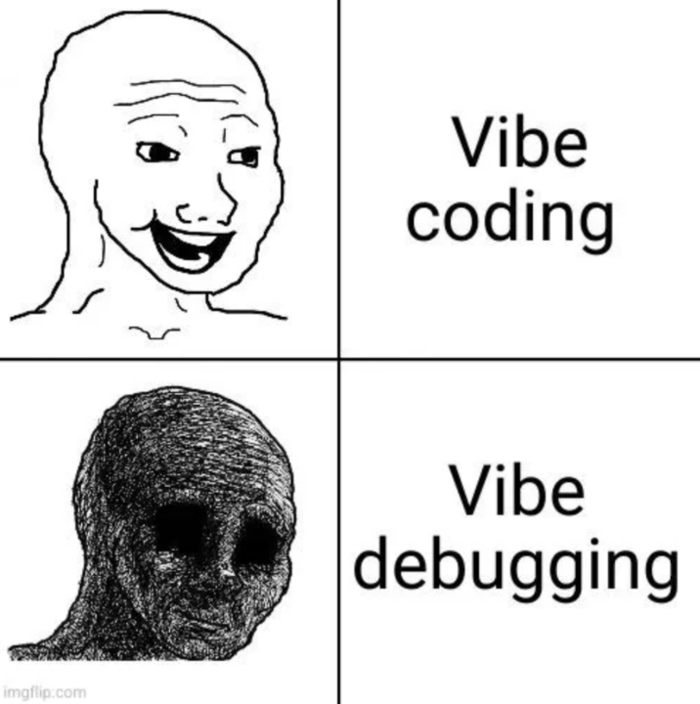
❌ 1. When Things Break
If your app crashes…
If your smart contract throws an error…
If your API calls fail silently…
And you don’t understand what’s happening under the hood?
You’re stuck.
Prompts can patch surface-level issues.
But without fundamentals, debugging becomes guessing.
❌ 2. Scalability Problems
AI-generated code often:
- Repeats logic
- Lacks proper architecture
- Overuses dependencies
- Misses security considerations
It works for demos.
It struggles in production.
Especially in Web3 where a small mistake in a smart contract can lock or lose funds permanently.
There’s no “undo” on-chain.
❌ 3. Security Risks
Blindly shipping AI-generated code is dangerous.
In:
- Crypto apps
- DeFi protocols
- AI data pipelines
- User authentication systems
Security isn’t optional.
Vibe coding without review is how vulnerabilities get deployed.
The Real Truth: Prompts Are Leverage, Not Replacement
AI doesn’t replace skill.
It amplifies it.
A skilled developer using vibe coding becomes 5x faster.
An unskilled builder using vibe coding becomes dependent.
That’s the difference.
Think of AI like:
- A junior developer who works instantly
- A creative collaborator
- A productivity multiplier
But not a technical brain replacement.
The Smart Way to Use Vibe Coding
If you want real leverage:
- Learn core fundamentals
- Basic programming logic
- How APIs work
- System design basics
- Security awareness
- Use AI for speed, not thinking
Let it write repetitive code.
You handle structure and decisions. - Review everything
Don’t copy-paste blindly.
Understand what you ship. - Combine it with domain knowledge
Web3 + AI + business context
That’s where the edge is.
The Bigger Shift Happening
Vibe coding is part of a larger trend:
We’re moving from:
- Manual execution
To:
- Prompt-driven orchestration
The future builder isn’t just a coder.
They’re:
- A system designer
- A product thinker
- An AI orchestrator
In Web3 and AI especially, those who understand both technology and strategy will dominate.
Not those who just paste prompts.
So… Are Vibe Coding Prompts All You Need?
For experimentation?
Almost.
For production-level systems?
No.
For building real leverage?
Only if paired with understanding.
Prompts are powerful.
But fundamentals are compounding.
And in tech especially in crypto and AI compounding always wins.





Sign in to leave a comment.