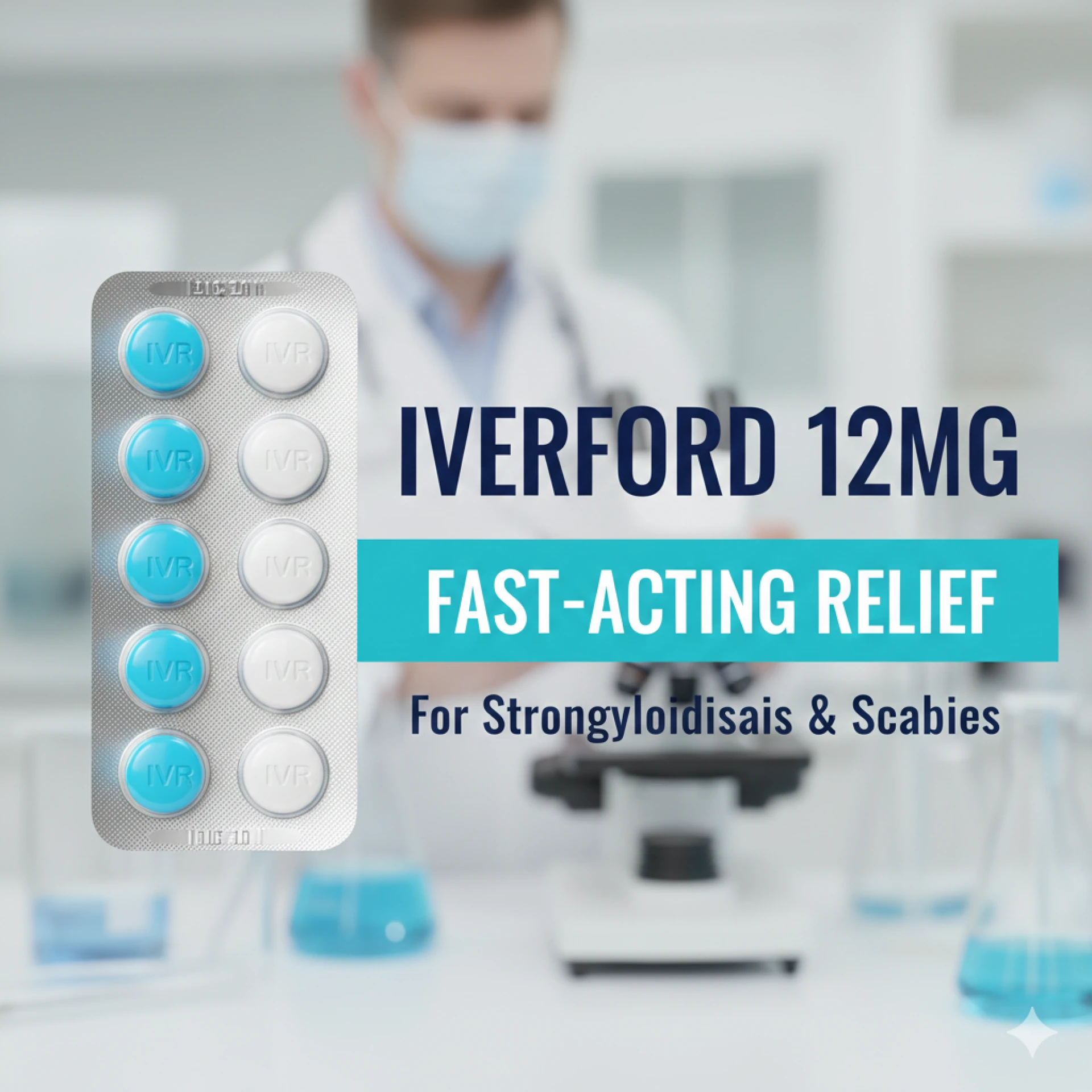
Parasitic infections have a way of overstaying their welcome. Some linger quietly in the gut for years, while others announce themselves loudly through relentless itching and skin irritation. Two of the most challenging examples are strongyloidiasis and scabies—very different conditions, yet both highly responsive to one well-studied treatment: ivermectin.
Iverford 12mg, an ivermectin 12mg tablet, has earned its reputation for providing fast-acting parasite relief in both intestinal and skin infestations. This article explains how it works, why it’s effective, and how it’s used safely—grounded in real clinical evidence and global treatment guidelines.
What Is Iverford 12mg?
Iverford 12mg is an oral formulation of ivermectin, a widely used antiparasitic medication. Ivermectin belongs to the macrocyclic lactone class and has been prescribed in human medicine for decades.
Its importance is recognized globally. Ivermectin is listed on the World Health Organization (WHO) Model List of Essential Medicines, and it is FDA-approved for strongyloidiasis while also widely used for other parasitic diseases.
Authoritative sources:
- World Health Organization (WHO) – Model List of Essential Medicines
- U.S. Food and Drug Administration (FDA) – Ivermectin Prescribing Information
Why Focus on Strongyloidiasis and Scabies?
Although many parasites affect humans, strongyloidiasis and scabies deserve special attention due to their persistence and potential complications.
- Strongyloidiasis is caused by Strongyloides stercoralis, a threadworm capable of reproducing inside the human body.
- Scabies is caused by the Sarcoptes scabiei mite, which burrows into the skin and triggers intense itching.
Both conditions often go undiagnosed for long periods and can worsen without effective treatment.
How Ivermectin Works: Simple but Powerful
Paralyzes and Kills Parasites
Ivermectin works by binding to chloride channels in parasite nerve and muscle cells. This causes:
- Loss of movement
- Inability to feed or reproduce
- Eventual parasite death
This mechanism paralyzes and kills parasites without harming human nerve cells, which lack these channels. That selectivity explains why ivermectin is considered a well-tolerated antiparasitic when prescribed correctly.
Source: Centers for Disease Control and Prevention (CDC) – Parasites: Ivermectin
Iverford 12mg for Strongyloidiasis
Understanding Strongyloides stercoralis Infection
Threadworm infection caused by Strongyloides stercoralis is unlike most intestinal worm diseases. The parasite can complete its life cycle inside the human host, leading to chronic intestinal strongyloidiasis that may persist for decades.
In people with weakened immune systems, this infection can escalate into hyperinfection syndrome, a life-threatening condition.
Why Ivermectin Is First-Line Therapy
Ivermectin for strongyloidiasis is considered the gold standard:
- Recommended by the CDC as first-line treatment
- More effective than older therapies such as albendazole
- Short treatment duration, often a single dose ivermectin
Prompt treatment not only clears infection but also supports hyperinfection syndrome prevention.
Source: CDC – Strongyloidiasis Treatment Guidelines
Dosage and Administration for Strongyloidiasis
- Standard dose: 200 mcg/kg ivermectin dose
- Based on weight-based ivermectin dosing
- Often taken as a single oral dose, with repeat dosing in some cases
Follow-up testing may be recommended to confirm parasite clearance.
Iverford 12mg for Scabies
What Makes Scabies So Difficult to Treat?
Scabies mites burrow into the skin, causing:
- Severe itching
- Rash and skin irritation
- Secondary bacterial infections
In crusted scabies (Norwegian scabies), the parasite load is extremely high, making treatment more challenging and contagious.
Ivermectin for Scabies: Why It Works
Ivermectin for scabies is especially useful when:
- Topical treatments fail
- Large body areas are affected
- Outbreaks occur in households or institutions
Oral ivermectin reaches mites throughout the body, offering rapid symptom relief scabies and reducing transmission.
Source: CDC – Scabies Treatment Guidelines
Dosing for Scabies Treatment
- Ivermectin 12mg for adults is dosed based on body weight
- Typically 200 mcg/kg
- A repeat dose scabies regimen is common, often after 7–14 days
This approach improves cure rates and reduces reinfestation.
Fast-Acting Relief: What Patients Often Notice
Symptom Improvement Timeline
Many patients report:
- Reduced itching within days
- Gradual clearing of skin lesions
- Improved comfort and sleep
While itching may persist briefly due to immune response, the underlying skin infestation relief begins soon after treatment.
High Cure Rates and Effectiveness
Clinical evidence shows:
- High cure rates in strongyloidiasis
- Effective clearance of scabies mites, especially with repeat dosing
This makes ivermectin a reliable option for parasitic infection treatment when used correctly.
Oral Ivermectin Treatment vs Topical Options
Ivermectin vs Permethrin
- Permethrin is topical and often first-line for scabies
- Ivermectin vs permethrin becomes relevant in severe or resistant cases
- Oral ivermectin offers convenience and systemic coverage
Ivermectin vs Benzyl Benzoate
- Benzyl benzoate can irritate the skin
- Ivermectin avoids direct skin irritation and is easier to administer
Ivermectin vs Albendazole
For strongyloidiasis:
- Ivermectin vs albendazole clearly favors ivermectin due to higher efficacy and shorter treatment duration
Safety and Tolerability
Common Side Effects
Ivermectin is generally well tolerated. When side effects occur, they are usually mild:
- Headache
- Dizziness
- Nausea
These effects align with its profile as a low side effects ivermectin option.
Immune Reactions to Parasite Die-Off
In some cases, symptoms result from immune response to dying parasites rather than drug toxicity. These reactions are usually temporary and manageable under medical guidance.
Important Precautions
- Always use doctor-prescribed ivermectin
- Avoid during pregnancy unless clearly indicated
- Inform your healthcare provider about neurological conditions or other medications
Used responsibly, ivermectin remains safe when prescribed.
Off-Label Use Ivermectin: A Clarification
- FDA-approved strongyloidiasis treatment is well established
- Off-label scabies treatment is common and supported by clinical guidelines
Off-label use does not mean unsafe—it means the medication is used based on evidence and clinical judgment rather than a specific FDA indication.
Broader Role in Neglected Tropical Diseases
Beyond scabies and strongyloidiasis, ivermectin plays a key role in neglected tropical diseases treatment, including:
- River blindness (onchocerciasis)
- Certain filarial infections
This broader impact highlights ivermectin’s unmatched public health value.
Source: WHO – Neglected Tropical Diseases
Why Iverford 12mg Remains a Practical Choice
Key benefits include:
- Fast-acting parasite relief
- Simple single oral dose benefits
- Effective against intestinal parasites and ectoparasites
- Convenient alternative to topical treatments
- Long-standing global safety record
Few antiparasitic drugs offer this balance of speed, effectiveness, and ease of use.
Final Thoughts: Reliable Relief Backed by Real Evidence
Iverford 12mg continues to stand out for treating both strongyloidiasis and scabies because it does exactly what good medicine should do: work quickly, safely, and predictably.
When guided by proper diagnosis and medical supervision, ivermectin provides dependable relief from infections that can otherwise linger or worsen. In the world of parasite treatment, that reliability still matters—and Iverford delivers it.























Sign in to leave a comment.