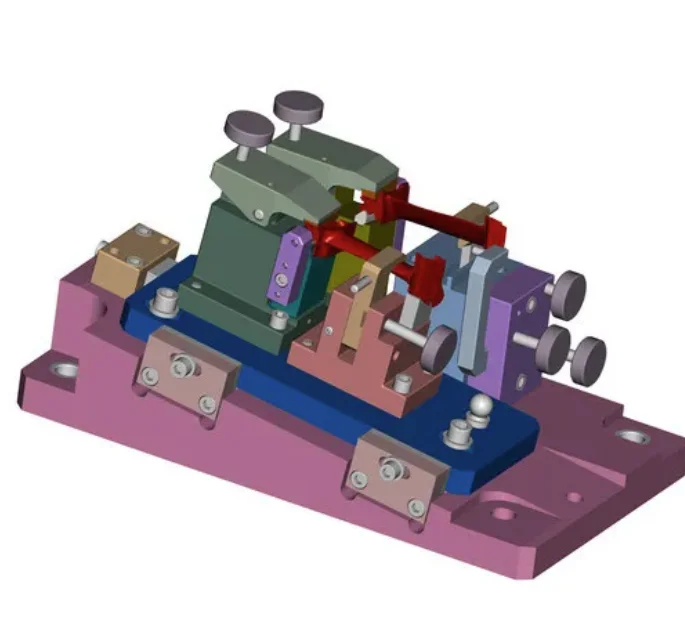

Modern CNC manufacturing depends on accuracy, consistency, and controlled production flow. Even advanced machines cannot deliver stable results without proper workholding support. This is where jigs and fixtures play a critical role by ensuring repeatable positioning, reduced setup time, and controlled machining forces. Manufacturers across aerospace, automotive, and industrial sectors rely on these solutions to maintain quality while meeting tight production deadlines.
In high-precision environments, the correct application of jigs and fixtures directly impacts dimensional accuracy and surface finish. Well-planned systems support the cutting process and protect both tools and components. Companies that invest in structured workholding strategies often see measurable improvements in productivity, quality control, and long-term cost efficiency, especially when supported by professional services such as jigs and fixtures engineered for CNC operations.
The Role of Jigs and Fixtures in CNC Accuracy
Understanding Machining Stability
CNC machining stability depends on how securely a workpiece is held during cutting. Vibrations, tool deflection, or minor shifts can lead to scrap or rework. Jigs guide the cutting tool, while fixtures firmly locate and support the workpiece, allowing the machine to perform at its intended accuracy level. This controlled environment reduces tolerance variation and ensures predictable outcomes across batches.
Impact on Repeatability and Tolerances
Repeatability is essential for batch and mass production. Properly engineered workholding systems ensure each part is positioned identically, cycle after cycle. This consistency supports tighter tolerances and reduces inspection time. When components align precisely with machine coordinates, CNC programs run more efficiently and require fewer adjustments.
Key Elements of Effective Workholding Systems
Locating Principles and Alignment
Accurate location is the foundation of all workholding solutions. Using established locating principles allows machinists to control degrees of freedom without over-constraining the part. Correct alignment improves machining flow and reduces internal stress on components. This approach supports consistent datum referencing and stable tool paths.
Clamping Methods and Force Control
Clamping must hold parts securely without distortion. Excessive force can damage delicate components, while insufficient force can cause movement. Effective systems balance strength and precision, allowing machinists to maintain stability while protecting part geometry. Hydraulic, pneumatic, and mechanical clamps are selected based on production volume and material type.
Jigs and Fixtures Tooling in CNC Production
Tooling Integration with CNC Machines
Tooling compatibility is essential for smooth CNC workflows. Jigs and fixtures tooling must integrate seamlessly with machine tables, pallets, and automation systems. When designed correctly, tooling enhances spindle access and allows faster tool changes, supporting higher spindle utilization rates.
Benefits for High-Volume Manufacturing
In high-volume production, tooling efficiency directly affects profitability. Structured workholding reduces setup time and operator dependency. It also minimizes human error, ensuring that each component meets specification. Manufacturers often standardize tooling platforms to improve scalability and reduce lead times.
Key advantages of structured tooling include:
- Reduced setup and changeover time
- Improved process consistency
- Lower rejection and rework rates
Custom Jig and Fixture Design Devices
Engineering for Complex Components
Complex geometries require custom jig and fixture design devices tailored to part shape and machining sequence. These solutions consider material behavior, cutting forces, and accessibility. Custom engineering ensures that even intricate components remain stable throughout multi-axis operations.
Supporting Multi-Axis CNC Machining
Five-axis and multi-axis CNC machines demand advanced workholding solutions. Fixtures must allow full tool access without repositioning while maintaining rigidity. Proper design supports continuous machining, reducing cycle time and improving surface finish across complex contours.
Material Considerations in Jig and Fixture Design
Selecting Durable Construction Materials
Material selection affects fixture life and performance. Steel offers strength and wear resistance, while aluminum reduces weight and improves handling. Composite materials may be used for specialized applications where vibration damping is required. The right choice balances durability with operational efficiency.
Managing Thermal and Mechanical Loads
During machining, heat and cutting forces can affect both the part and the fixture. Effective designs account for thermal expansion and mechanical stress. This foresight prevents distortion and ensures dimensional accuracy remains consistent throughout the machining cycle.
Improving Efficiency with Standardized Workholding
Modular Systems and Flexibility
Modular workholding systems allow manufacturers to adapt quickly to new components. Standardized bases and interchangeable elements reduce design time and inventory costs. This flexibility supports lean manufacturing principles and faster response to market demands.
Reducing Setup Time and Errors
Standardization simplifies operator training and reduces setup errors. When fixtures follow consistent design logic, machinists can install and verify setups more quickly. This efficiency translates into higher machine uptime and predictable production schedules.
Operational improvements achieved include:
- Faster machine changeovers
- Simplified quality checks
- Improved shop-floor efficiency
Quality Control and Process Reliability
Supporting Inspection and Measurement
Accurate workholding supports reliable inspection processes. Fixtures designed with inspection in mind allow in-process measurement without removing parts. This capability reduces downtime and supports real-time quality control.
Long-Term Process Stability
Consistent jig and fixture performance contributes to long-term process stability. Reduced variation leads to predictable output and easier process optimization. Over time, this stability strengthens customer confidence and supports continuous improvement initiatives.
Conclusion
Jigs and fixtures remain essential to precision CNC manufacturing. They support accuracy, repeatability, and efficient production across diverse industries. From basic tooling to advanced jig and fixture design devices, well-engineered workholding solutions enhance machining performance and protect product quality. Manufacturers that prioritize structured workholding strategies benefit from reduced costs, improved efficiency, and long-term operational reliability. By investing in professionally engineered systems aligned with CNC requirements, production teams can achieve consistent results and maintain a competitive edge in modern manufacturing.





















Sign in to leave a comment.